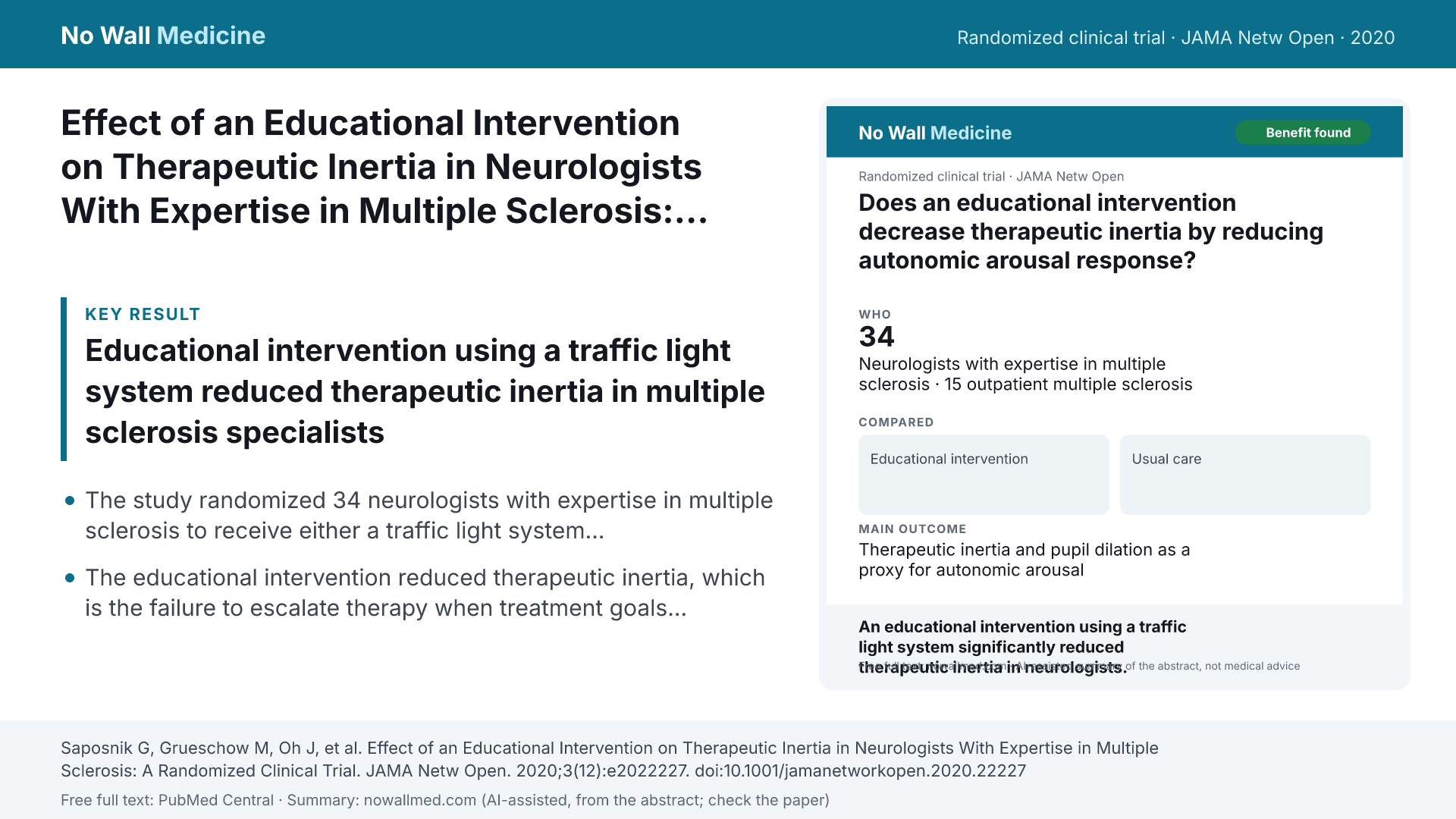
Educational intervention using a traffic light system reduced therapeutic inertia in multiple sclerosis specialists
Effect of an Educational Intervention on Therapeutic Inertia in Neurologists With Expertise in Multiple Sclerosis: A Randomized Clinical Trial
Randomized clinical trialBenefit found
Does an educational intervention decrease therapeutic inertia by reducing autonomic arousal response?
Who
34
Neurologists with expertise in multiple sclerosis · 15 outpatient multiple sclerosis clinics in Canada
Compared
Educational intervention
Usual care
Main outcome
Therapeutic inertia and pupil dilation as a proxy for autonomic arousal
Result: risk reduction, 31.5% (95% CI, 16.1%-47.0%)
Bottom line: An educational intervention using a traffic light system significantly reduced therapeutic inertia in neurologists.
JAMA Netw Open · 2020-12-01 · Save PNG
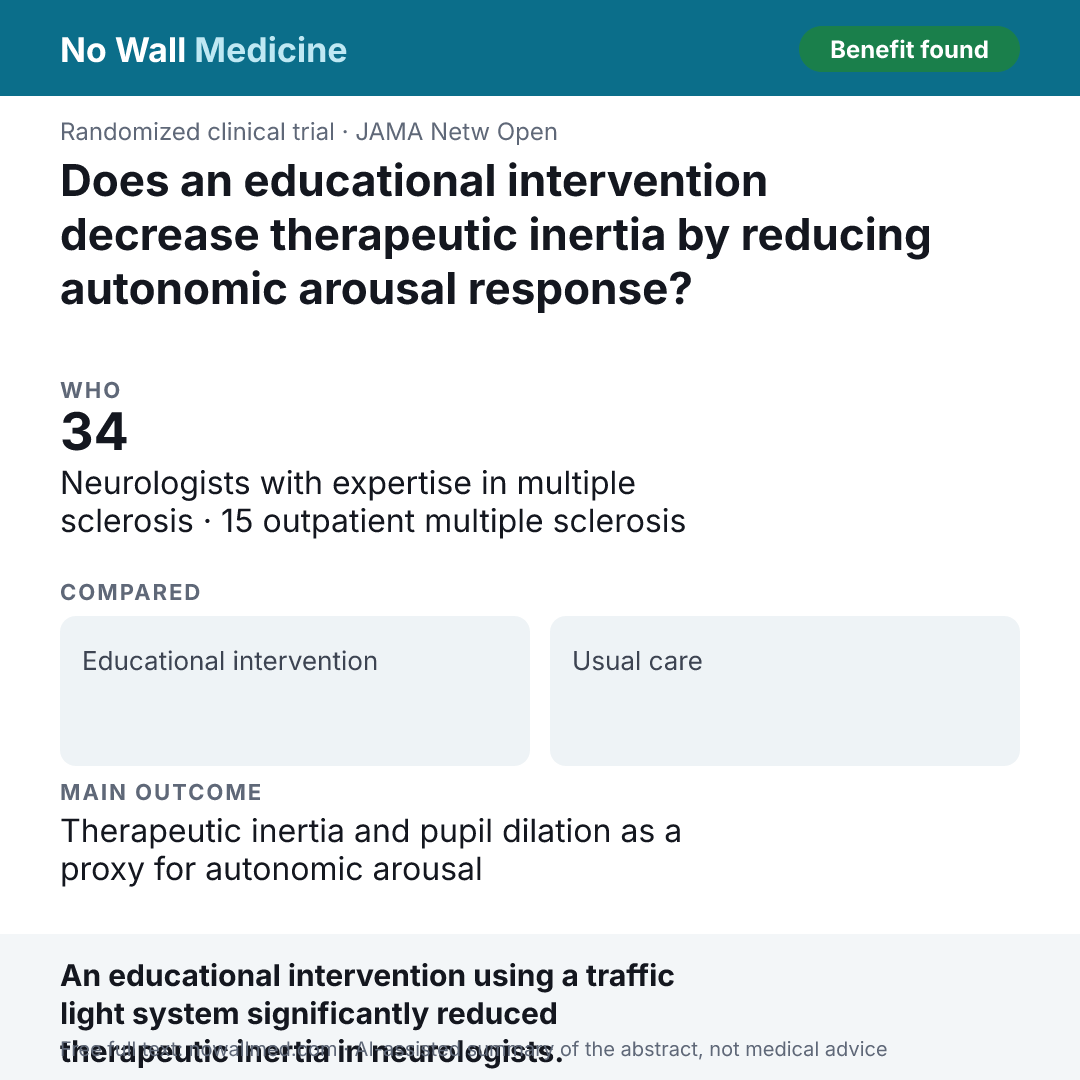
Clinical question: Does an educational intervention decrease therapeutic inertia by reducing autonomic arousal response?
Key points
- The study randomized 34 neurologists with expertise in multiple sclerosis to receive either a traffic light system educational intervention or usual care.
- The educational intervention reduced therapeutic inertia, which is the failure to escalate therapy when treatment goals are unmet, by 31.5%.
- Therapeutic inertia was present in 50.0% of participants and was associated with greater pupil dilation, a measure of autonomic arousal.
Headline and key points written with AI from the paper’s abstract, with every number checked against it. Read the paper before relying on them.
Was this summary helpful?
Subject terms
Headline, design, result, key points, caveat and citation as plain text.
Cite this article
Saposnik G, Grueschow M, Oh J, et al. Effect of an Educational Intervention on Therapeutic Inertia in Neurologists With Expertise in Multiple Sclerosis: A Randomized Clinical Trial. JAMA Netw Open. 2020;3(12):e2022227. doi:10.1001/jamanetworkopen.2020.22227
Spotted a mistake? Suggest a correction