Effect of early adaptive servoventilation on cardiac repolarisation in patients with myocardial infarction and sleep disordered breathing: an ancillary analysis of the randomised controlled trial TEAM-ASV I
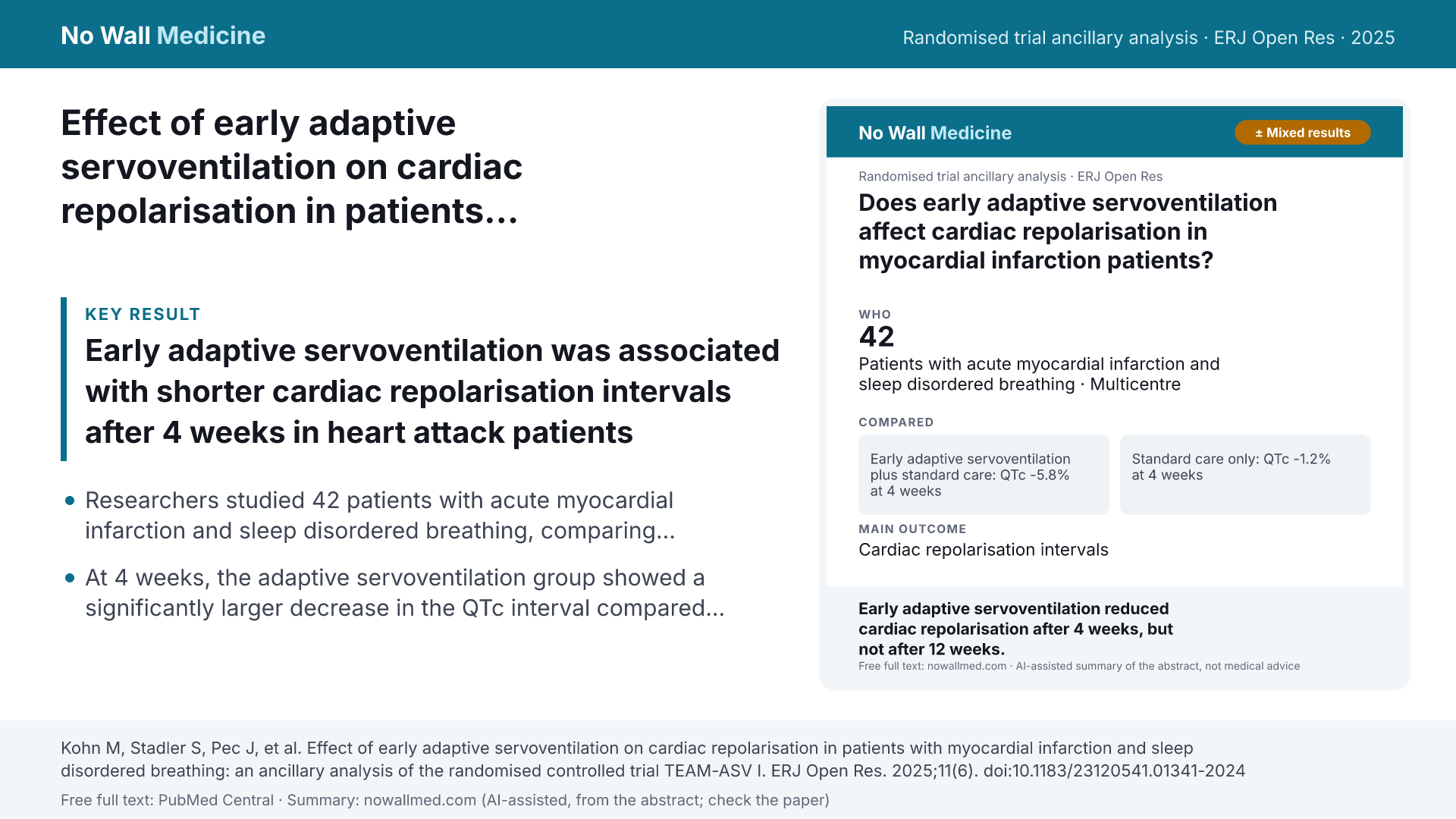
Key result: Early adaptive servoventilation was associated with shorter cardiac repolarisation intervals after 4 weeks in heart attack patients
Key points
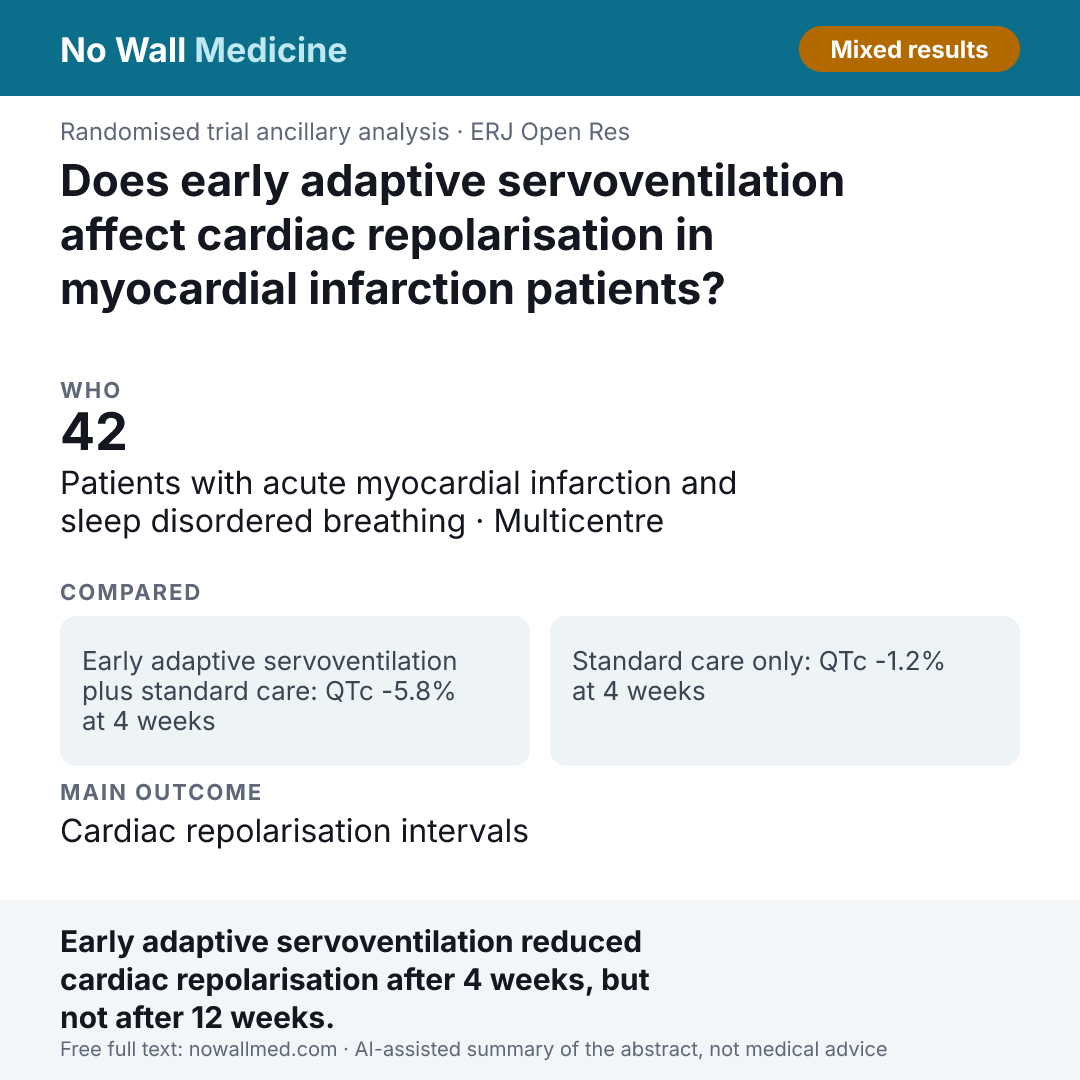
- Researchers studied 42 patients with acute myocardial infarction and sleep disordered breathing, comparing 22 receiving adaptive servoventilation to 20 receiving standard care.
- At 4 weeks, the adaptive servoventilation group showed a significantly larger decrease in the QTc interval compared to the control group (-5.8% versus -1.2%, p=0.041).
- At 12 weeks, there were no significant differences between the groups for QTc, TpTec, or TpTe/QT intervals.
Why it matters: Altered cardiac repolarisation, the process where heart cells reset after a beat, is linked to dangerous heart rhythms in patients after a heart attack.
Discussion prompts
- Would these patients look like yours? Who was left out?
- Is the main outcome one that matters to patients?
- Is the difference large enough to change what you do?
Cite: Kohn M, Stadler S, Pec J, et al. Effect of early adaptive servoventilation on cardiac repolarisation in patients with myocardial infarction and sleep disordered breathing: an ancillary analysis of the randomised controlled trial TEAM-ASV I. ERJ Open Res. 2025;11(6). doi:10.1183/23120541.01341-2024
Free full text: PubMed Central · Summary and visual abstract: nowallmed.com/a/effect-of-early-adaptive-servoventilation-on-cardiac-repolarisation-loll1a/ (AI-assisted from the abstract; check the paper before relying on it).