Motor imagery neurofeedback increased brain activity suppression during movement attempts in stroke patients
Effect of electroencephalography-based motor imagery neurofeedback on mu suppression during motor attempt in patients with stroke
Randomized cross-over studyBenefit found
Does electroencephalography-based motor imagery neurofeedback affect mu suppression in subacute stroke patients?
Who
15
Patients with hemiplegia following subacute ischemic stroke
Compared
Neurofeedback: Significant mu suppression in bilateral motor and parietal cortices
Sham
Main outcome
Mu suppression during motor attempts
Bottom line: Motor imagery neurofeedback significantly enhances mu suppression in the ipsilesional motor and bilateral parietal cortices during motor attempts.
J Neuroeng Rehabil · 2025-05-28Download image
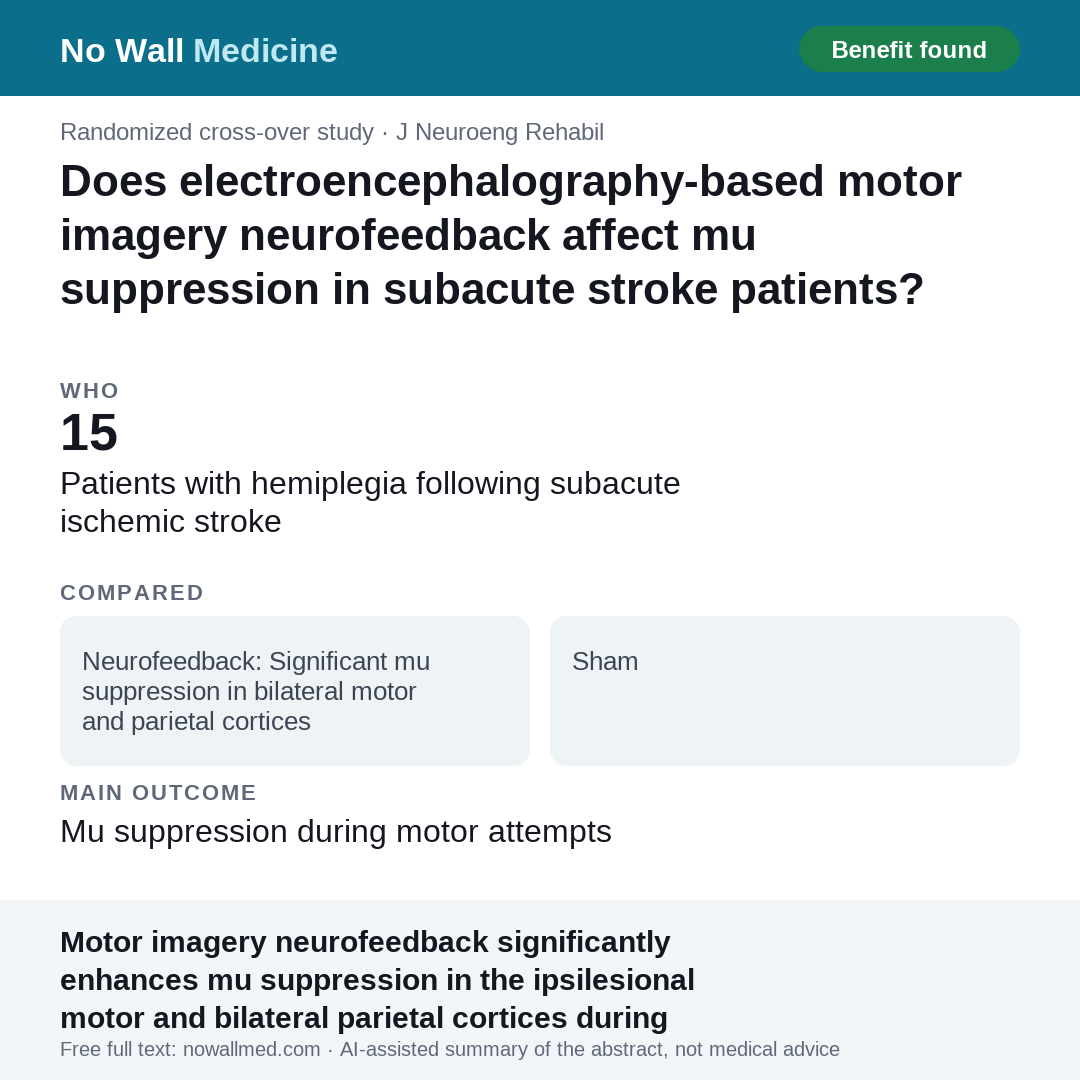
Clinical question: Does electroencephalography-based motor imagery neurofeedback affect mu suppression in subacute stroke patients?
Why it matters: It was unknown if motor imagery neurofeedback using electroencephalography, which measures electrical activity in the brain, could affect mu suppression during motor attempts in subacute stroke patients.
Key points
- Researchers studied 15 patients with hemiplegia, which is weakness on one side of the body, following a subacute ischemic stroke.
- Neurofeedback using brain wave monitoring was associated with significant mu suppression, a measure of brain activity, in the bilateral motor and parietal cortices compared to sham (p < 0.001).
- Following neurofeedback, real grasping sessions showed progressive strengthening of mu suppression in the ipsilesional motor cortex and bilateral parietal cortices (p < 0.05).
Headline and key points written with AI from the paper’s abstract, with every number checked against it. Read the paper before relying on them.
Was this summary helpful?
Subject terms
Cite this article
Cha S, Kim KT, Chang WK, Paik NJ, Choi JS, Lim H. Effect of electroencephalography-based motor imagery neurofeedback on mu suppression during motor attempt in patients with stroke. J Neuroeng Rehabil. 2025. doi:10.1186/s12984-025-01653-5
Spotted a mistake? Suggest a correction
Top studies every Monday
The week’s key trials and guidelines in your specialties, plus any topics you follow. By email, free.
Get the weekly digest