Helmet noninvasive ventilation did not significantly reduce mortality in COVID-19 respiratory failure patients
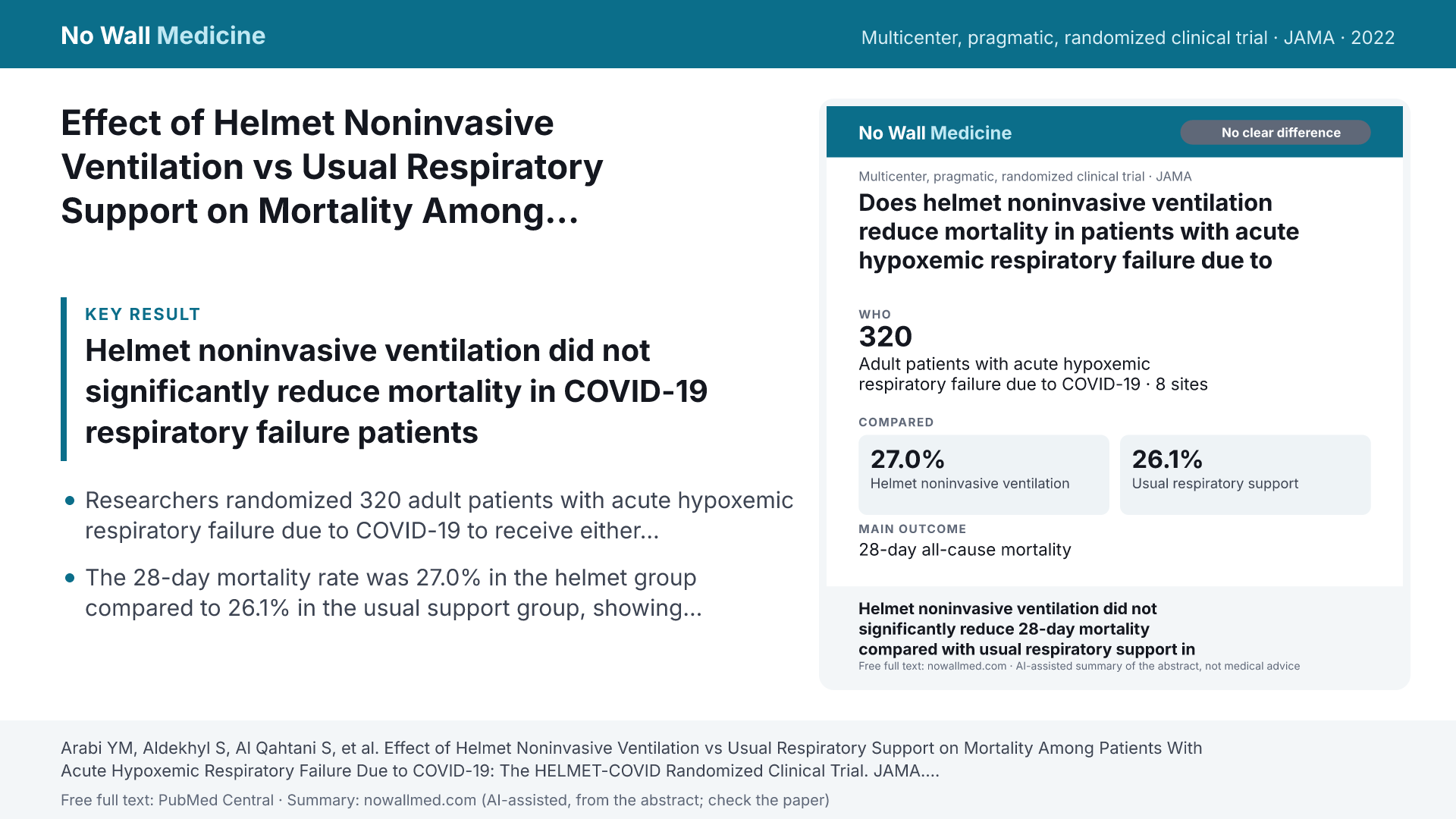
Effect of Helmet Noninvasive Ventilation vs Usual Respiratory Support on Mortality Among Patients With Acute Hypoxemic Respiratory Failure Due to COVID-19: The HELMET-COVID Randomized Clinical Trial
Multicenter, pragmatic, randomized clinical trialNo clear difference
Does helmet noninvasive ventilation reduce mortality in patients with acute hypoxemic respiratory failure due to COVID-19?
Who
320
Adult patients with acute hypoxemic respiratory failure due to COVID-19 · 8 sites in Saudi Arabia and Kuwait
Compared
27.0%Helmet noninvasive ventilation
26.1%Usual respiratory support
Main outcome
28-day all-cause mortality
Result: risk difference, 1.0% (95% CI, -8.7% to 10.6%)
Bottom line: Helmet noninvasive ventilation did not significantly reduce 28-day mortality compared with usual respiratory support in COVID-19 patients.
Limitation: Interpretation is limited by imprecision in the effect estimate.
JAMA · 2022-09-20Download image
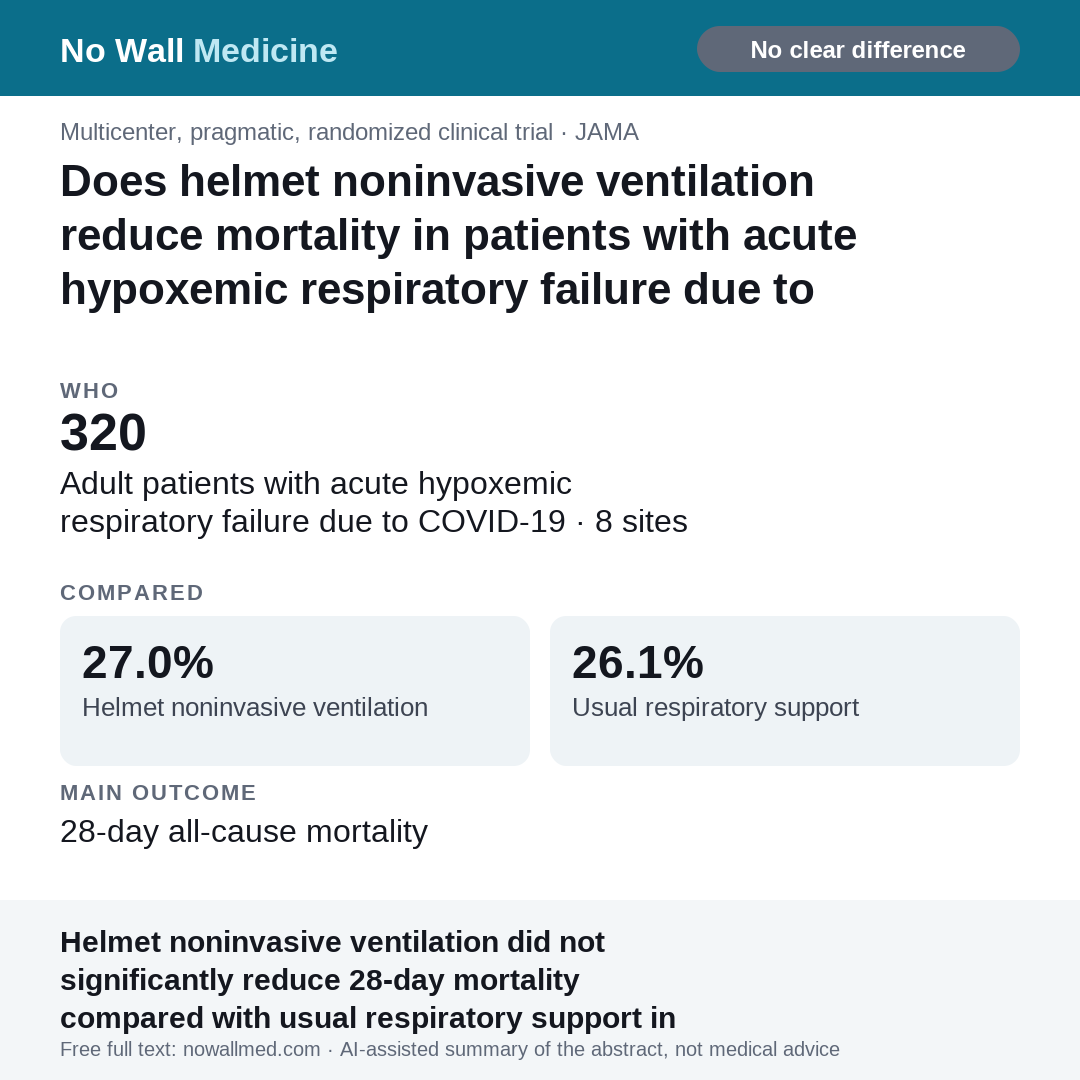
Clinical question: Does helmet noninvasive ventilation reduce mortality in patients with acute hypoxemic respiratory failure due to COVID-19?
Key points
- Researchers randomized 320 adult patients with acute hypoxemic respiratory failure due to COVID-19 to receive either helmet noninvasive ventilation or usual respiratory support.
- The 28-day mortality rate was 27.0% in the helmet group compared to 26.1% in the usual support group, showing no significant difference.
- Endotracheal intubation, which involves a breathing tube, was required by 47.2% of the helmet group and 50.3% of the usual support group.
Limitation the authors note: The authors state that interpretation of the findings is limited by imprecision in the effect estimate, which does not exclude potentially clinically important benefit or harm.
Headline and key points written with AI from the paper’s abstract, with every number checked against it. Read the paper before relying on them.
Was this summary helpful?
Subject terms
Headline, design, result, key points, caveat and citation as plain text.
Cite this article
Arabi YM, Aldekhyl S, Al Qahtani S, et al. Effect of Helmet Noninvasive Ventilation vs Usual Respiratory Support on Mortality Among Patients With Acute Hypoxemic Respiratory Failure Due to COVID-19: The HELMET-COVID Randomized Clinical Trial. JAMA. 2022. doi:10.1001/jama.2022.15599
Spotted a mistake? Suggest a correction