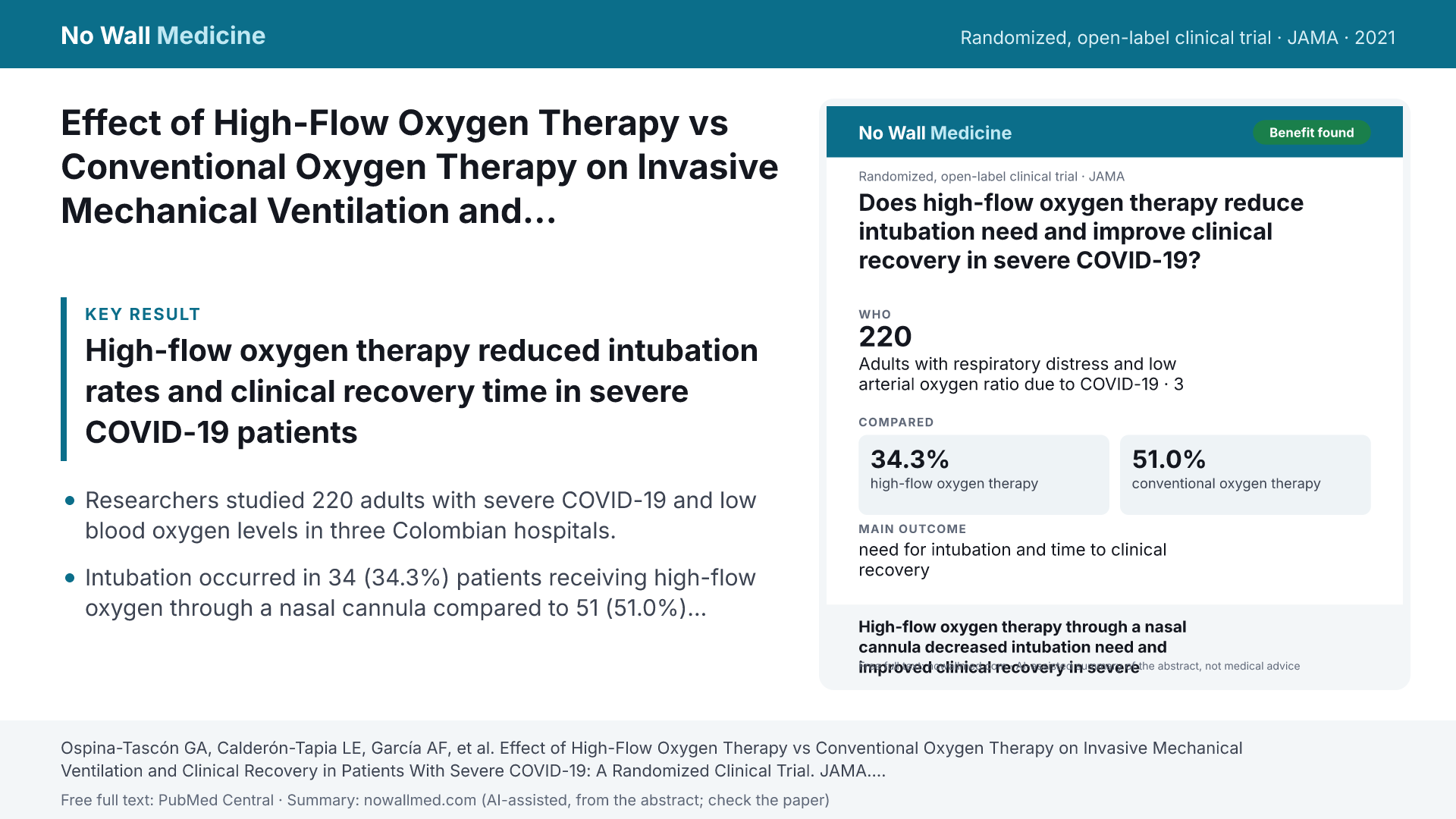
High-flow oxygen therapy reduced intubation rates and clinical recovery time in severe COVID-19 patients
Effect of High-Flow Oxygen Therapy vs Conventional Oxygen Therapy on Invasive Mechanical Ventilation and Clinical Recovery in Patients With Severe COVID-19: A Randomized Clinical Trial
Randomized, open-label clinical trialBenefit found
Does high-flow oxygen therapy reduce intubation need and improve clinical recovery in severe COVID-19?
Who
220
Adults with respiratory distress and low arterial oxygen ratio due to COVID-19 · 3 hospitals in Colombia
Compared
34.3%high-flow oxygen therapy
51.0%conventional oxygen therapy
Main outcome
need for intubation and time to clinical recovery
Result: hazard ratio 0.62 (95% CI 0.39-0.96)
Bottom line: High-flow oxygen therapy through a nasal cannula decreased intubation need and improved clinical recovery in severe COVID-19 patients.
JAMA · 2021-12-07Download image
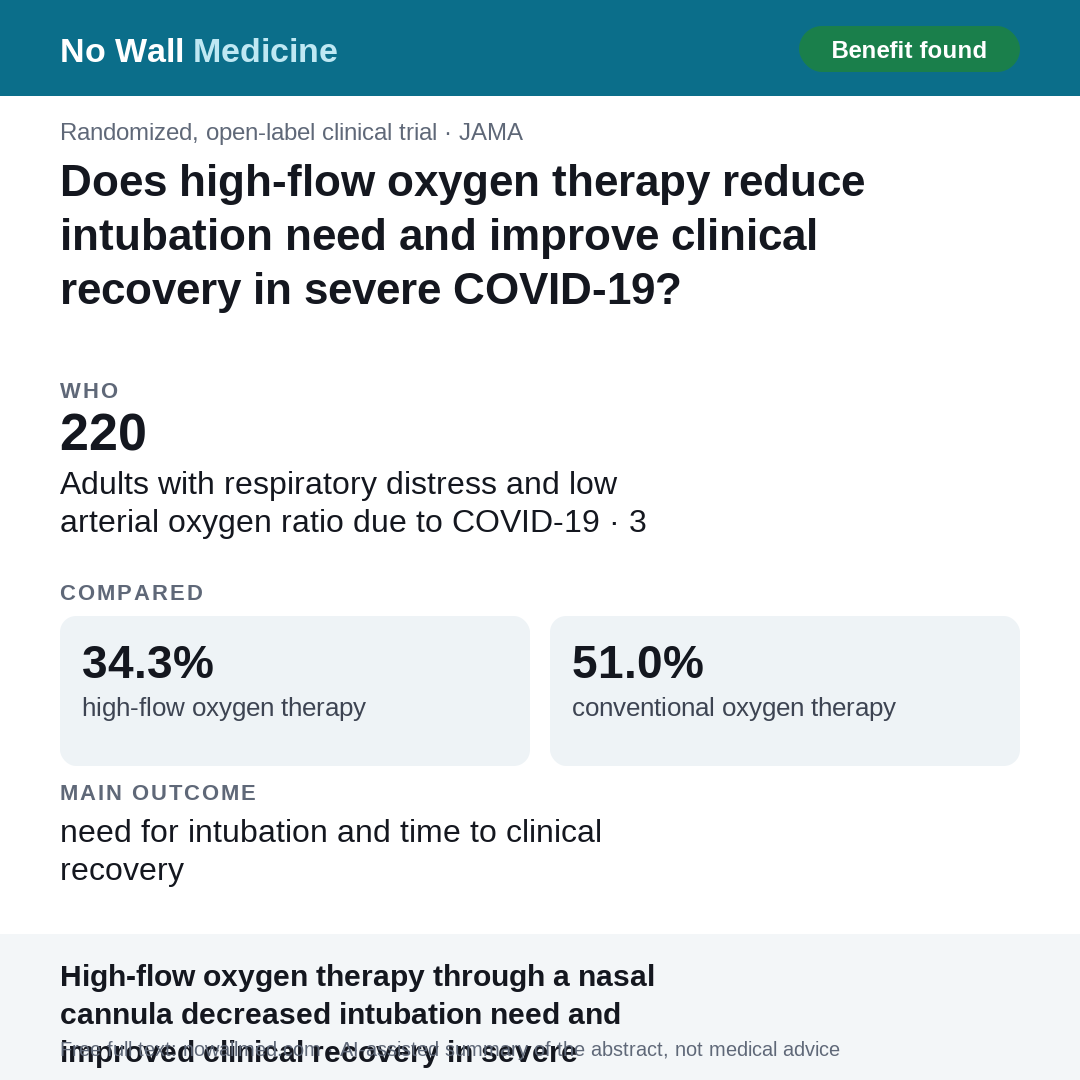
Clinical question: Does high-flow oxygen therapy reduce intubation need and improve clinical recovery in severe COVID-19?
Why it matters: The effect of high-flow oxygen therapy through a nasal cannula compared to conventional oxygen therapy on the need for intubation and clinical recovery in severe COVID-19 was not established.
Key points
- Researchers studied 220 adults with severe COVID-19 and low blood oxygen levels in three Colombian hospitals.
- Intubation occurred in 34 (34.3%) patients receiving high-flow oxygen through a nasal cannula compared to 51 (51.0%) receiving conventional oxygen therapy.
- The median time to clinical recovery was 11 (IQR, 9-14) days for high-flow oxygen versus 14 (IQR, 11-19) days for conventional oxygen therapy.
Headline and key points written with AI from the paper’s abstract, with every number checked against it. Read the paper before relying on them.
Was this summary helpful?
Subject terms
Cite this article
Ospina-Tascón GA, Calderón-Tapia LE, García AF, Zarama V, Gómez-Álvarez F, Álvarez-Saa T. Effect of High-Flow Oxygen Therapy vs Conventional Oxygen Therapy on Invasive Mechanical Ventilation and Clinical Recovery in Patients With Severe COVID-19: A Randomized Clinical Trial. JAMA. 2021. doi:10.1001/jama.2021.20714
Spotted a mistake? Suggest a correction
Top studies every Monday
The week’s key trials and guidelines in your specialties, plus any topics you follow. By email, free.
Get the weekly digest