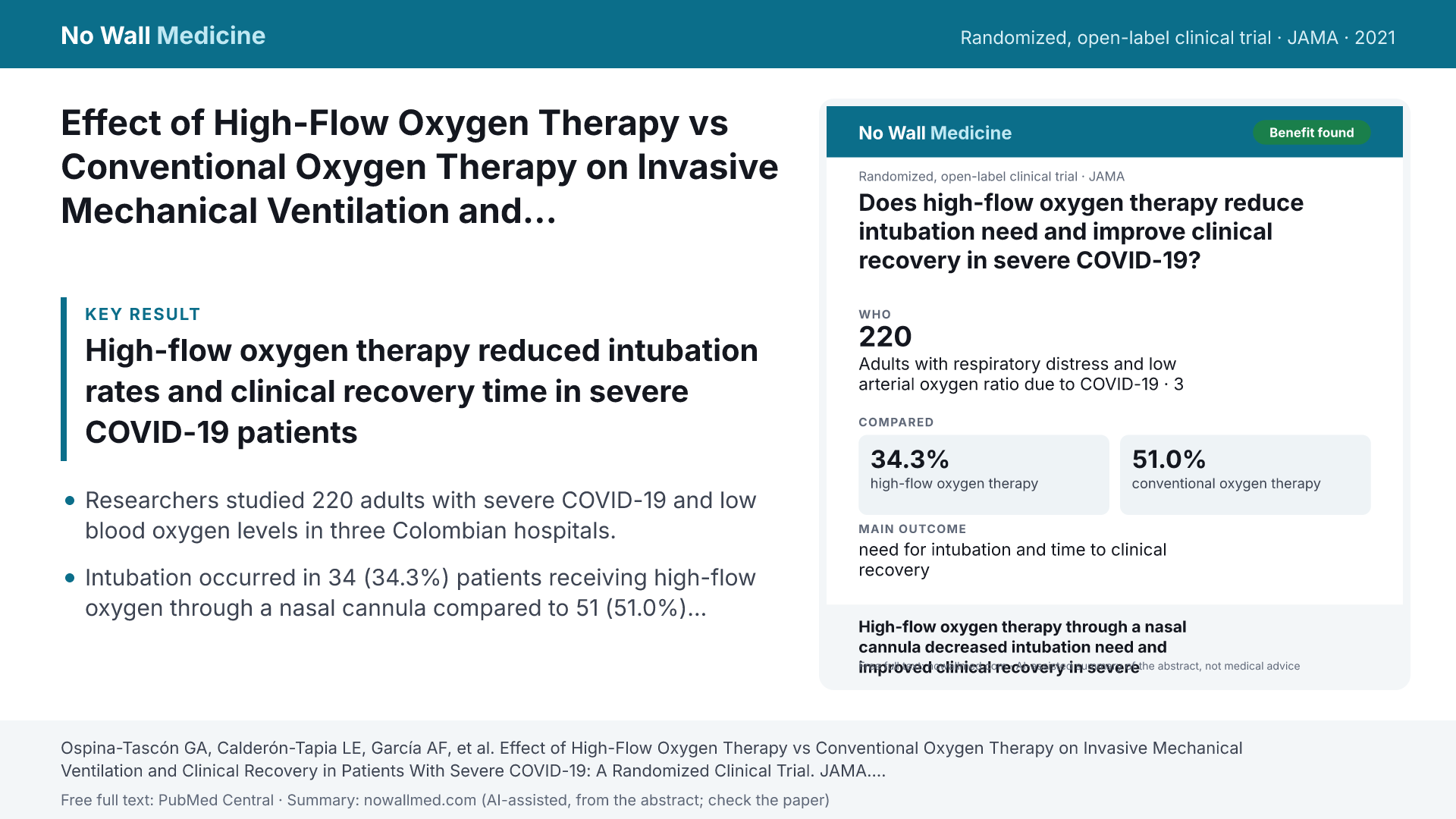
Effect of High-Flow Oxygen Therapy vs Conventional Oxygen Therapy on Invasive Mechanical Ventilation and Clinical Recovery in Patients With Severe COVID-19: A Randomized Clinical Trial
Key result: High-flow oxygen therapy reduced intubation rates and clinical recovery time in severe COVID-19 patients
Key points
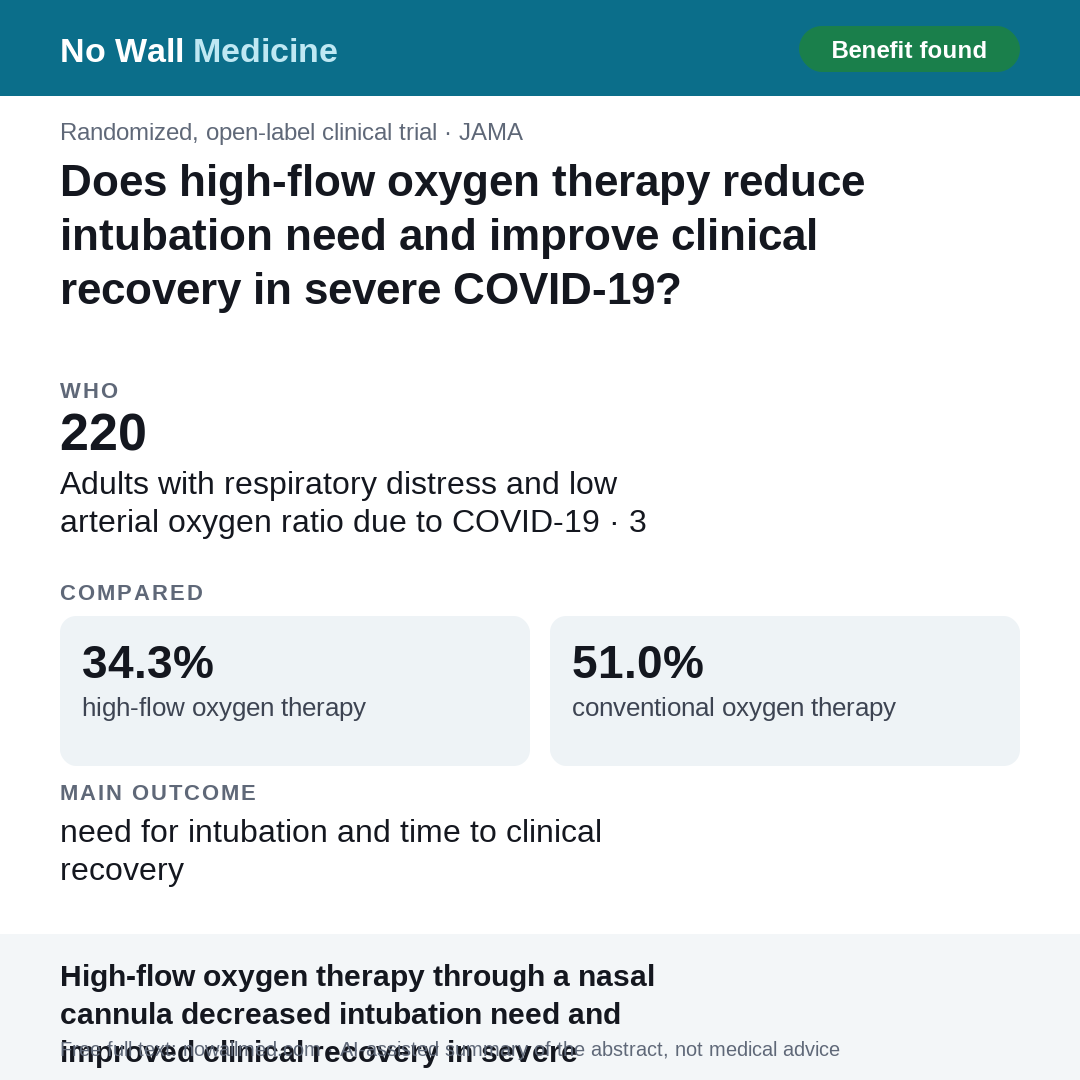
- Researchers studied 220 adults with severe COVID-19 and low blood oxygen levels in three Colombian hospitals.
- Intubation occurred in 34 (34.3%) patients receiving high-flow oxygen through a nasal cannula compared to 51 (51.0%) receiving conventional oxygen therapy.
- The median time to clinical recovery was 11 (IQR, 9-14) days for high-flow oxygen versus 14 (IQR, 11-19) days for conventional oxygen therapy.
Why it matters: The effect of high-flow oxygen therapy through a nasal cannula compared to conventional oxygen therapy on the need for intubation and clinical recovery in severe COVID-19 was not established.
Discussion prompts
- Would these patients look like yours? Who was left out?
- Is the main outcome one that matters to patients?
- Is the difference large enough to change what you do?
Cite: Ospina-Tascón GA, Calderón-Tapia LE, García AF, et al. Effect of High-Flow Oxygen Therapy vs Conventional Oxygen Therapy on Invasive Mechanical Ventilation and Clinical Recovery in Patients With Severe COVID-19: A Randomized Clinical Trial. JAMA. 2021. doi:10.1001/jama.2021.20714
Free full text: PubMed Central · Summary and visual abstract: nowallmed.com/a/effect-of-high-flow-oxygen-therapy-vs-conventional-oxygen-therapy-on-y04vun/ (AI-assisted from the abstract; check the paper before relying on it).