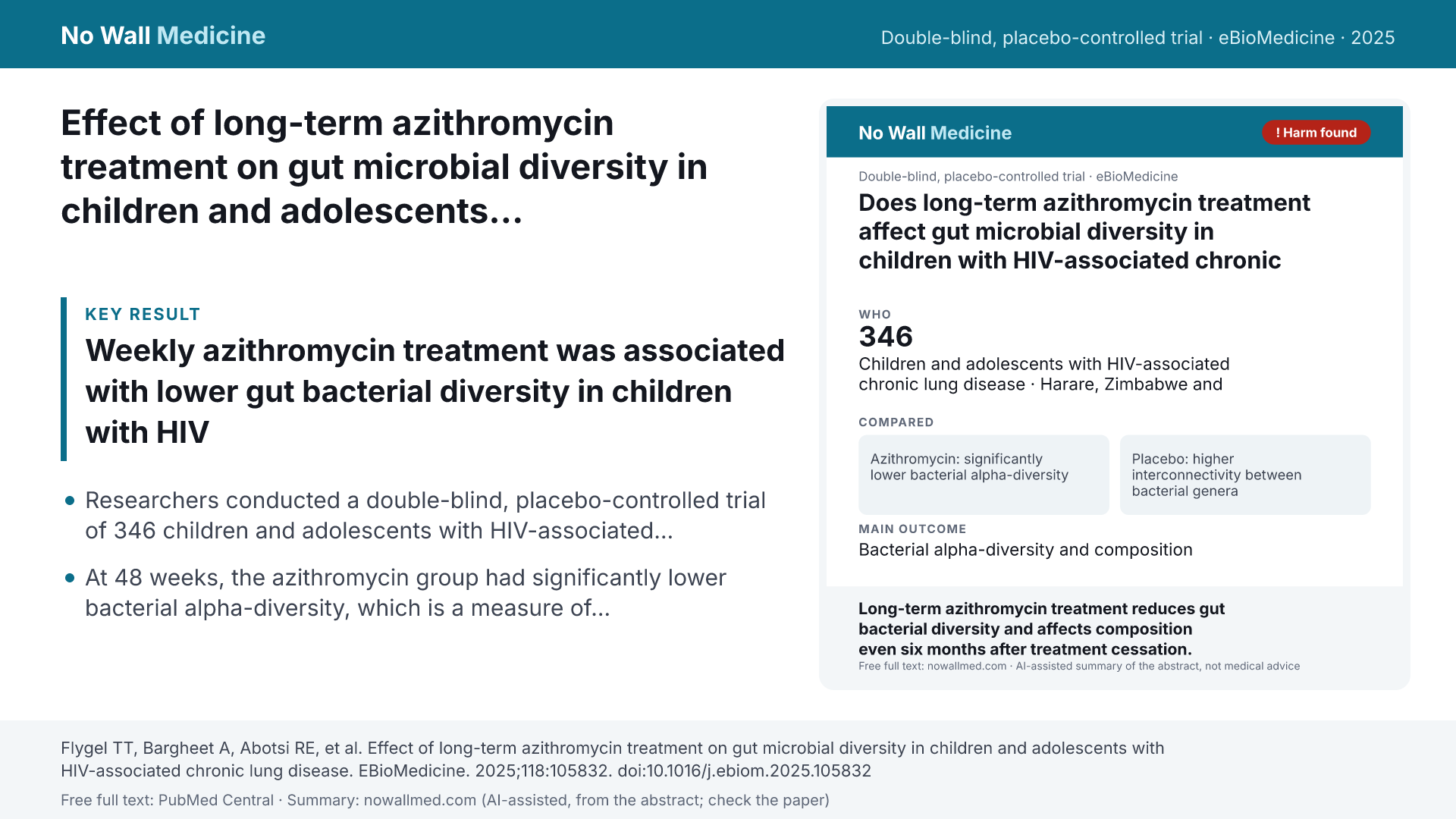
Effect of long-term azithromycin treatment on gut microbial diversity in children and adolescents with HIV-associated chronic lung disease
Key result: Weekly azithromycin treatment was associated with lower gut bacterial diversity in children with HIV
Key points
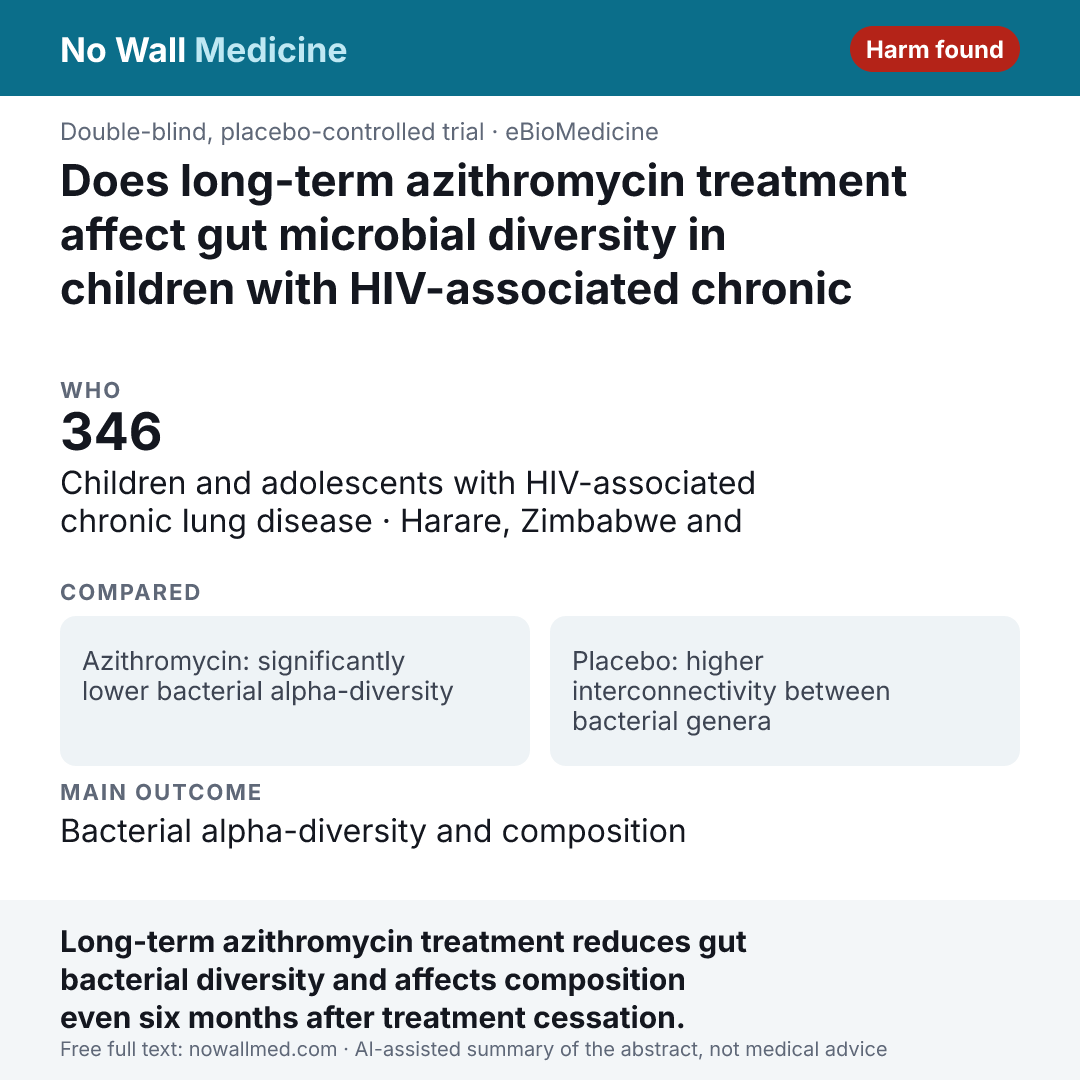
- Researchers conducted a double-blind, placebo-controlled trial of 346 children and adolescents with HIV-associated chronic lung disease in Zimbabwe and Malawi.
- At 48 weeks, the azithromycin group had significantly lower bacterial alpha-diversity, which is a measure of microbial variety, compared to the placebo group.
- The depletion of the bacteria Campylobacter persisted for six months after the treatment ended.
Why it matters: The impact of long-term azithromycin treatment on the gut microbiota and its relationship with inflammatory markers in children with HIV-associated chronic lung disease has not been studied.
Discussion prompts
- Would these patients look like yours? Who was left out?
- Is the main outcome one that matters to patients?
- Is the difference large enough to change what you do?
Cite: Flygel TT, Bargheet A, Abotsi RE, et al. Effect of long-term azithromycin treatment on gut microbial diversity in children and adolescents with HIV-associated chronic lung disease. EBioMedicine. 2025;118:105832. doi:10.1016/j.ebiom.2025.105832
Free full text: PubMed Central · Summary and visual abstract: nowallmed.com/a/effect-of-long-term-azithromycin-treatment-on-gut-microbial-diversity-13ex7lh/ (AI-assisted from the abstract; check the paper before relying on it).