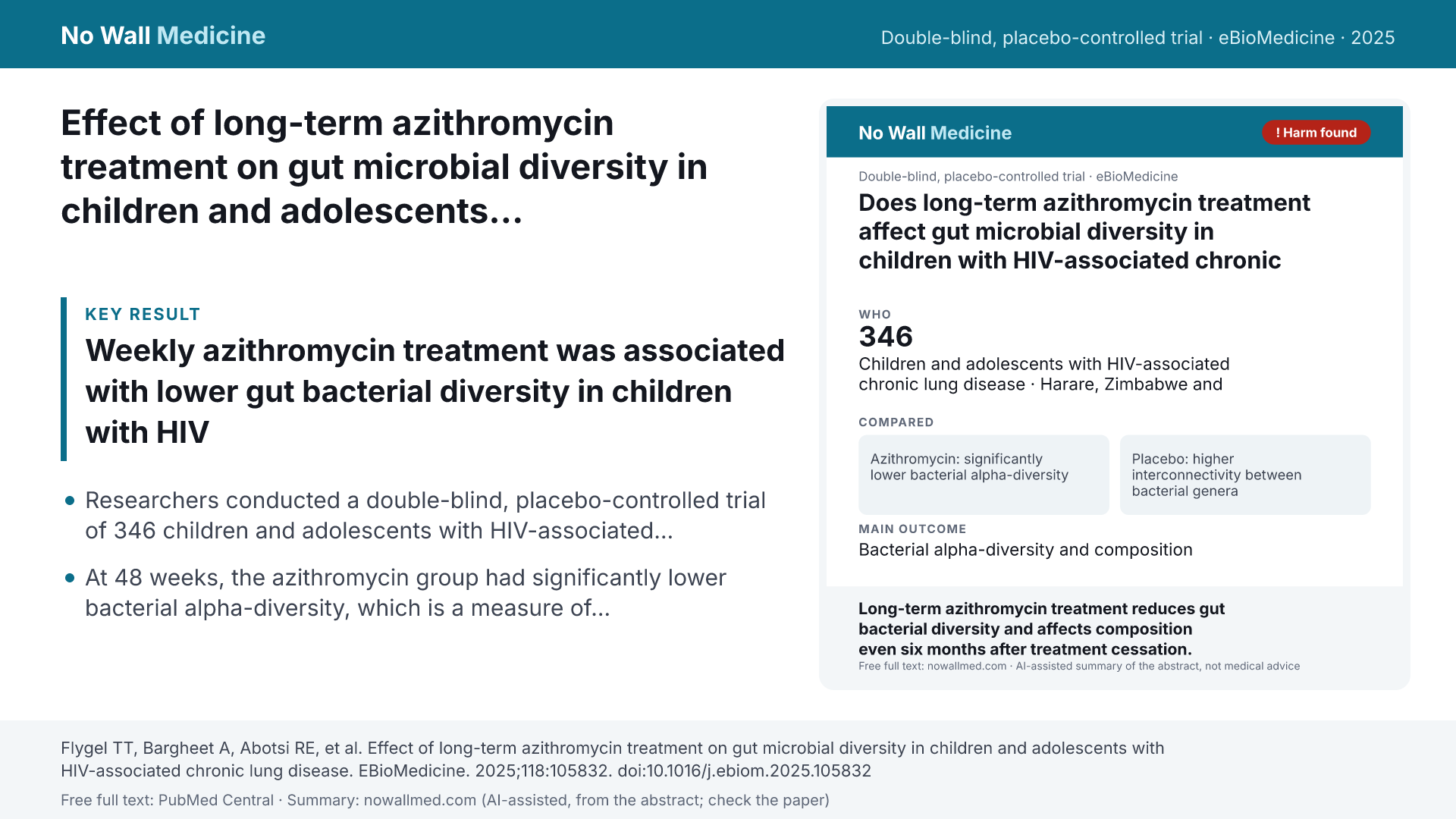
Weekly azithromycin treatment was associated with lower gut bacterial diversity in children with HIV
Effect of long-term azithromycin treatment on gut microbial diversity in children and adolescents with HIV-associated chronic lung disease
Double-blind, placebo-controlled trialHarm found
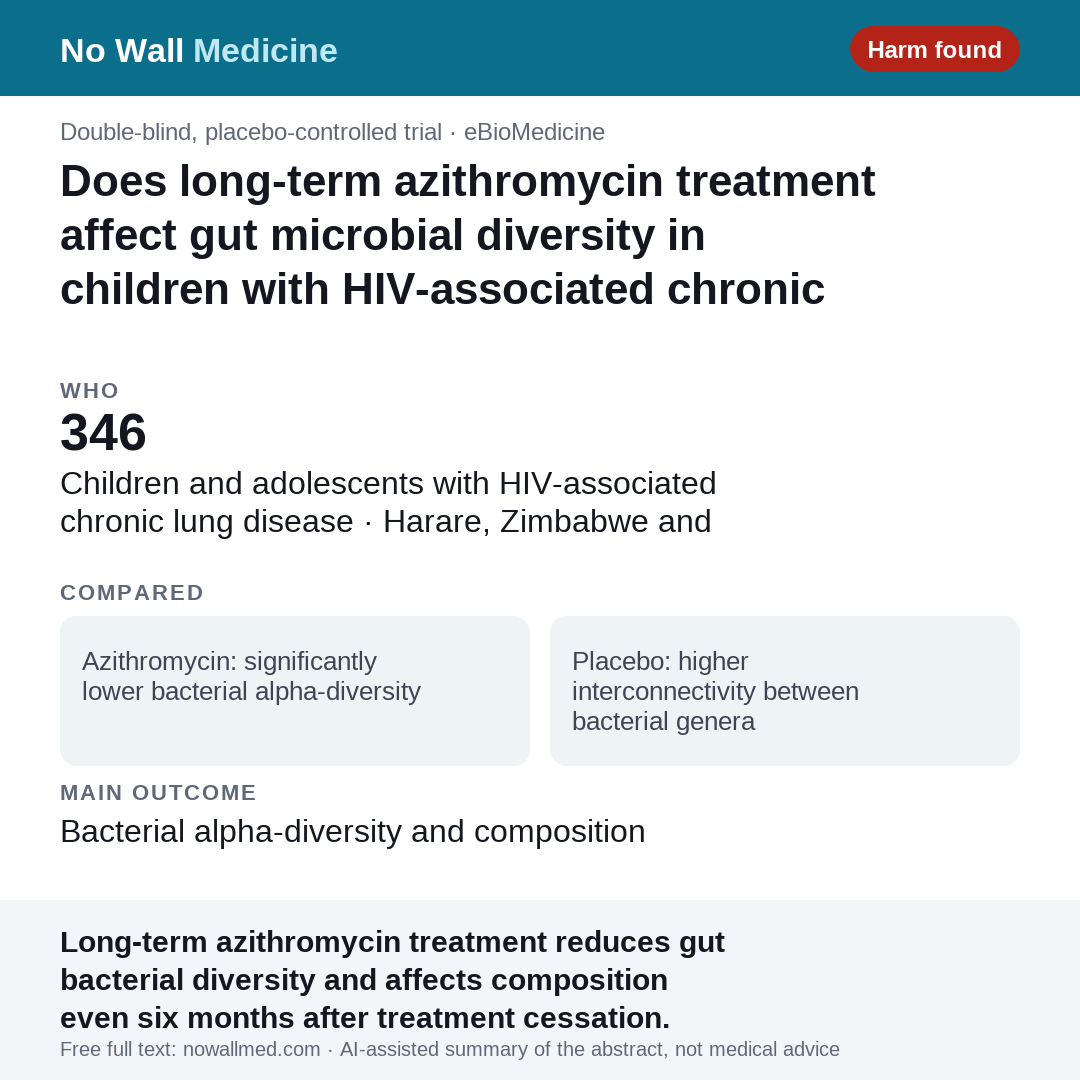
Does long-term azithromycin treatment affect gut microbial diversity in children with HIV-associated chronic lung disease?
Who
346
Children and adolescents with HIV-associated chronic lung disease · Harare, Zimbabwe and Blantyre, Malawi
Compared
Azithromycin: significantly lower bacterial alpha-diversity
Placebo: higher interconnectivity between bacterial genera
Main outcome
Bacterial alpha-diversity and composition
Bottom line: Long-term azithromycin treatment reduces gut bacterial diversity and affects composition even six months after treatment cessation.
Limitation: Consequences of reduced bacterial diversity need further investigation.
Funded by: Norwegian Research Council and Helse Nord
eBioMedicine · 2025-07-05Download image
Clinical question: Does long-term azithromycin treatment affect gut microbial diversity in children with HIV-associated chronic lung disease?
Why it matters: The impact of long-term azithromycin treatment on the gut microbiota and its relationship with inflammatory markers in children with HIV-associated chronic lung disease has not been studied.
Key points
- Researchers conducted a double-blind, placebo-controlled trial of 346 children and adolescents with HIV-associated chronic lung disease in Zimbabwe and Malawi.
- At 48 weeks, the azithromycin group had significantly lower bacterial alpha-diversity, which is a measure of microbial variety, compared to the placebo group.
- The depletion of the bacteria Campylobacter persisted for six months after the treatment ended.
Headline and key points written with AI from the paper’s abstract, with every number checked against it. Read the paper before relying on them.
Was this summary helpful?
Subject terms
Cite this article
Flygel TT, Bargheet A, Abotsi RE, et al. Effect of long-term azithromycin treatment on gut microbial diversity in children and adolescents with HIV-associated chronic lung disease. eBioMedicine. 2025. doi:10.1016/j.ebiom.2025.105832
Spotted a mistake? Suggest a correction