Azithromycin reduced microbial diversity in preterm infants' gut microbiome
The impact of prophylactic azithromycin on the developing preterm gut microbiome and resistome
Randomized, double-blind trialHarm found
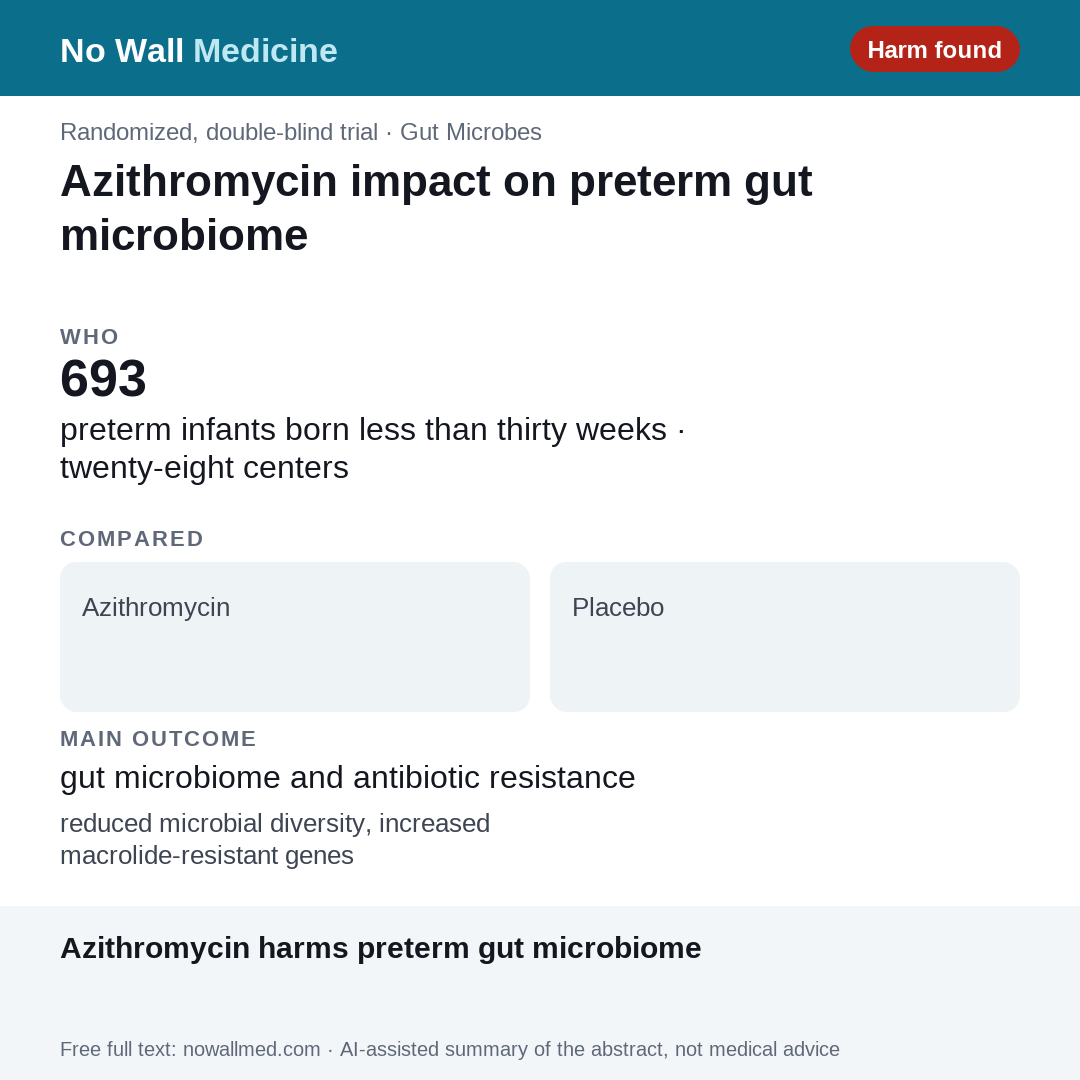
Azithromycin impact on preterm gut microbiome
Who
693
preterm infants born less than thirty weeks · twenty-eight centers
Compared
Azithromycin
Placebo
Main outcome
gut microbiome and antibiotic resistance
Result: reduced microbial diversity, increased macrolide-resistant genes
Bottom line: Azithromycin harms preterm gut microbiome
Gut Microbes · 2026-10-15Download image
Why it matters: Doctors have had little understanding of how early-life antibiotic exposure affects preterm gut microbiome
Key points
- Researchers studied 693 preterm infants in a 28-center trial comparing azithromycin to placebo.
- Azithromycin reduced health-associated Bifidobacterium and increased pathobionts.
- Azithromycin increased macrolide-resistant genes, including erm(C), which persisted for 21 days.
Limitation the authors note: The abstract does not state a specific limitation mentioned by the authors
Headline and key points written with AI from the paper’s abstract, with every number checked against it. Read the paper before relying on them.
Topics
Spotted a mistake? Suggest a correction