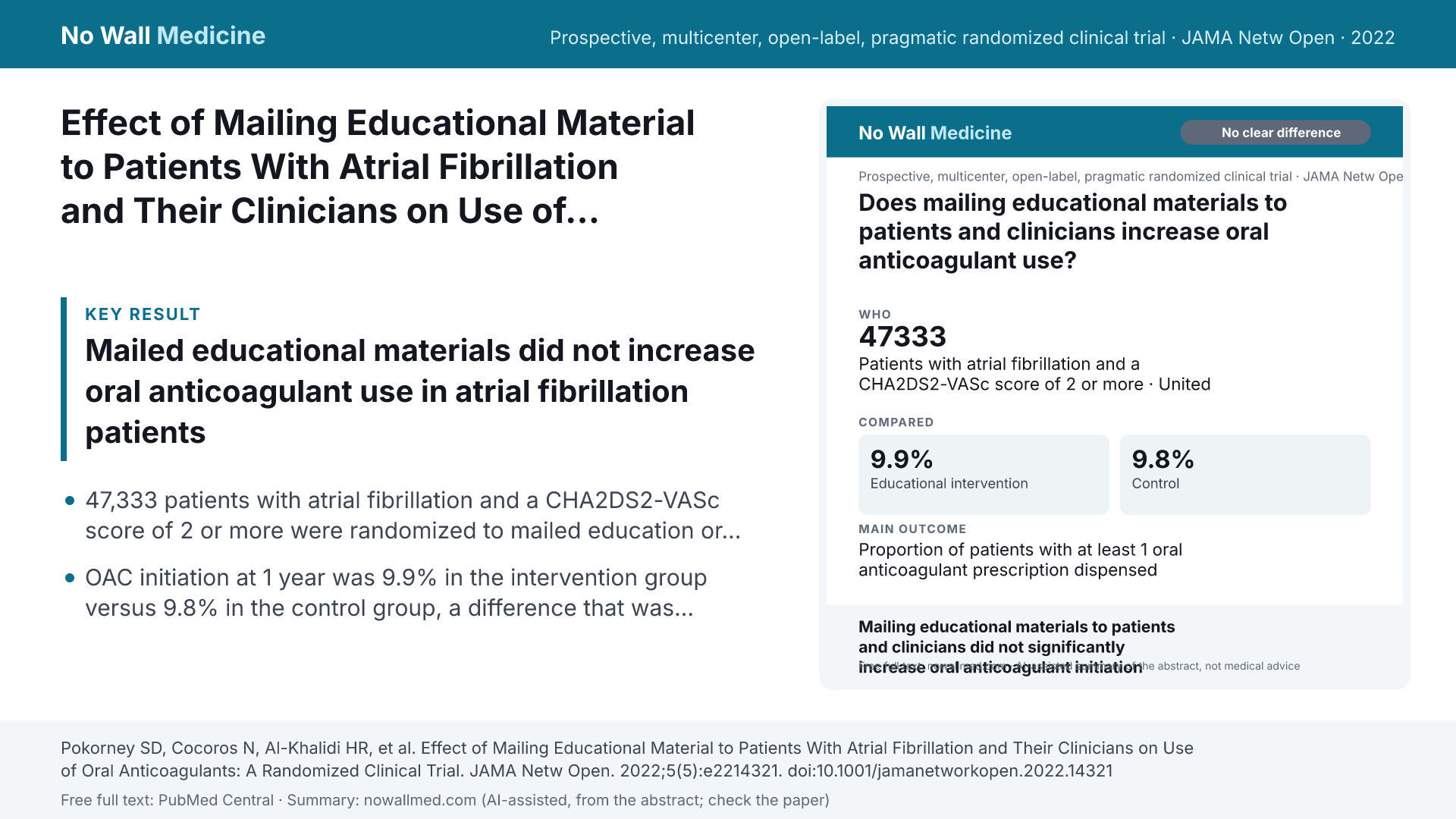
Effect of Mailing Educational Material to Patients With Atrial Fibrillation and Their Clinicians on Use of Oral Anticoagulants: A Randomized Clinical Trial
Key result: Mailed educational materials did not increase oral anticoagulant use in atrial fibrillation patients
Key points
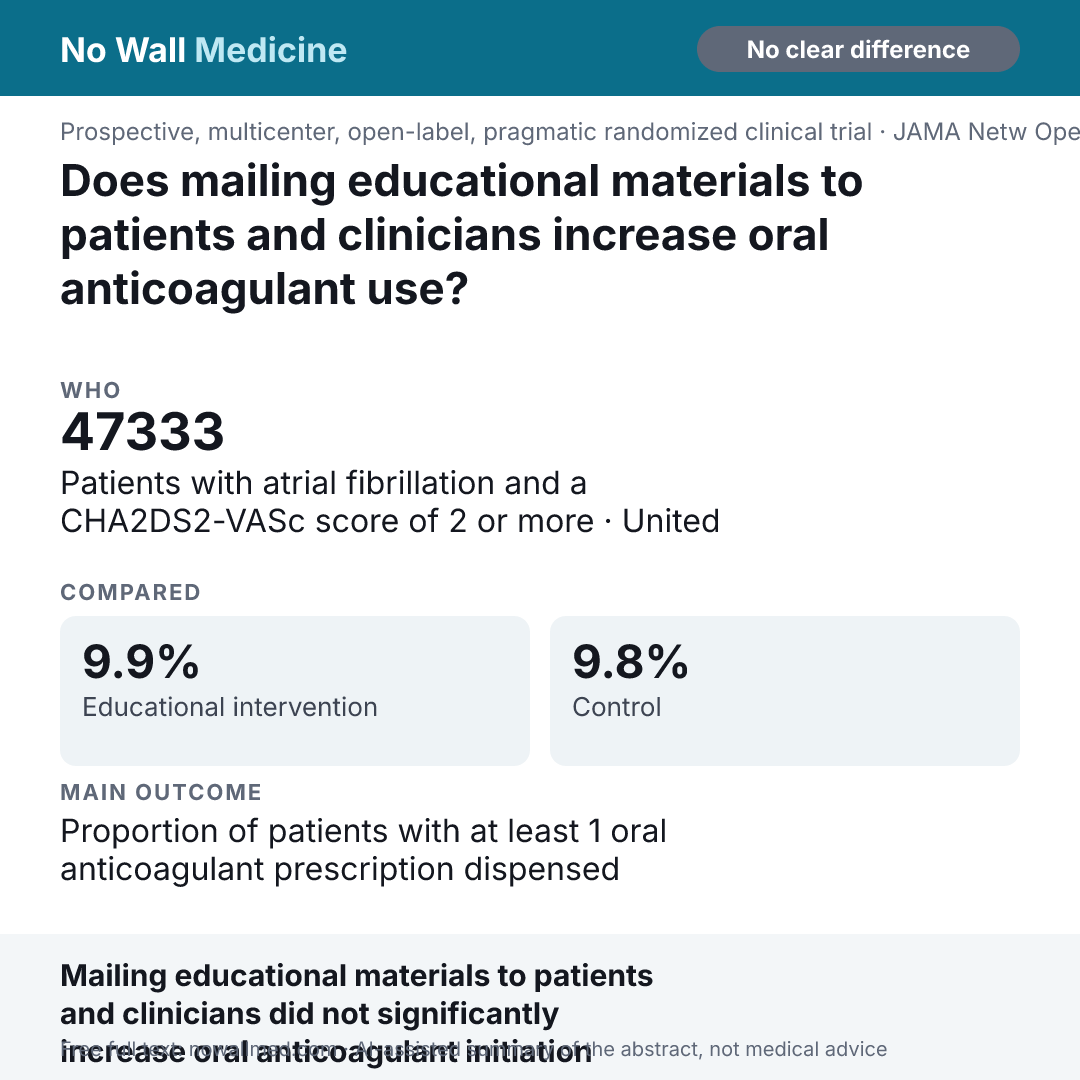
- 47,333 patients with atrial fibrillation and a CHA2DS2-VASc score of 2 or more were randomized to mailed education or usual care.
- OAC initiation at 1 year was 9.9% in the intervention group versus 9.8% in the control group, a difference that was not statistically significant.
- The study found no clinically meaningful or statistically significant difference in oral anticoagulant prescription rates between the two groups.
Why it matters: Only about half of eligible atrial fibrillation patients receive oral anticoagulants despite guideline recommendations for stroke prevention.
Discussion prompts
- Would these patients look like yours? Who was left out?
- Is the main outcome one that matters to patients?
- Is the difference large enough to change what you do?
Cite: Pokorney SD, Cocoros N, Al-Khalidi HR, et al. Effect of Mailing Educational Material to Patients With Atrial Fibrillation and Their Clinicians on Use of Oral Anticoagulants: A Randomized Clinical Trial. JAMA Netw Open. 2022;5(5):e2214321. doi:10.1001/jamanetworkopen.2022.14321
Free full text: PubMed Central · Summary and visual abstract: nowallmed.com/a/effect-of-mailing-educational-material-to-patients-with-atrial-1fkdu9p/ (AI-assisted from the abstract; check the paper before relying on it).