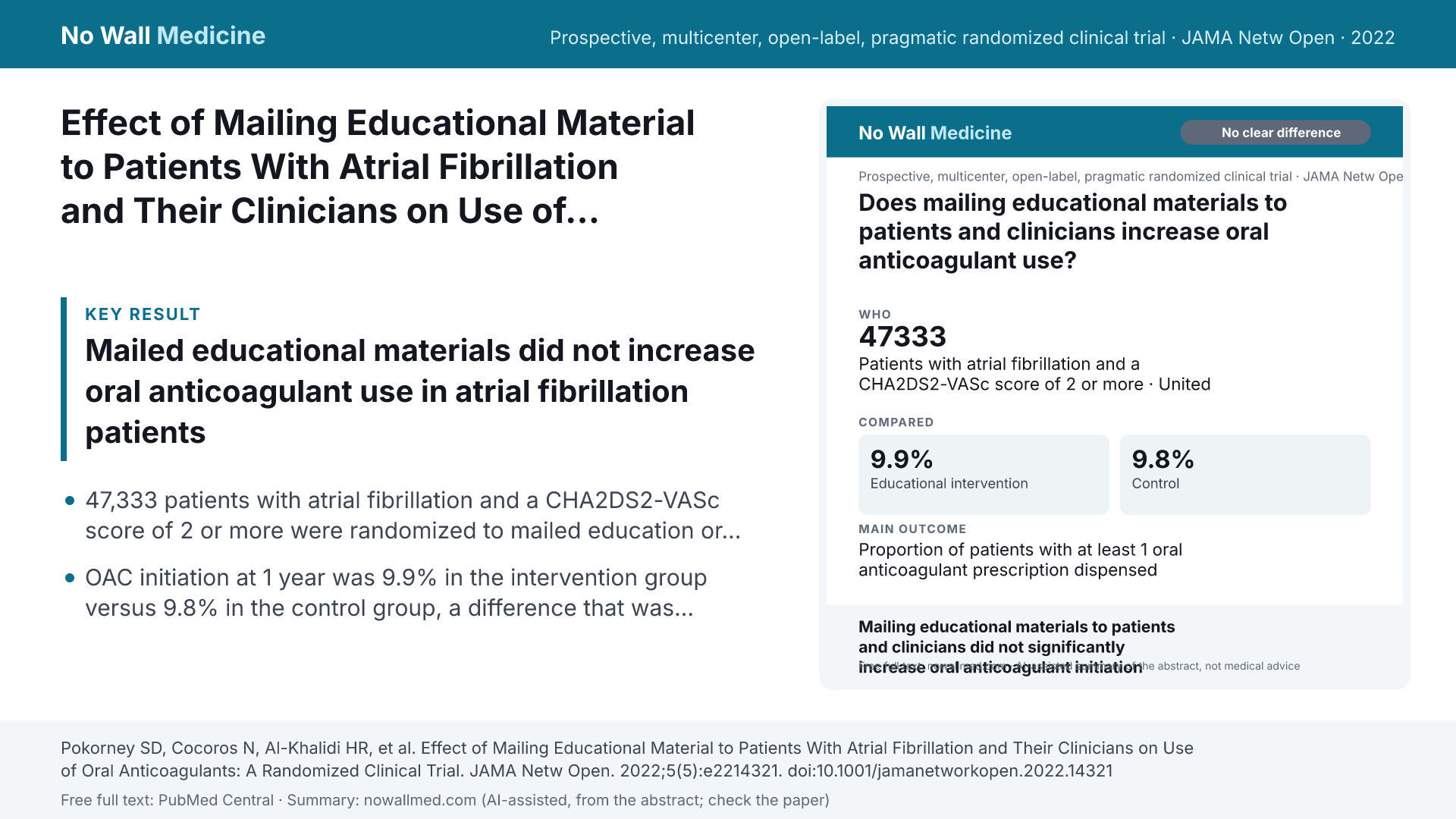
Mailed educational materials did not increase oral anticoagulant use in atrial fibrillation patients
Effect of Mailing Educational Material to Patients With Atrial Fibrillation and Their Clinicians on Use of Oral Anticoagulants: A Randomized Clinical Trial
Prospective, multicenter, open-label, pragmatic randomized clinical trialNo clear difference
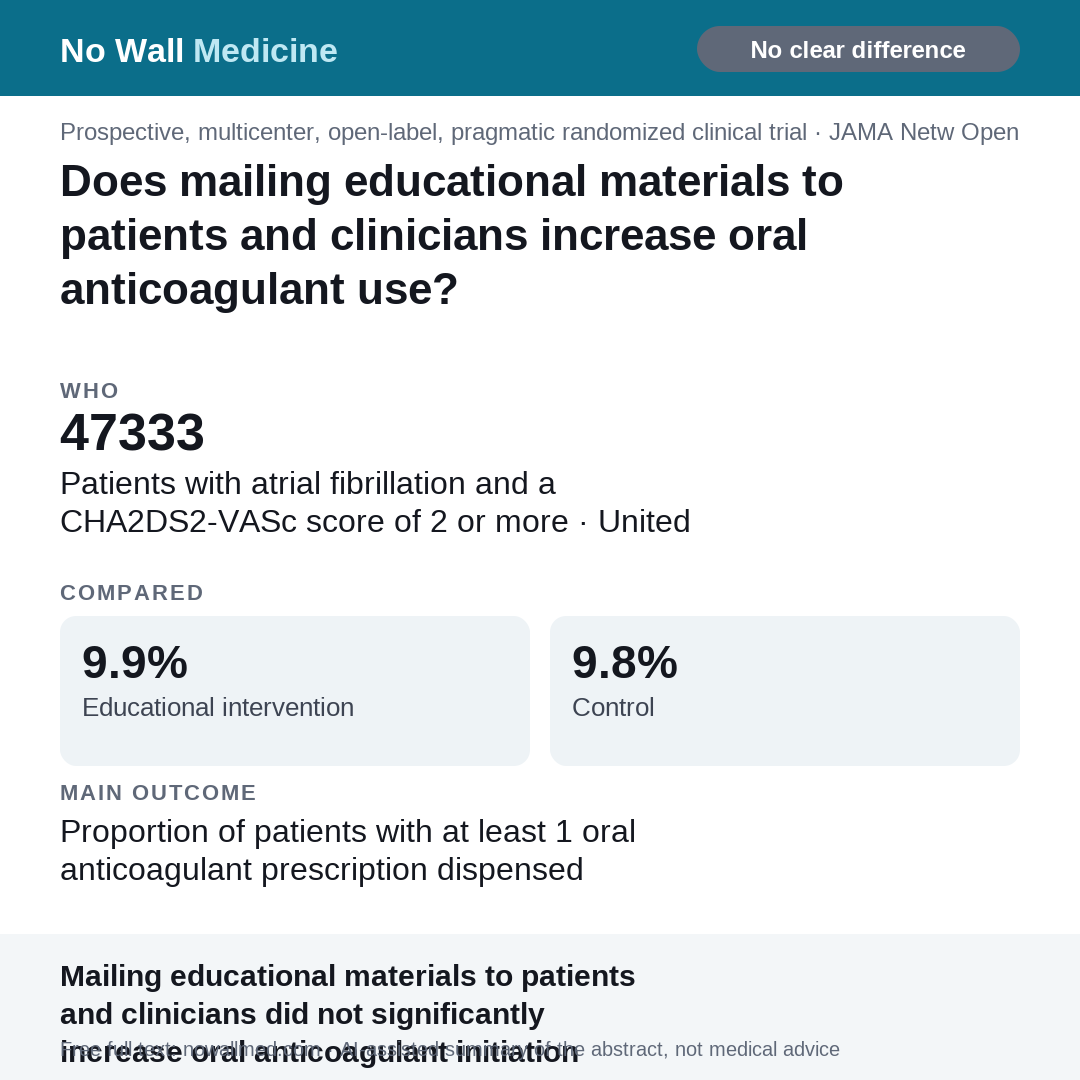
Does mailing educational materials to patients and clinicians increase oral anticoagulant use?
Who
47333
Patients with atrial fibrillation and a CHA2DS2-VASc score of 2 or more · United States health plans
Compared
9.9%Educational intervention
9.8%Control
Main outcome
Proportion of patients with at least 1 oral anticoagulant prescription dispensed
Result: adjusted OR, 1.01 (95% CI, 0.95-1.07)
Bottom line: Mailing educational materials to patients and clinicians did not significantly increase oral anticoagulant initiation rates.
JAMA Netw Open · 2022-05-02Download image
Clinical question: Does mailing educational materials to patients and clinicians increase oral anticoagulant use?
Why it matters: Only about half of eligible atrial fibrillation patients receive oral anticoagulants despite guideline recommendations for stroke prevention.
Key points
- 47,333 patients with atrial fibrillation and a CHA2DS2-VASc score of 2 or more were randomized to mailed education or usual care.
- OAC initiation at 1 year was 9.9% in the intervention group versus 9.8% in the control group, a difference that was not statistically significant.
- The study found no clinically meaningful or statistically significant difference in oral anticoagulant prescription rates between the two groups.
Headline and key points written with AI from the paper’s abstract, with every number checked against it. Read the paper before relying on them.
Was this summary helpful?
Subject terms
Cite this article
Pokorney SD, Cocoros N, Al-Khalidi HR, et al. Effect of Mailing Educational Material to Patients With Atrial Fibrillation and Their Clinicians on Use of Oral Anticoagulants: A Randomized Clinical Trial. JAMA Netw Open. 2022. doi:10.1001/jamanetworkopen.2022.14321
Spotted a mistake? Suggest a correction