Effect of Microaxial Flow Pump on Hemodynamics in STEMI-Related Cardiogenic Shock
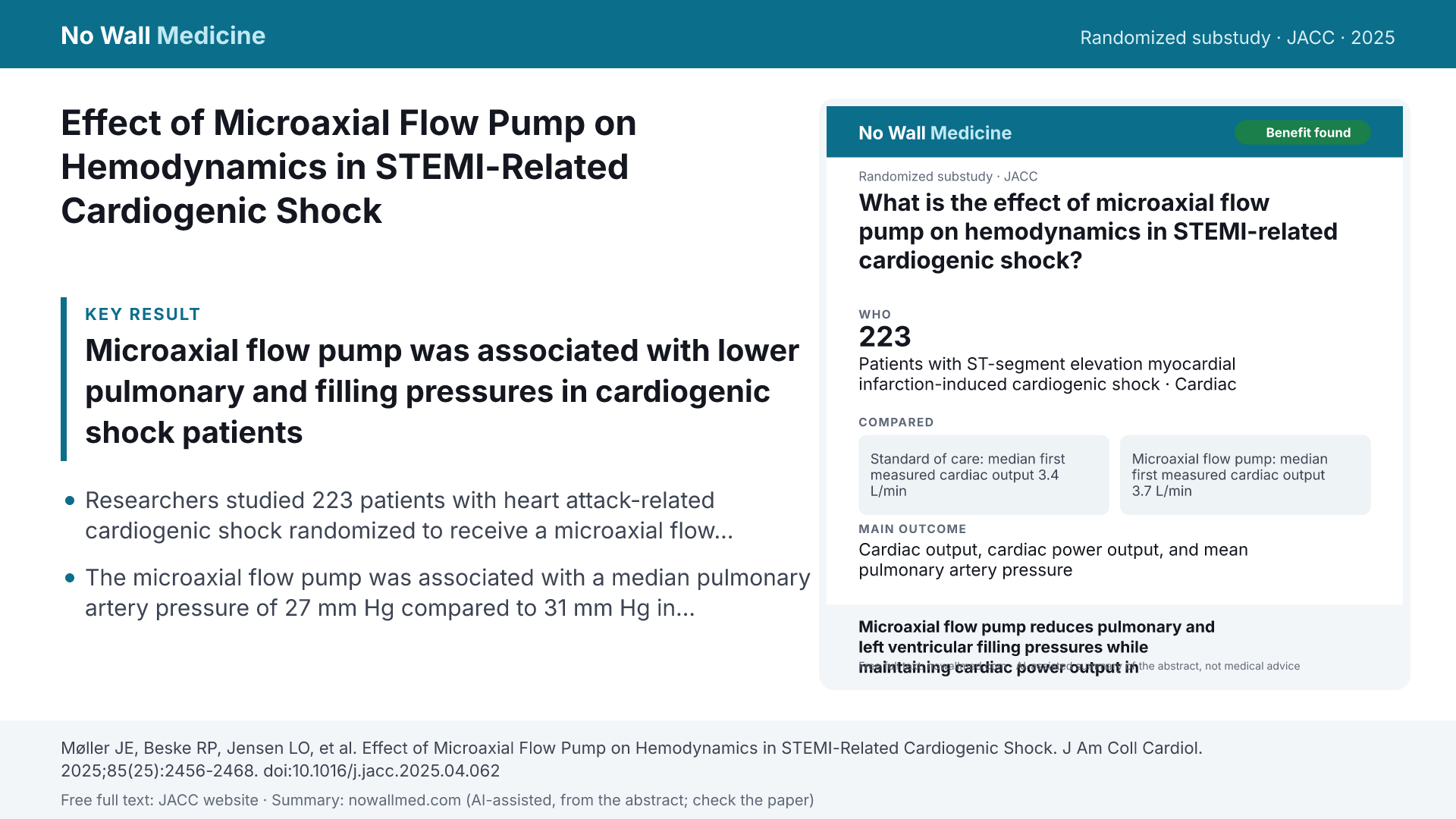
Key result: Microaxial flow pump was associated with lower pulmonary and filling pressures in cardiogenic shock patients
Randomized substudyBenefit found
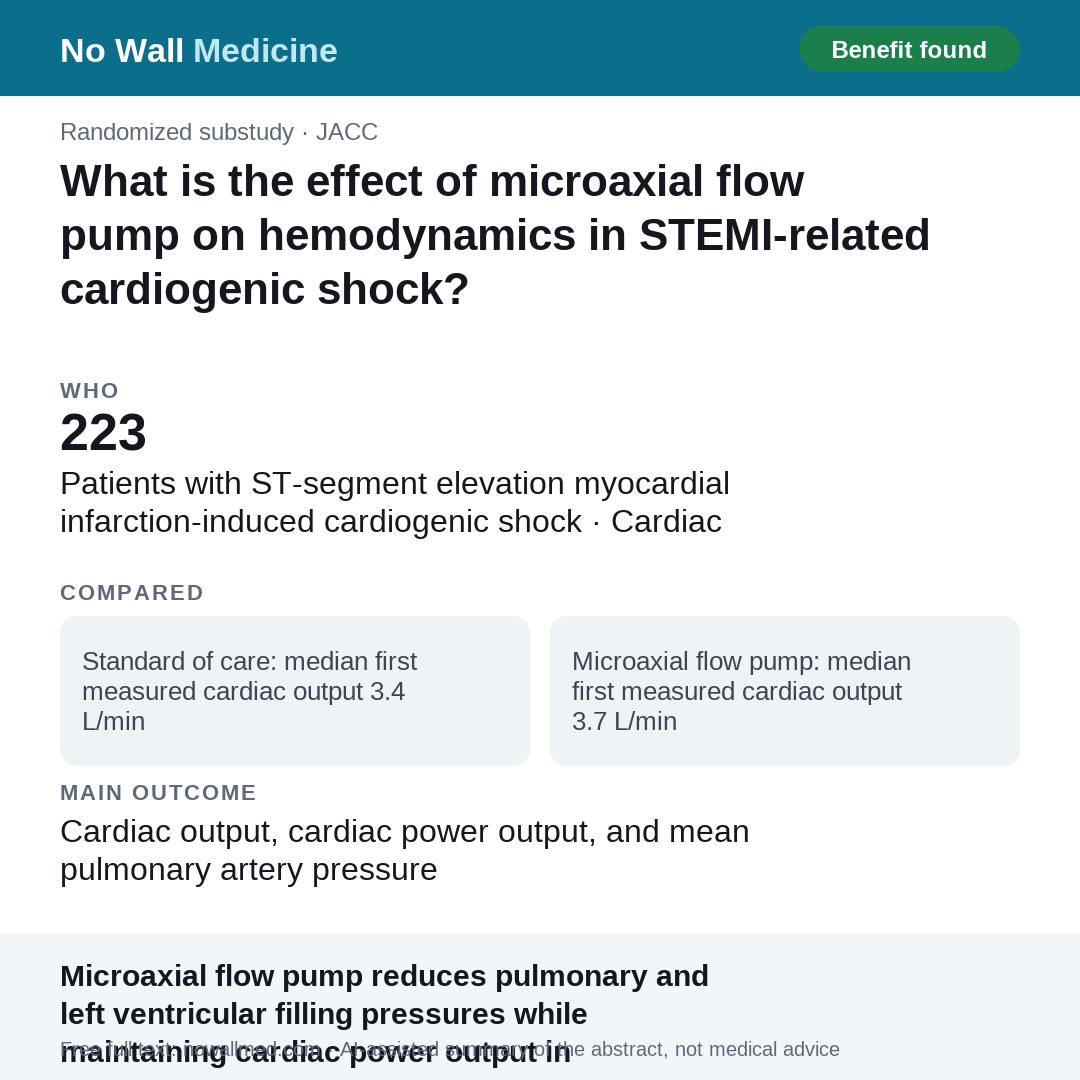
What is the effect of microaxial flow pump on hemodynamics in STEMI-related cardiogenic shock?
Who
223
Patients with ST-segment elevation myocardial infarction-induced cardiogenic shock · Cardiac intensive care unit
Compared
Standard of care: median first measured cardiac output 3.4 L/min
Microaxial flow pump: median first measured cardiac output 3.7 L/min
Main outcome
Cardiac output, cardiac power output, and mean pulmonary artery pressure
Result: median first measured cardiac power output 0.68 W (95% CI: 0.51-0.85 W)
Bottom line: Microaxial flow pump reduces pulmonary and left ventricular filling pressures while maintaining cardiac power output in cardiogenic shock.
JACC · 2025-06-26Download image
Key points
- Researchers studied 223 patients with heart attack-related cardiogenic shock randomized to receive a microaxial flow pump or standard care.
- The microaxial flow pump was associated with a median pulmonary artery pressure of 27 mm Hg compared to 31 mm Hg in standard care (P < 0.001).
- The pump was associated with a median pulmonary capillary wedge pressure of 18 mm Hg versus 22 mm Hg in the control group (P < 0.001).
Discussion prompts
- Would these patients look like yours? Who was left out?
- Is the main outcome one that matters to patients?
- Is the difference large enough to change what you do?
Cite: Møller JE, Beske RP, Jensen LO, et al. Effect of Microaxial Flow Pump on Hemodynamics in STEMI-Related Cardiogenic Shock. JACC. 2025. doi:10.1016/j.jacc.2025.04.062
Free full text: JACC website · Summary and visual abstract: nowallmed.com/a/effect-of-microaxial-flow-pump-on-hemodynamics-in-stemi-related-un313d/ (AI-assisted from the abstract; check the paper before relying on it).