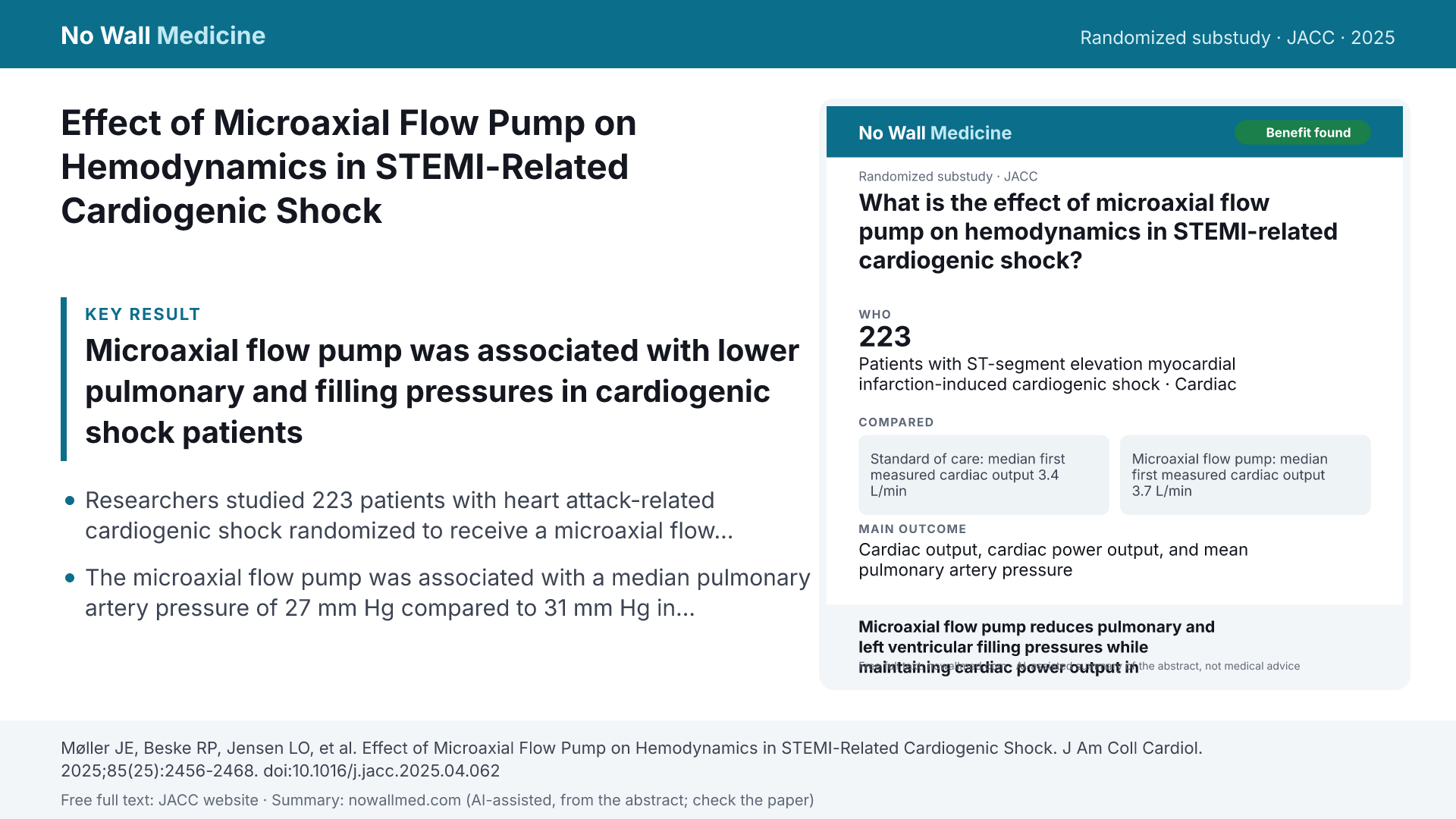
Microaxial flow pump was associated with lower pulmonary and filling pressures in cardiogenic shock patients
Effect of Microaxial Flow Pump on Hemodynamics in STEMI-Related Cardiogenic Shock
Randomized substudyBenefit found
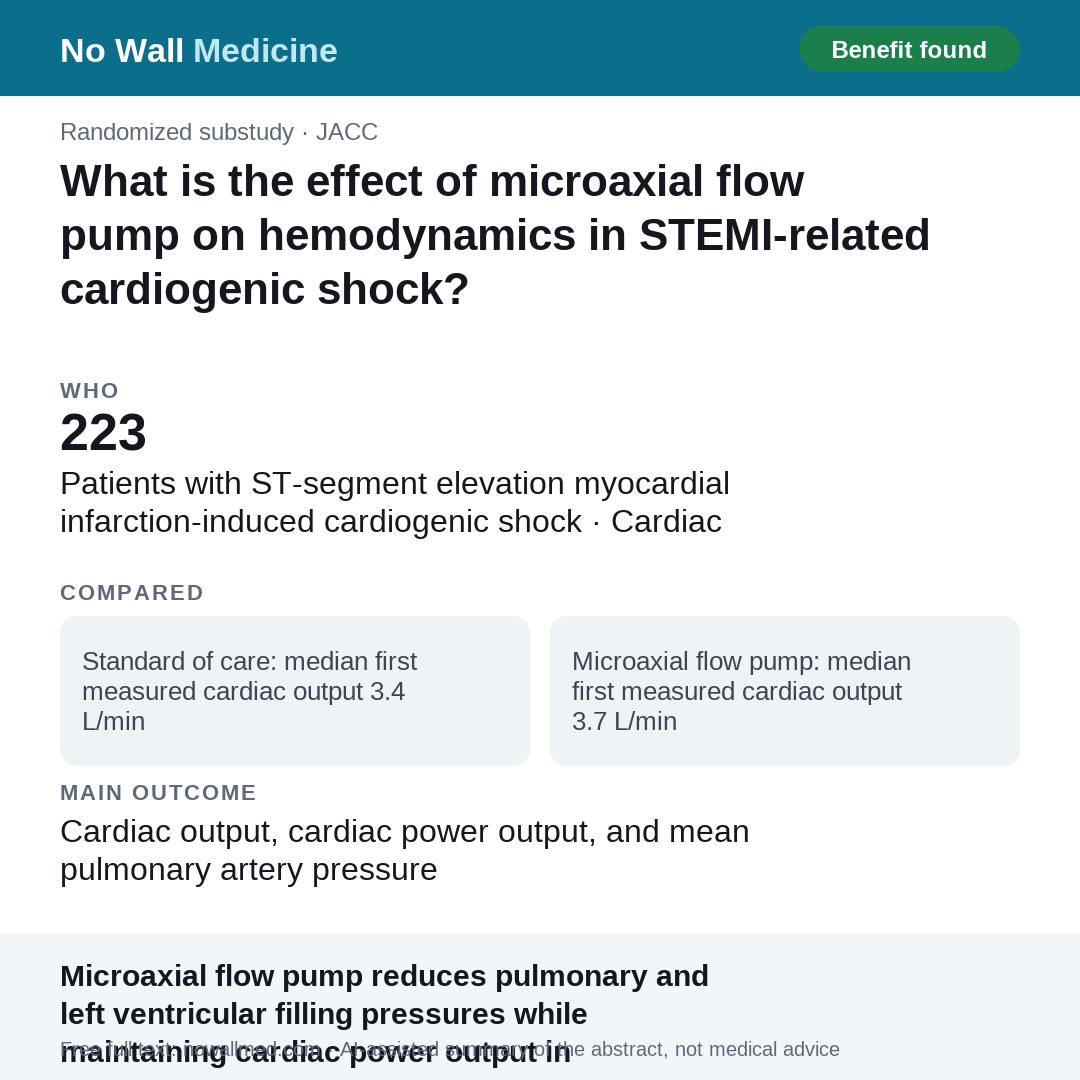
What is the effect of microaxial flow pump on hemodynamics in STEMI-related cardiogenic shock?
Who
223
Patients with ST-segment elevation myocardial infarction-induced cardiogenic shock · Cardiac intensive care unit
Compared
Standard of care: median first measured cardiac output 3.4 L/min
Microaxial flow pump: median first measured cardiac output 3.7 L/min
Main outcome
Cardiac output, cardiac power output, and mean pulmonary artery pressure
Result: median first measured cardiac power output 0.68 W (95% CI: 0.51-0.85 W)
Bottom line: Microaxial flow pump reduces pulmonary and left ventricular filling pressures while maintaining cardiac power output in cardiogenic shock.
JACC · 2025-06-26Download image
Clinical question: What is the effect of microaxial flow pump on hemodynamics in STEMI-related cardiogenic shock?
Why it matters: The impact of microaxial flow pumps on cardiac output, cardiac power output, and pulmonary artery pressure in patients with heart attack-induced cardiogenic shock is not fully understood.
Key points
- Researchers studied 223 patients with heart attack-related cardiogenic shock randomized to receive a microaxial flow pump or standard care.
- The microaxial flow pump was associated with a median pulmonary artery pressure of 27 mm Hg compared to 31 mm Hg in standard care (P < 0.001).
- The pump was associated with a median pulmonary capillary wedge pressure of 18 mm Hg versus 22 mm Hg in the control group (P < 0.001).
Headline and key points written with AI from the paper’s abstract, with every number checked against it. Read the paper before relying on them.
Was this summary helpful?
Subject terms
Cite this article
Møller JE, Beske RP, Jensen LO, Eiskjær H, Mangner N, Polzin A. Effect of Microaxial Flow Pump on Hemodynamics in STEMI-Related Cardiogenic Shock. JACC. 2025. doi:10.1016/j.jacc.2025.04.062
Spotted a mistake? Suggest a correction
Top studies every Monday
The week’s key trials and guidelines in your specialties, plus any topics you follow. By email, free.
Get the weekly digest