Microaxial flow pump use was associated with lower medication needs and faster lactate normalization in cardiogenic shock
Microaxial Flow Pump Hemodynamic and Metabolic Effects in Infarct-Related Cardiogenic Shock: A Substudy of the DanGer Shock Randomized Clinical Trial
Open-label randomized clinical trial substudyBenefit found
Does microaxial flow pump reduce pharmacological support without compromising hemodynamics in STEMI-induced cardiogenic shock?
Who
324
Patients with ST-elevation myocardial infarction and cardiogenic shock · 14 heart centers in Denmark, Germany, and the UK
Compared
Microaxial flow pump: lower vasoactive-inotropic score
Standard care
Main outcome
Hemodynamic status, arterial lactate concentration, and vasoactive-inotropic score
Result: mean difference in arterial lactate 1.3 mmol/L (95% CI, 0.7-1.9 mmol/L)
Bottom line: Microaxial flow pump reduces vasopressor and inotropic medication use and achieves faster lactate normalization in STEMI-induced cardiogenic shock.
JAMA Cardiol · 2024-10-27Download image
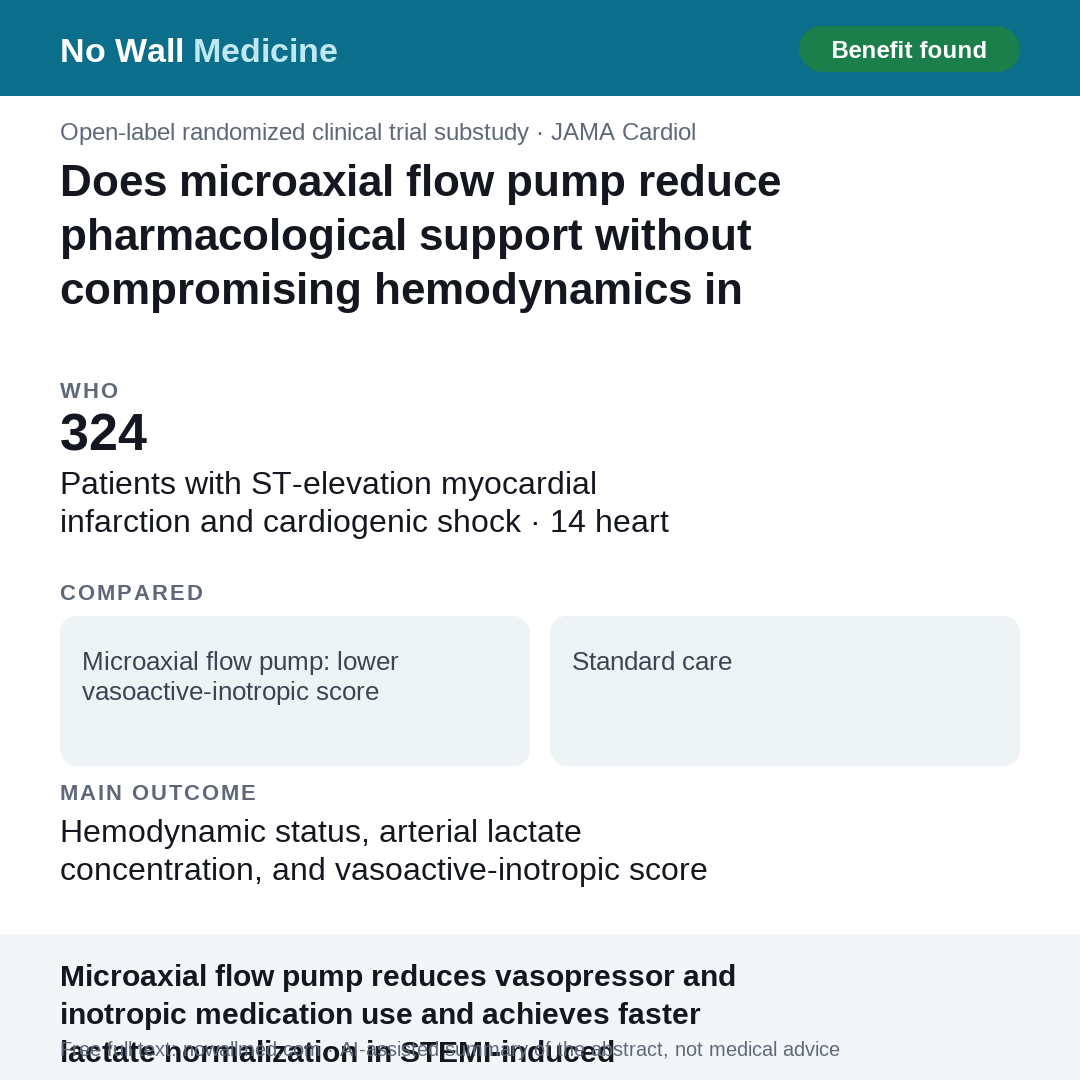
Clinical question: Does microaxial flow pump reduce pharmacological support without compromising hemodynamics in STEMI-induced cardiogenic shock?
Why it matters: It was unknown if using a microaxial flow pump reduces the need for blood pressure and heart support medications without compromising hemodynamic stability in patients with heart attack-induced cardiogenic shock.
Key points
- Researchers studied 324 patients in an international randomized trial comparing a microaxial flow pump to standard care for heart attack-induced cardiogenic shock.
- The microaxial flow pump group achieved a lower vasoactive-inotropic score, which measures the dose of drugs used to support blood pressure and heart function, compared to standard care.
- Patients using the pump had lower arterial lactate levels upon intensive care unit arrival and achieved lactate normalization 12 hours earlier than the standard-care group.
Headline and key points written with AI from the paper’s abstract, with every number checked against it. Read the paper before relying on them.
Was this summary helpful?
Subject terms
Cite this article
Udesen NLJ, Beske RP, Hassager C, Jensen LO, Eiskjær H, Mangner N. Microaxial Flow Pump Hemodynamic and Metabolic Effects in Infarct-Related Cardiogenic Shock: A Substudy of the DanGer Shock Randomized Clinical Trial. JAMA Cardiol. 2024. doi:10.1001/jamacardio.2024.4197
Spotted a mistake? Suggest a correction
Top studies every Monday
The week’s key trials and guidelines in your specialties, plus any topics you follow. By email, free.
Get the weekly digest