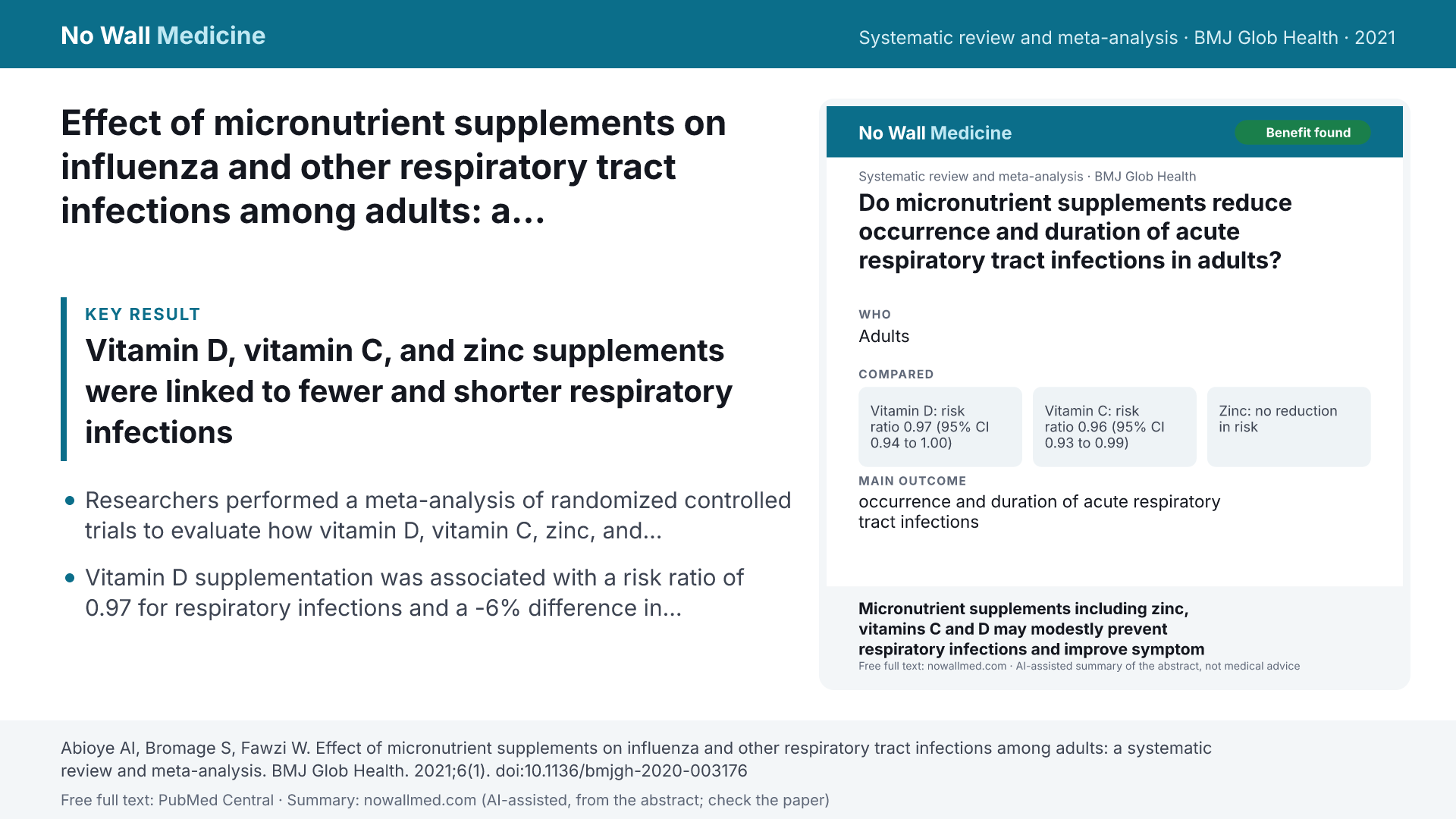
Vitamin D, vitamin C, and zinc supplements were linked to fewer and shorter respiratory infections
Effect of micronutrient supplements on influenza and other respiratory tract infections among adults: a systematic review and meta-analysis
Systematic review and meta-analysisBenefit found
Do micronutrient supplements reduce occurrence and duration of acute respiratory tract infections in adults?
Who
Adults
Compared
Vitamin D: risk ratio 0.97 (95% CI 0.94 to 1.00)
Vitamin C: risk ratio 0.96 (95% CI 0.93 to 0.99)
Zinc: no reduction in risk
Main outcome
occurrence and duration of acute respiratory tract infections
Bottom line: Micronutrient supplements including zinc, vitamins C and D may modestly prevent respiratory infections and improve symptom duration.
BMJ Glob Health · 2021-01-21 · Save PNG
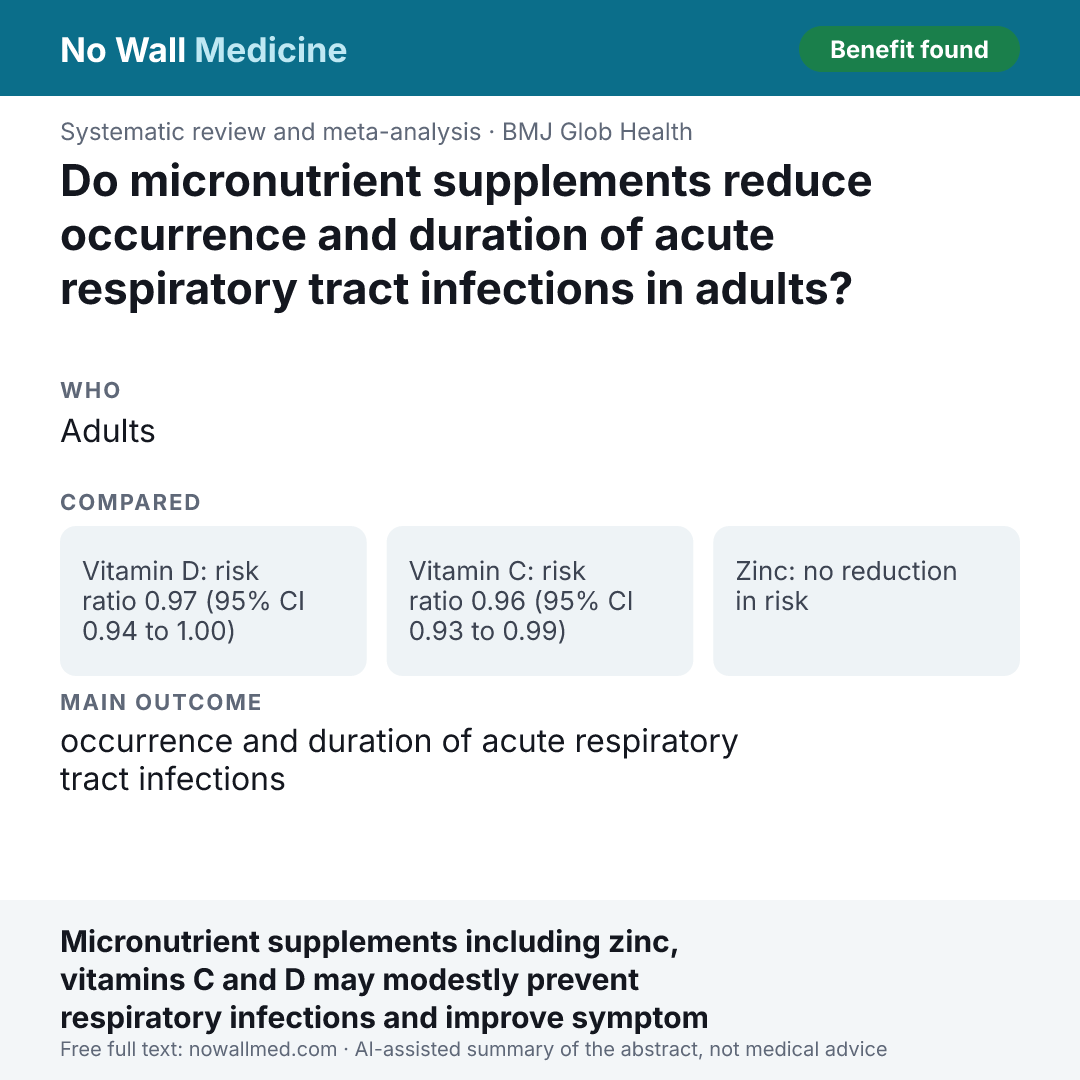
Clinical question: Do micronutrient supplements reduce occurrence and duration of acute respiratory tract infections in adults?
Key points
- Researchers performed a meta-analysis of randomized controlled trials to evaluate how vitamin D, vitamin C, zinc, and multiple micronutrient supplements affect respiratory tract infections in adults.
- Vitamin D supplementation was associated with a risk ratio of 0.97 for respiratory infections and a -6% difference in symptom duration.
- Vitamin C was associated with a risk ratio of 0.96 for infections and a -9% difference in symptom duration, while zinc was associated with a -47% difference in symptom duration.
Headline and key points written with AI from the paper’s abstract, with every number checked against it. Read the paper before relying on them.
Was this summary helpful?
Abstract
Acute respiratory tract infections (ARIs) are a leading cause of ill-health and death globally. Individual or multiple micronutrients have been shown to modulate immune function and affect the risk and severity of a number of infectious diseases. We systematically reviewed the evidence on the impact of micronutrient supplements to reduce the occurrence of ARIs and shorten the duration of ARI symptoms among adults. Random effects meta-analyses were conducted to estimate the pooled effects of vitamin D, vitamin C, zinc and multiple micronutrient supplementation (MMS) on the occurrence of ARIs and the duration of ARI symptoms. Vitamin D supplementation reduced the risk of ARI (risk ratio (RR)=0.97; 95% CI 0.94 to 1.00; p=0.028) and shortened the duration of symptoms (per cent difference: -6% (95% CI -9% to -2%; p=0.003)). The RR of vitamin D to prevent ARI was farther from the null when diagnosis was based on clinical diagnosis or laboratory testing, compared with self-report and when the loading dose was <60 000 IU. Vitamin C supplementation reduced the risk of ARIs (RR=0.96; 95% CI 0.93 to 0.99; p=0.01) and shortened the duration of symptoms (per cent difference: -9% (95% CI -16% to -2%; p=0.014)). The effect of vitamin C on preventing ARI was stronger among men and in middle-income countries, compared with women and high-income countries, respectively. Zinc supplementation did not reduce the risk of ARIs but shortened the duration of symptoms substantially (per cent difference: -47% (95% CI -73% to -21%; p=0.0004)). Our synthesis of global evidence from randomised controlled trials indicates that micronutrient supplements including zinc, vitamins C and D, and multiple micronutrient supplements may be modestly effective in preventing ARIs and improving their clinical course. Further research is warranted to better understand the effectiveness that individual or multiple micronutrients have on SARS-CoV-2 infection and treatment outcomes.
Abstract reproduced under the article’s CC BY NC licence.
Subject terms
Headline, design, result, key points, caveat and citation as plain text.
Cite this article
Abioye AI, Bromage S, Fawzi W. Effect of micronutrient supplements on influenza and other respiratory tract infections among adults: a systematic review and meta-analysis. BMJ Glob Health. 2021;6(1). doi:10.1136/bmjgh-2020-003176
Spotted a mistake? Suggest a correction