Effect of Omega-3 Polyunsaturated Fatty Acids on Cardiovascular Outcomes in Patients with Diabetes: A Meta-analysis of Randomized Controlled Trials
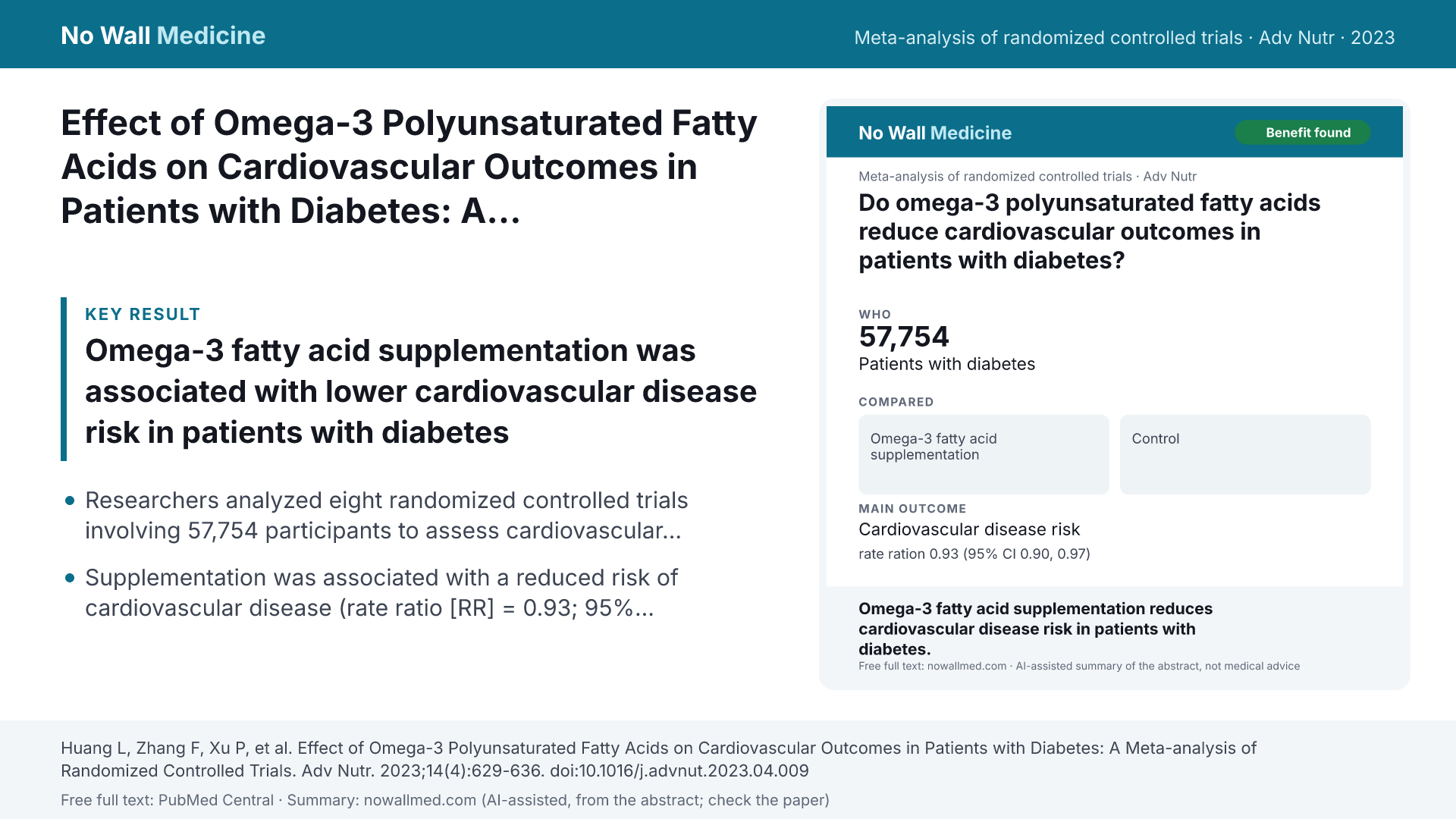
Key result: Omega-3 fatty acid supplementation was associated with lower cardiovascular disease risk in patients with diabetes
Key points
- Researchers analyzed eight randomized controlled trials involving 57,754 participants to assess cardiovascular outcomes after omega-3 fatty acid supplementation.
- Supplementation was associated with a reduced risk of cardiovascular disease (rate ratio [RR] = 0.93; 95% confidence interval [CI]: 0.90, 0.97; P = 0.0009).
- Eicosapentaenoic acid (EPA) was associated with a lower risk of cardiovascular disease (RR = 0.81; 95% CI: 0.73, 0.90; P = 0.0001), but EPA plus docosahexaenoic acid (DHA) was not.
Why it matters: The cardiovascular benefits of omega-3 polyunsaturated fatty acids in patients with diabetes are unclear because related large-scale trials have produced conflicting results.
Discussion prompts
- Would these patients look like yours? Who was left out?
- Is the main outcome one that matters to patients?
- Is the difference large enough to change what you do?
Cite: Huang L, Zhang F, Xu P, et al. Effect of Omega-3 Polyunsaturated Fatty Acids on Cardiovascular Outcomes in Patients with Diabetes: A Meta-analysis of Randomized Controlled Trials. Adv Nutr. 2023;14(4):629-636. doi:10.1016/j.advnut.2023.04.009
Free full text: PubMed Central · Summary and visual abstract: nowallmed.com/a/effect-of-omega-3-polyunsaturated-fatty-acids-on-cardiovascular-1cvigob/ (AI-assisted from the abstract; check the paper before relying on it).