Omega-3 fatty acid supplementation was associated with lower cardiovascular disease risk in patients with diabetes
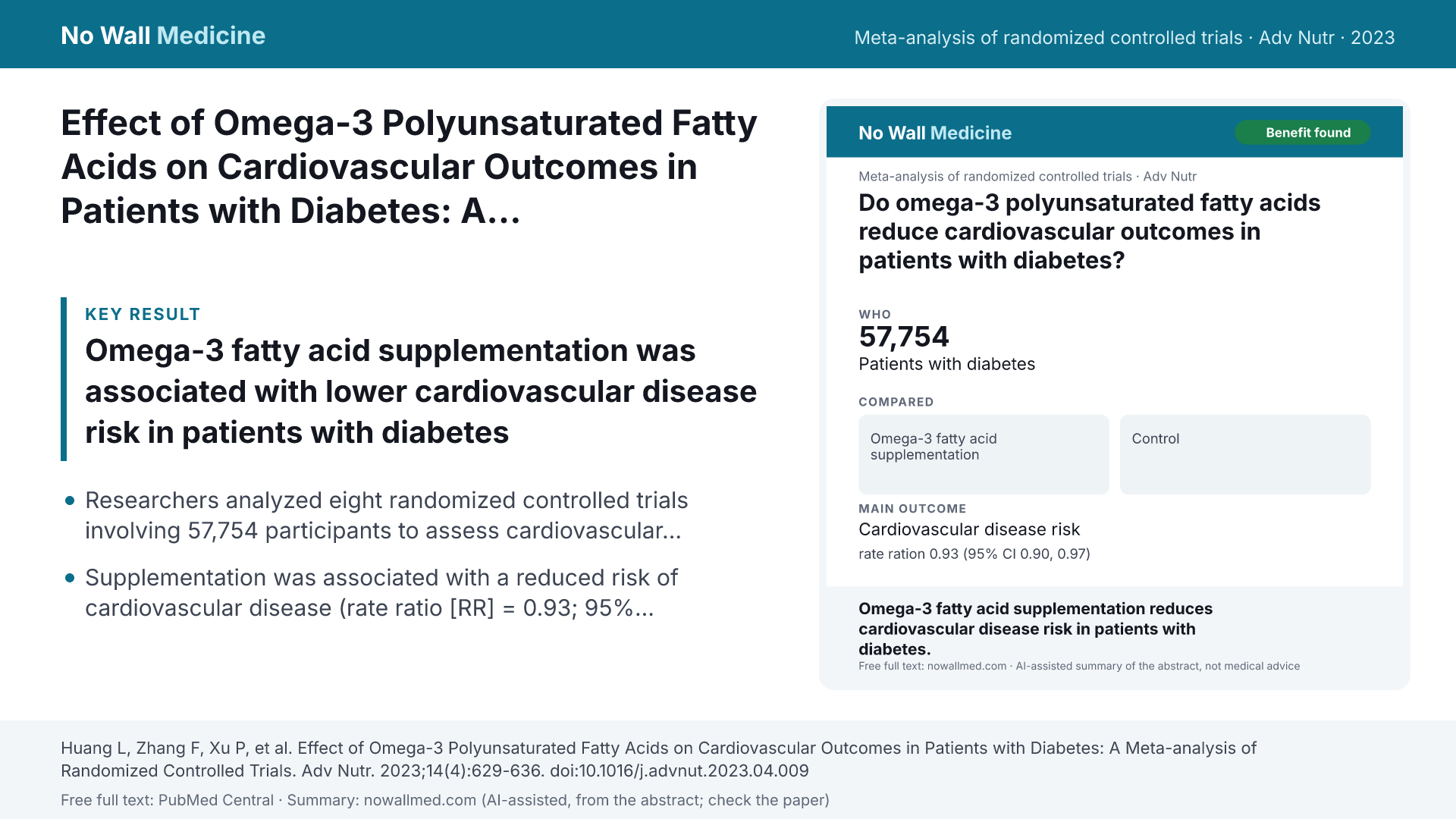
Effect of Omega-3 Polyunsaturated Fatty Acids on Cardiovascular Outcomes in Patients with Diabetes: A Meta-analysis of Randomized Controlled Trials
Meta-analysis of randomized controlled trialsBenefit found
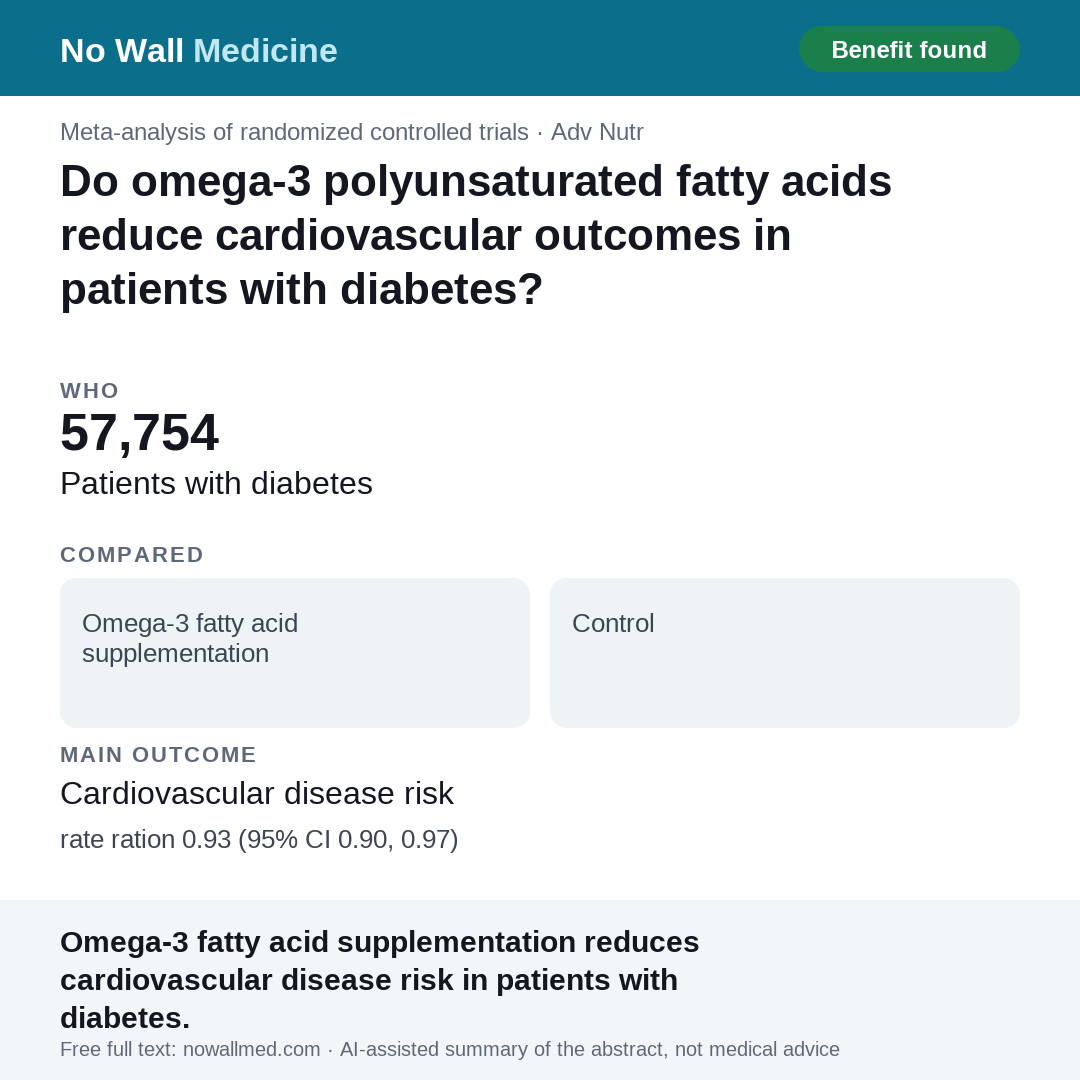
Do omega-3 polyunsaturated fatty acids reduce cardiovascular outcomes in patients with diabetes?
Who
57,754
Patients with diabetes
Compared
Omega-3 fatty acid supplementation
Control
Main outcome
Cardiovascular disease risk
Result: rate ration 0.93 (95% CI 0.90, 0.97)
Bottom line: Omega-3 fatty acid supplementation reduces cardiovascular disease risk in patients with diabetes.
Limitation: Further large-scale trials are necessary to evaluate safety and effect on atrial fibrillation.
Adv Nutr · 2023-04-28Download image
Clinical question: Do omega-3 polyunsaturated fatty acids reduce cardiovascular outcomes in patients with diabetes?
Why it matters: The cardiovascular benefits of omega-3 polyunsaturated fatty acids in patients with diabetes are unclear because related large-scale trials have produced conflicting results.
Key points
- Researchers analyzed eight randomized controlled trials involving 57,754 participants to assess cardiovascular outcomes after omega-3 fatty acid supplementation.
- Supplementation was associated with a reduced risk of cardiovascular disease (rate ratio [RR] = 0.93; 95% confidence interval [CI]: 0.90, 0.97; P = 0.0009).
- Eicosapentaenoic acid (EPA) was associated with a lower risk of cardiovascular disease (RR = 0.81; 95% CI: 0.73, 0.90; P = 0.0001), but EPA plus docosahexaenoic acid (DHA) was not.
Headline and key points written with AI from the paper’s abstract, with every number checked against it. Read the paper before relying on them.
Was this summary helpful?
Subject terms
Cite this article
Huang L, Zhang F, Xu P, et al. Effect of Omega-3 Polyunsaturated Fatty Acids on Cardiovascular Outcomes in Patients with Diabetes: A Meta-analysis of Randomized Controlled Trials. Adv Nutr. 2023. doi:10.1016/j.advnut.2023.04.009
Spotted a mistake? Suggest a correction