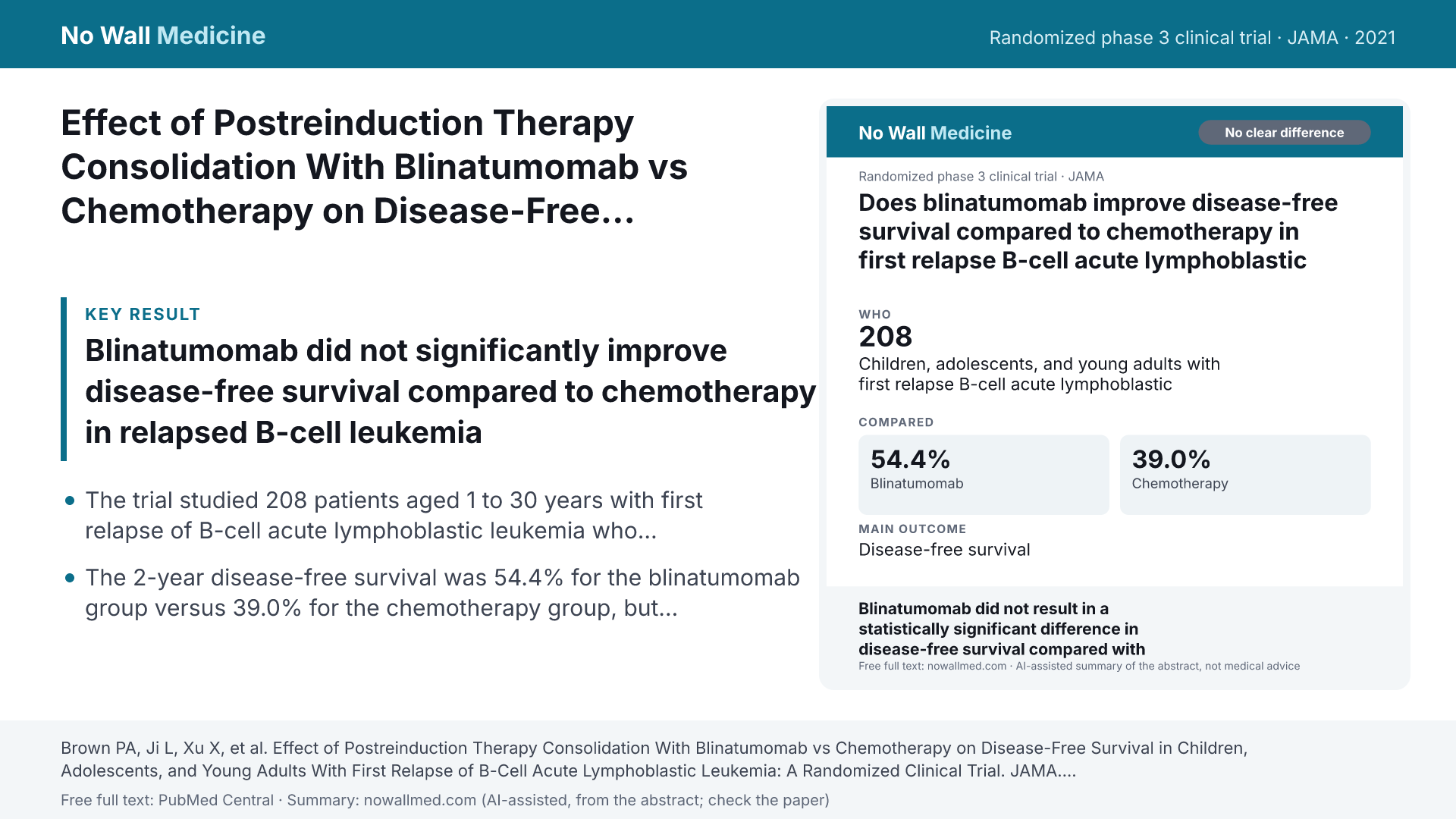
Effect of Postreinduction Therapy Consolidation With Blinatumomab vs Chemotherapy on Disease-Free Survival in Children, Adolescents, and Young Adults With First Relapse of B-Cell Acute Lymphoblastic Leukemia: A Randomized Clinical Trial
Key result: Blinatumomab did not significantly improve disease-free survival compared to chemotherapy in relapsed B-cell leukemia
Key points
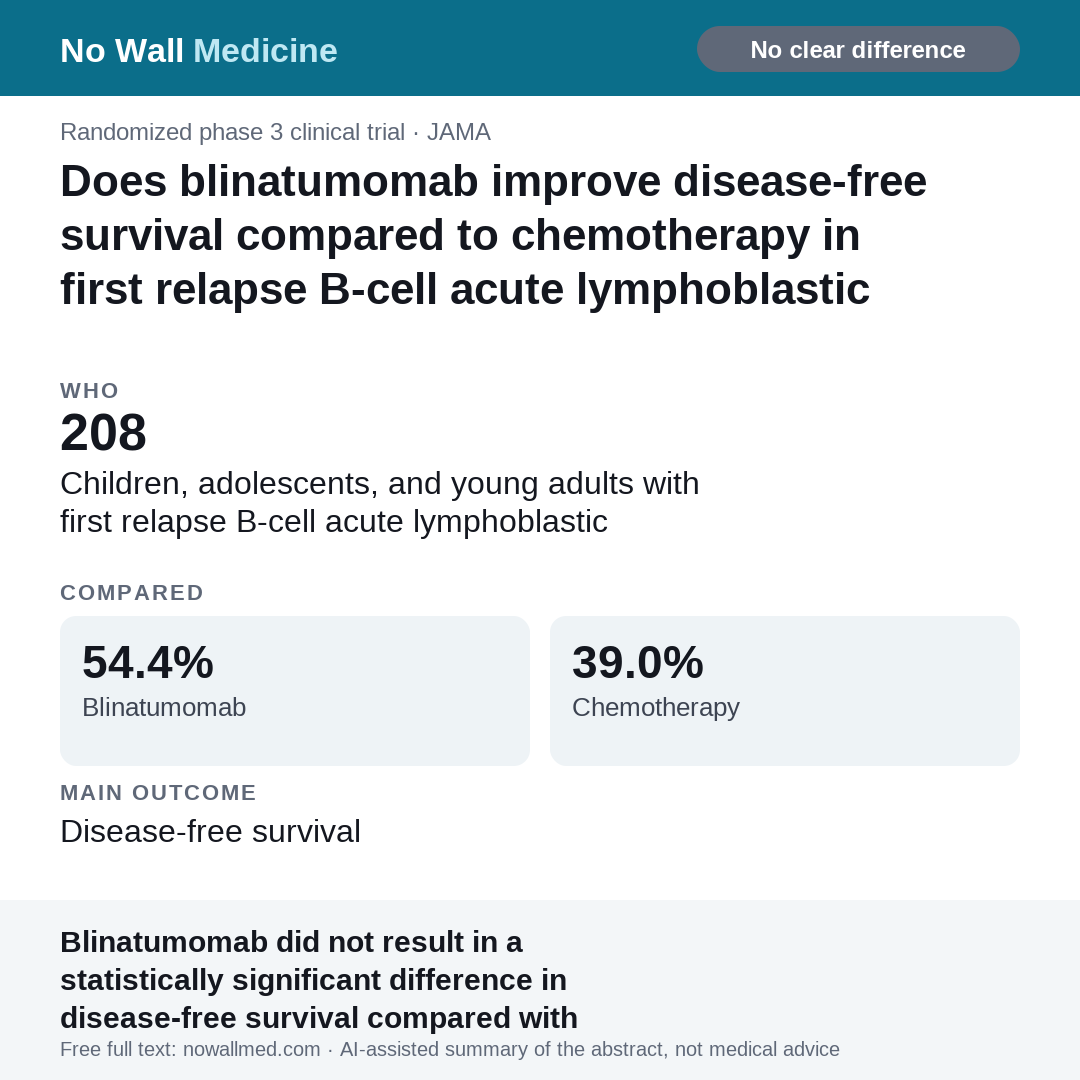
- The trial studied 208 patients aged 1 to 30 years with first relapse of B-cell acute lymphoblastic leukemia who were randomized to receive either blinatumomab or multiagent chemotherapy.
- The 2-year disease-free survival was 54.4% for the blinatumomab group versus 39.0% for the chemotherapy group, but this difference was not statistically significant.
- Serious adverse events like infection occurred in 15% of the blinatumomab group compared to 65% of the chemotherapy group.
Why it matters: Standard chemotherapy for first relapse of B-cell acute lymphoblastic leukemia is associated with high rates of severe toxicities, relapse, and death.
Limitation the authors note: The authors state that study interpretation is limited by early termination with possible underpowering for the primary end point.
Discussion prompts
- Would these patients look like yours? Who was left out?
- Is the main outcome one that matters to patients?
- Is the difference large enough to change what you do?
Cite: Brown PA, Ji L, Xu X, Devidas M, Hogan LE, Borowitz MJ. Effect of Postreinduction Therapy Consolidation With Blinatumomab vs Chemotherapy on Disease-Free Survival in Children, Adolescents, and Young Adults With First Relapse of B-Cell Acute Lymphoblastic Leukemia: A Randomized Clinical Trial. JAMA. 2021. doi:10.1001/jama.2021.0669
Free full text: PubMed Central · Summary and visual abstract: nowallmed.com/a/effect-of-postreinduction-therapy-consolidation-with-blinatumomab-vs-mpunoo/ (AI-assisted from the abstract; check the paper before relying on it).