Temporary blood flow arrest during stroke procedures did not significantly improve vessel recanalization
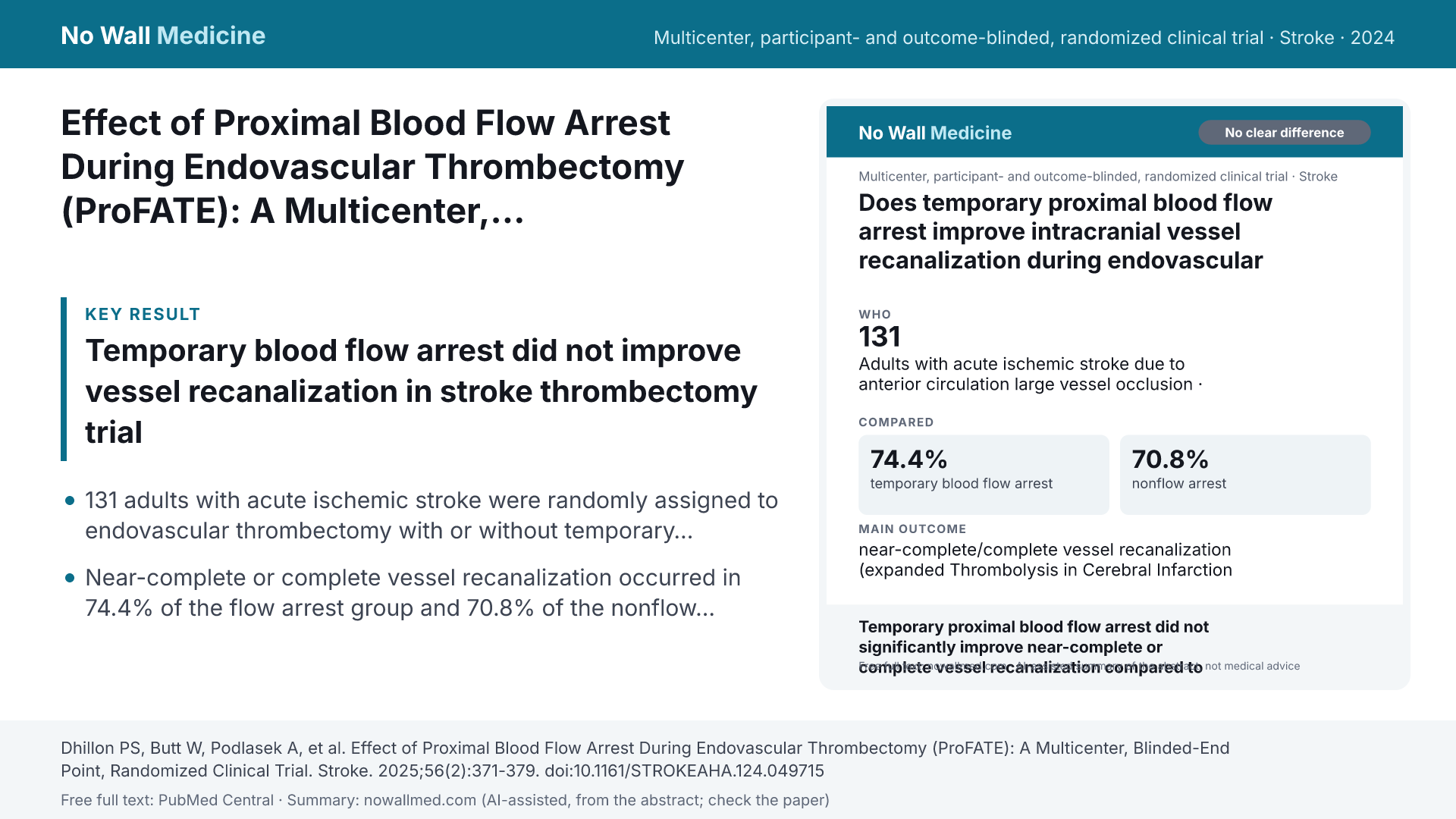
Effect of Proximal Blood Flow Arrest During Endovascular Thrombectomy (ProFATE): A Multicenter, Blinded-End Point, Randomized Clinical Trial
Multicenter, participant- and outcome-blinded, randomized clinical trialNo clear difference
Does temporary proximal blood flow arrest improve intracranial vessel recanalization during endovascular thrombectomy?
Who
131
Adults with acute ischemic stroke due to anterior circulation large vessel occlusion · 4 thrombectomy centers in the United Kingdom
Compared
74.4%temporary blood flow arrest (49/66)
70.8%nonflow arrest (46/65)
Main outcome
near-complete/complete vessel recanalization (expanded Thrombolysis in Cerebral Infarction score 2c or 3)
Result: adjusted odds ratio, 1.07 (95% CI, 0.45-2.55)
Bottom line: Temporary proximal blood flow arrest did not significantly improve near-complete or complete vessel recanalization compared to nonflow arrest.
Stroke · 2024-12-19Download image
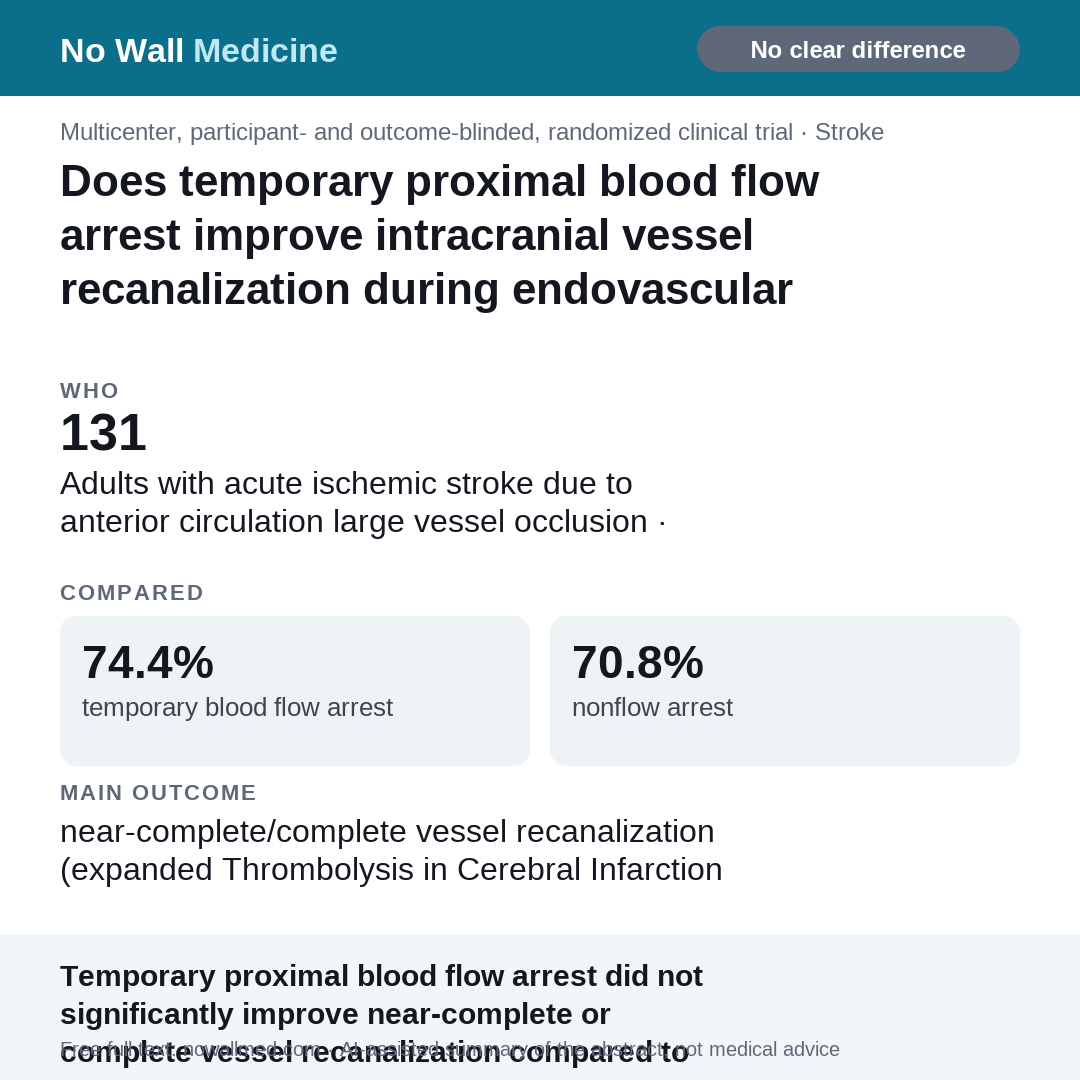
Clinical question: Does temporary proximal blood flow arrest improve intracranial vessel recanalization during endovascular thrombectomy?
Why it matters: It was uncertain whether temporary blood flow arrest during endovascular thrombectomy improves intracranial vessel recanalization compared to nonflow arrest.
Key points
- Researchers studied 131 adults with acute ischemic stroke undergoing endovascular thrombectomy, comparing temporary blood flow arrest to nonflow arrest.
- The proportion of patients achieving near-complete or complete vessel recanalization was 74.4% in the flow arrest group and 70.8% in the nonflow arrest group.
- The flow arrest group had a lower rate of emboli to a new vascular territory at 1.5% compared to 12.3% in the nonflow arrest group.
Headline and key points written with AI from the paper’s abstract, with every number checked against it. Read the paper before relying on them.
Was this summary helpful?
Subject terms
Cite this article
Dhillon PS, Butt W, Podlasek A, Bhogal P, Lynch J, Booth TC. Effect of Proximal Blood Flow Arrest During Endovascular Thrombectomy (ProFATE): A Multicenter, Blinded-End Point, Randomized Clinical Trial. Stroke. 2024. doi:10.1161/STROKEAHA.124.049715
Spotted a mistake? Suggest a correction
Top studies every Monday
The week’s key trials and guidelines in your specialties, plus any topics you follow. By email, free.
Get the weekly digest