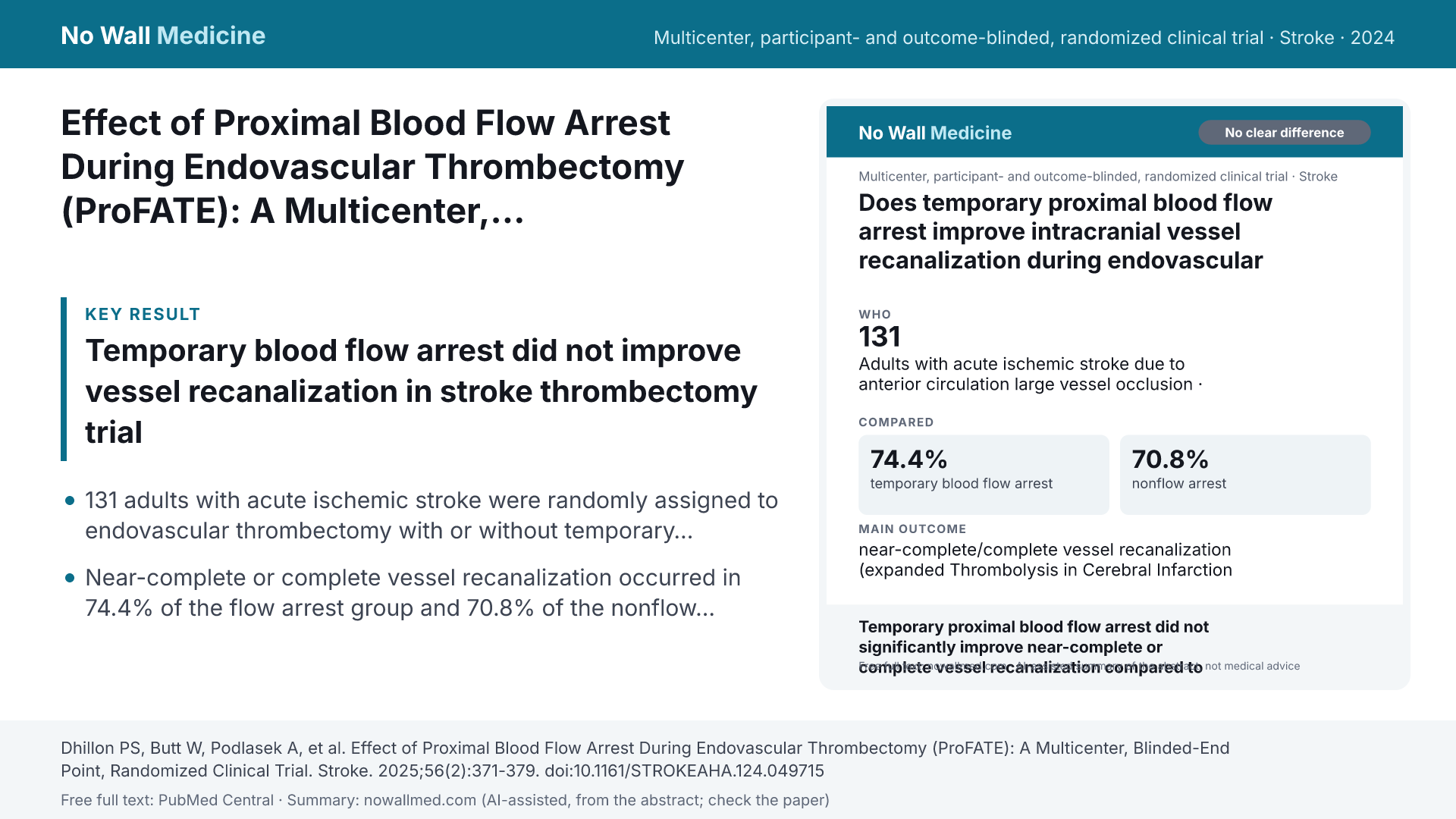
Effect of Proximal Blood Flow Arrest During Endovascular Thrombectomy (ProFATE): A Multicenter, Blinded-End Point, Randomized Clinical Trial
Key result: Temporary blood flow arrest during stroke procedures did not significantly improve vessel recanalization
Multicenter, participant- and outcome-blinded, randomized clinical trialNo clear difference
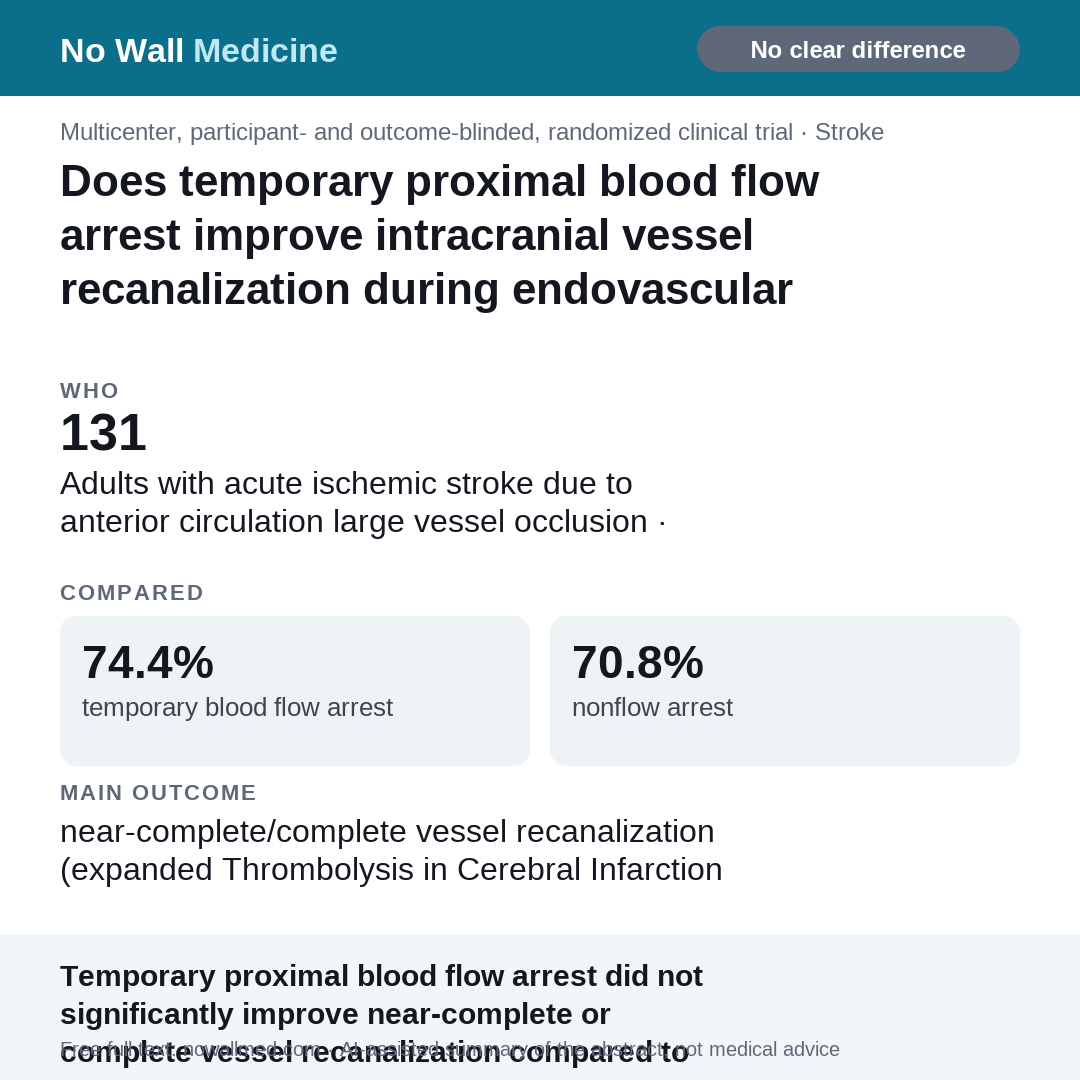
Does temporary proximal blood flow arrest improve intracranial vessel recanalization during endovascular thrombectomy?
Who
131
Adults with acute ischemic stroke due to anterior circulation large vessel occlusion · 4 thrombectomy centers in the United Kingdom
Compared
74.4%temporary blood flow arrest (49/66)
70.8%nonflow arrest (46/65)
Main outcome
near-complete/complete vessel recanalization (expanded Thrombolysis in Cerebral Infarction score 2c or 3)
Result: adjusted odds ratio, 1.07 (95% CI, 0.45-2.55)
Bottom line: Temporary proximal blood flow arrest did not significantly improve near-complete or complete vessel recanalization compared to nonflow arrest.
Stroke · 2024-12-19Download image
Key points
- Researchers studied 131 adults with acute ischemic stroke undergoing endovascular thrombectomy, comparing temporary blood flow arrest to nonflow arrest.
- The proportion of patients achieving near-complete or complete vessel recanalization was 74.4% in the flow arrest group and 70.8% in the nonflow arrest group.
- The flow arrest group had a lower rate of emboli to a new vascular territory at 1.5% compared to 12.3% in the nonflow arrest group.
Why it matters: It was uncertain whether temporary blood flow arrest during endovascular thrombectomy improves intracranial vessel recanalization compared to nonflow arrest.
Discussion prompts
- Would these patients look like yours? Who was left out?
- Is the main outcome one that matters to patients?
- Is the difference large enough to change what you do?
Cite: Dhillon PS, Butt W, Podlasek A, et al. Effect of Proximal Blood Flow Arrest During Endovascular Thrombectomy (ProFATE): A Multicenter, Blinded-End Point, Randomized Clinical Trial. Stroke. 2024. doi:10.1161/STROKEAHA.124.049715
Free full text: PubMed Central · Summary and visual abstract: nowallmed.com/a/effect-of-proximal-blood-flow-arrest-during-endovascular-thrombectomy-jsd49b/ (AI-assisted from the abstract; check the paper before relying on it).