Remote ischemic conditioning improved cerebral blood flow regulation in ischemic stroke patients
Effect of remote ischemic conditioning on cerebral blood flow regulation in patients with ischemic stroke: a randomized, controlled trial
Randomized controlled trialBenefit found
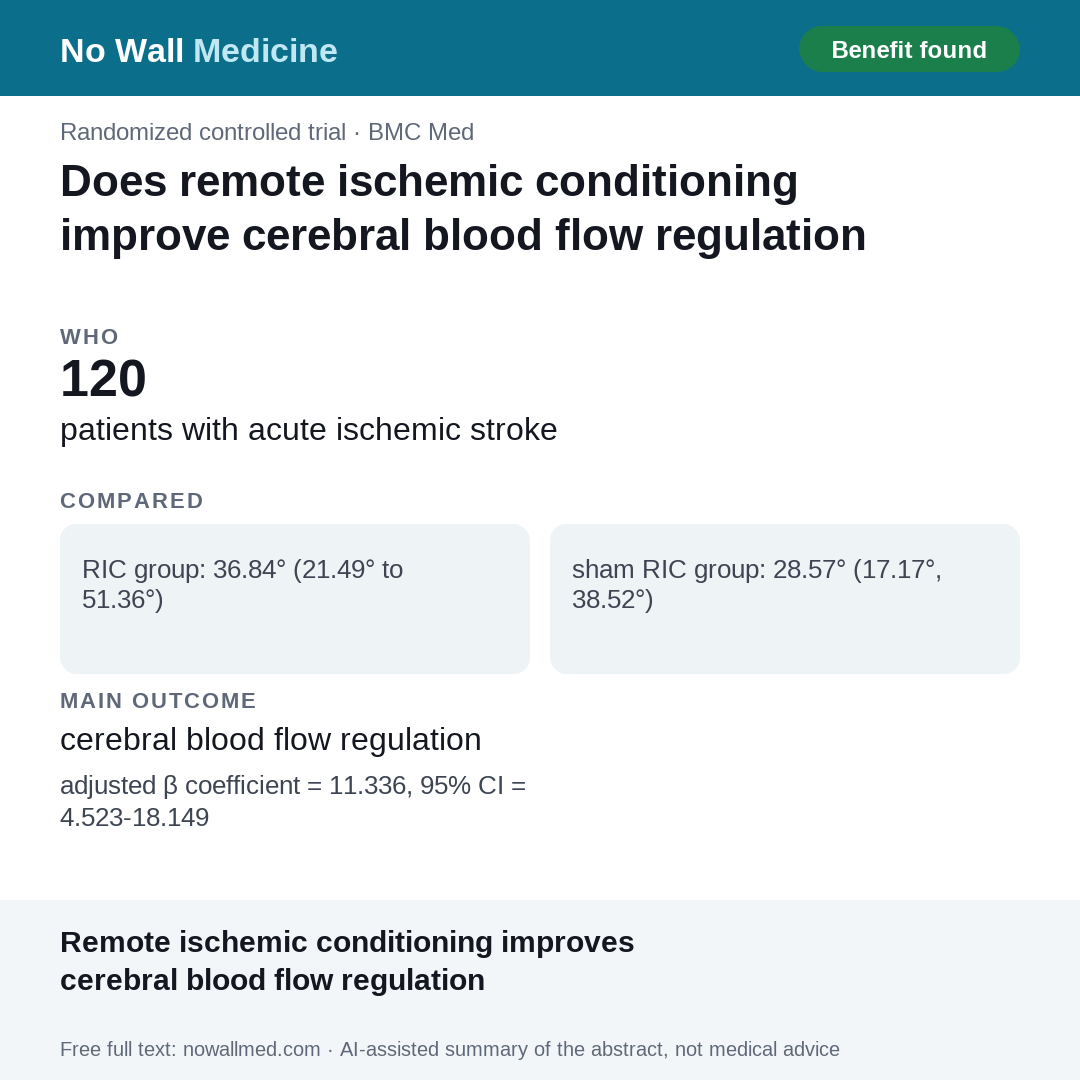
Does remote ischemic conditioning improve cerebral blood flow regulation
Who
120
patients with acute ischemic stroke
Compared
RIC group: 36.84° (21.49° to 51.36°)
sham RIC group: 28.57° (17.17°, 38.52°)
Main outcome
cerebral blood flow regulation
Result: adjusted β coefficient = 11.336, 95% CI = 4.523-18.149
Bottom line: Remote ischemic conditioning improves cerebral blood flow regulation
BMC Med · 2026-08-29Download image
Key points
- 120 patients with acute ischemic stroke were studied in a randomized controlled trial with remote ischemic conditioning or sham treatment.
- Remote ischemic conditioning group had a significantly higher phase difference in cerebral blood flow regulation, with 36.84° compared to 28.57° in the sham group.
- No significant differences were found in blood pressure, heart rate, or 90-day modified Rankin Scale scores between the two groups.
Headline and key points written with AI from the paper’s abstract, with every number checked against it. Read the paper before relying on them.
Topics
Cite this article
Wang SJ, Yin WJ, Zhang FL, Qu Y, Abuduxukuer R, Qi S. Effect of remote ischemic conditioning on cerebral blood flow regulation in patients with ischemic stroke: a randomized, controlled trial. BMC Med. 2026. doi:10.1186/s12916-026-05126-x
Spotted a mistake? Suggest a correction