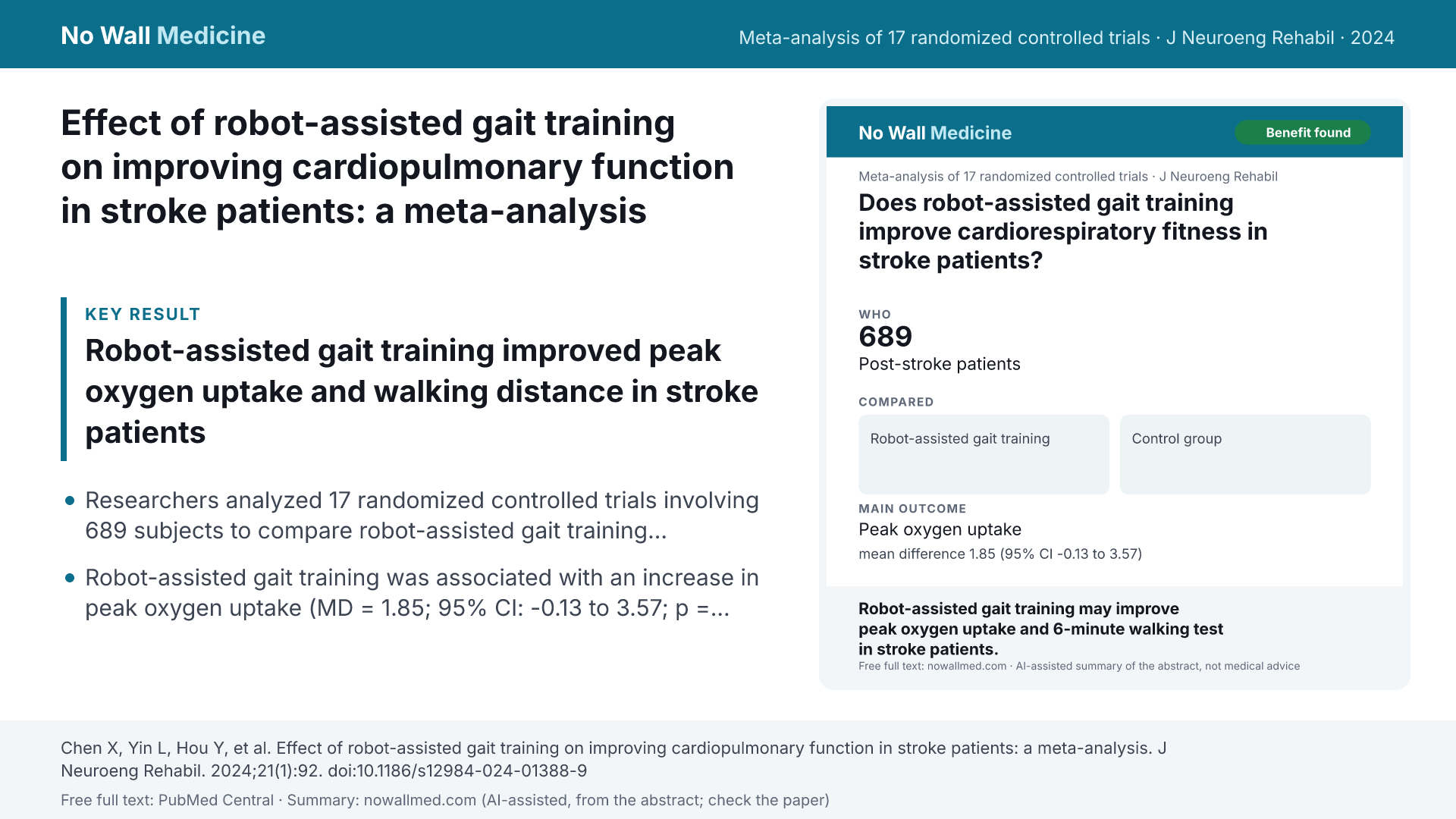
Robot-assisted gait training improved peak oxygen uptake and walking distance in stroke patients
Effect of robot-assisted gait training on improving cardiopulmonary function in stroke patients: a meta-analysis
Meta-analysis of 17 randomized controlled trialsBenefit found
Does robot-assisted gait training improve cardiorespiratory fitness in stroke patients?
Who
689
Post-stroke patients
Compared
Robot-assisted gait training
Control group
Main outcome
Peak oxygen uptake
Result: mean difference 1.85 (95% CI -0.13 to 3.57)
Bottom line: Robot-assisted gait training may improve peak oxygen uptake and 6-minute walking test in stroke patients.
J Neuroeng Rehabil · 2024-05-30Download image
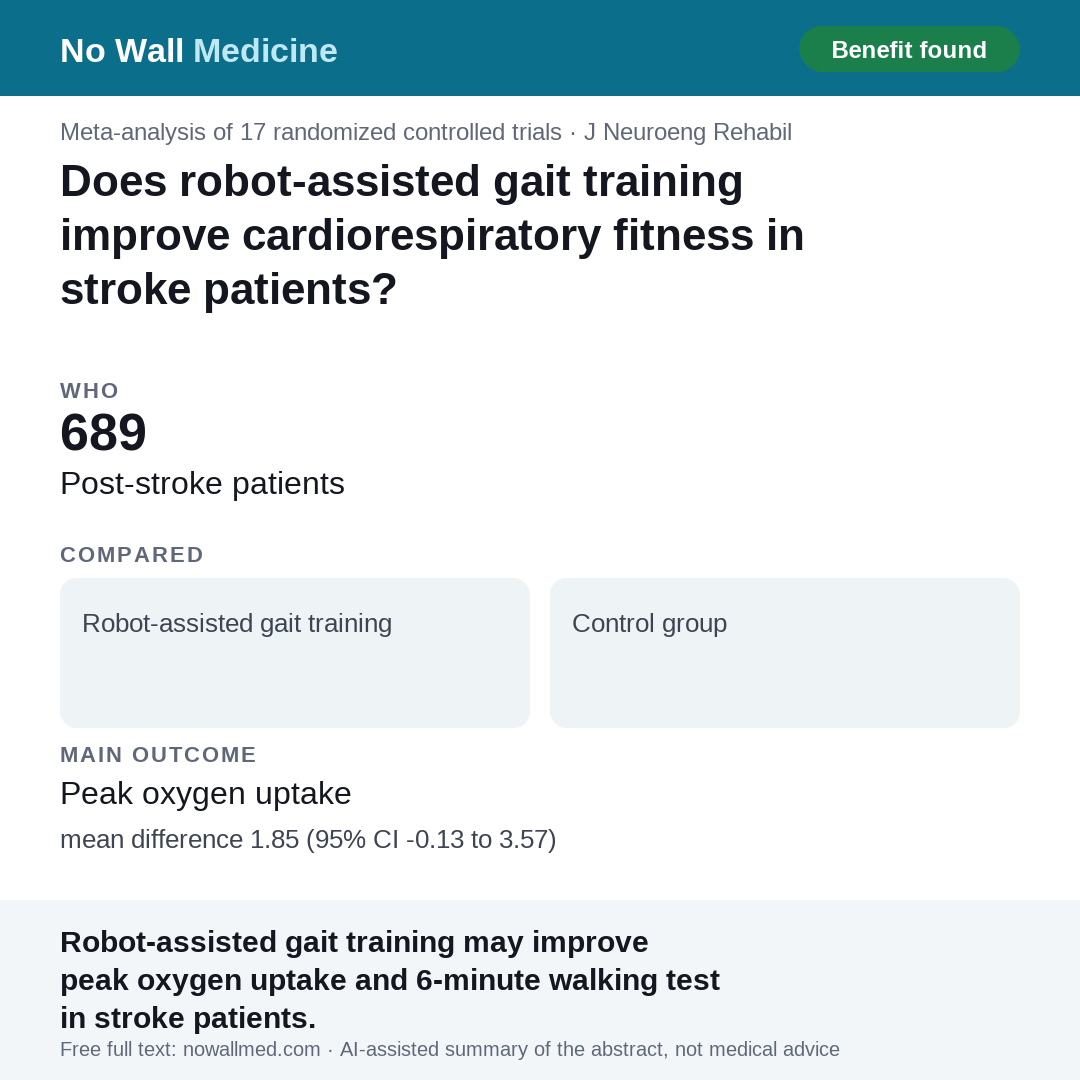
Clinical question: Does robot-assisted gait training improve cardiorespiratory fitness in stroke patients?
Why it matters: It is unclear how robot-assisted gait training compares to conventional rehabilitation training for improving cardiorespiratory fitness in patients after a stroke.
Key points
- Researchers analyzed 17 randomized controlled trials involving 689 subjects to compare robot-assisted gait training with conventional rehabilitation training.
- Robot-assisted gait training was associated with an increase in peak oxygen uptake (MD = 1.85; 95% CI: -0.13 to 3.57; p = 0.04) and 6-minute walking test distance (MD = 19.26; 95% CI: 10.43 to 28.08; p < 0.0001).
- No significant differences were found for peak heart rate (MD = 3.56; 95% CI: -1.90 to 9.02; p = 0.20) or peak inspiratory expiratory ratio (MD = -0.01; 95% CI: -0.04 to 0.01; p = 0.34).
Headline and key points written with AI from the paper’s abstract, with every number checked against it. Read the paper before relying on them.
Was this summary helpful?
Subject terms
Cite this article
Chen X, Yin L, Hou Y, Wang J, Li Y, Yan J. Effect of robot-assisted gait training on improving cardiopulmonary function in stroke patients: a meta-analysis. J Neuroeng Rehabil. 2024. doi:10.1186/s12984-024-01388-9
Spotted a mistake? Suggest a correction
Top studies every Monday
The week’s key trials and guidelines in your specialties, plus any topics you follow. By email, free.
Get the weekly digest