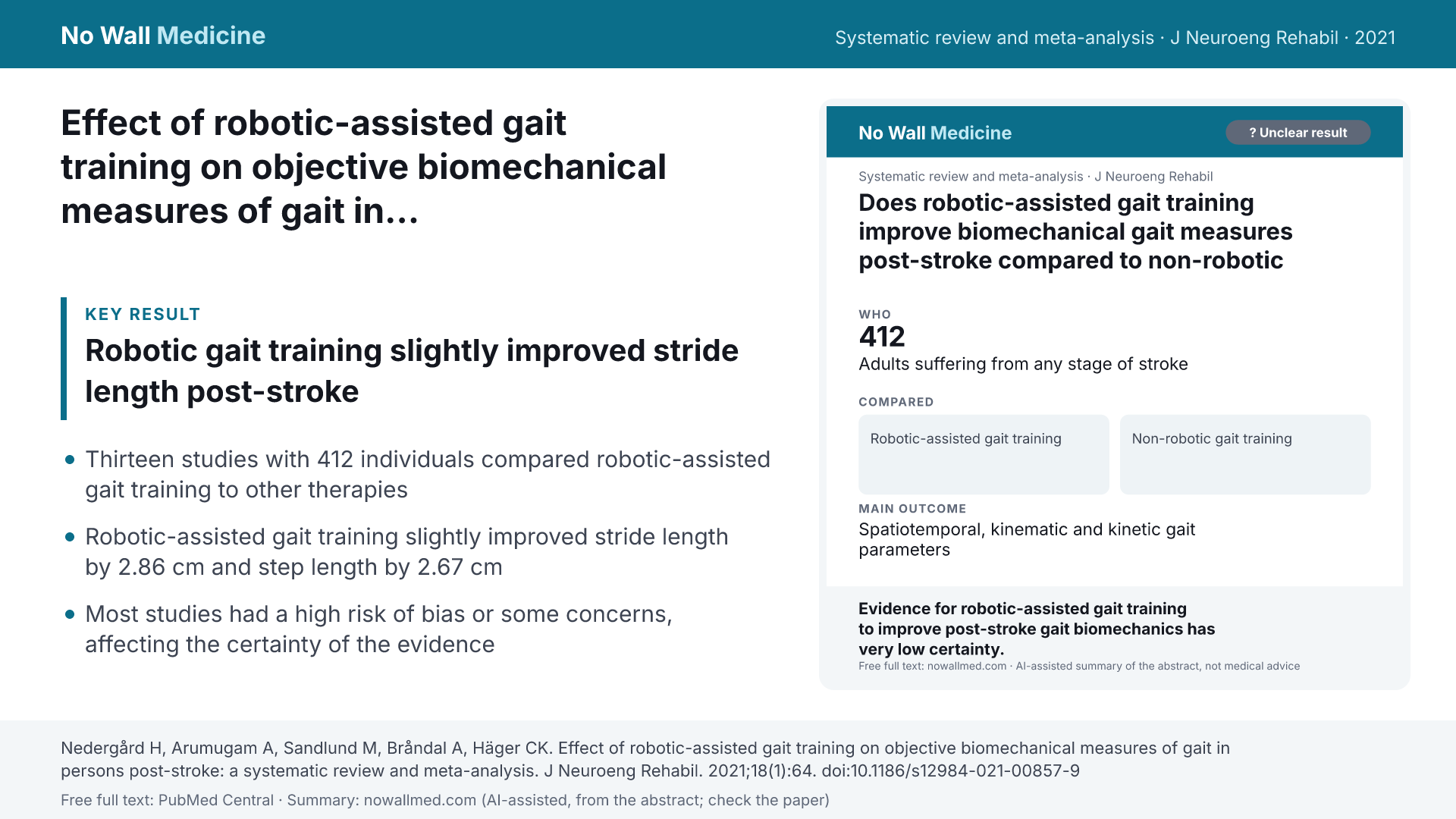
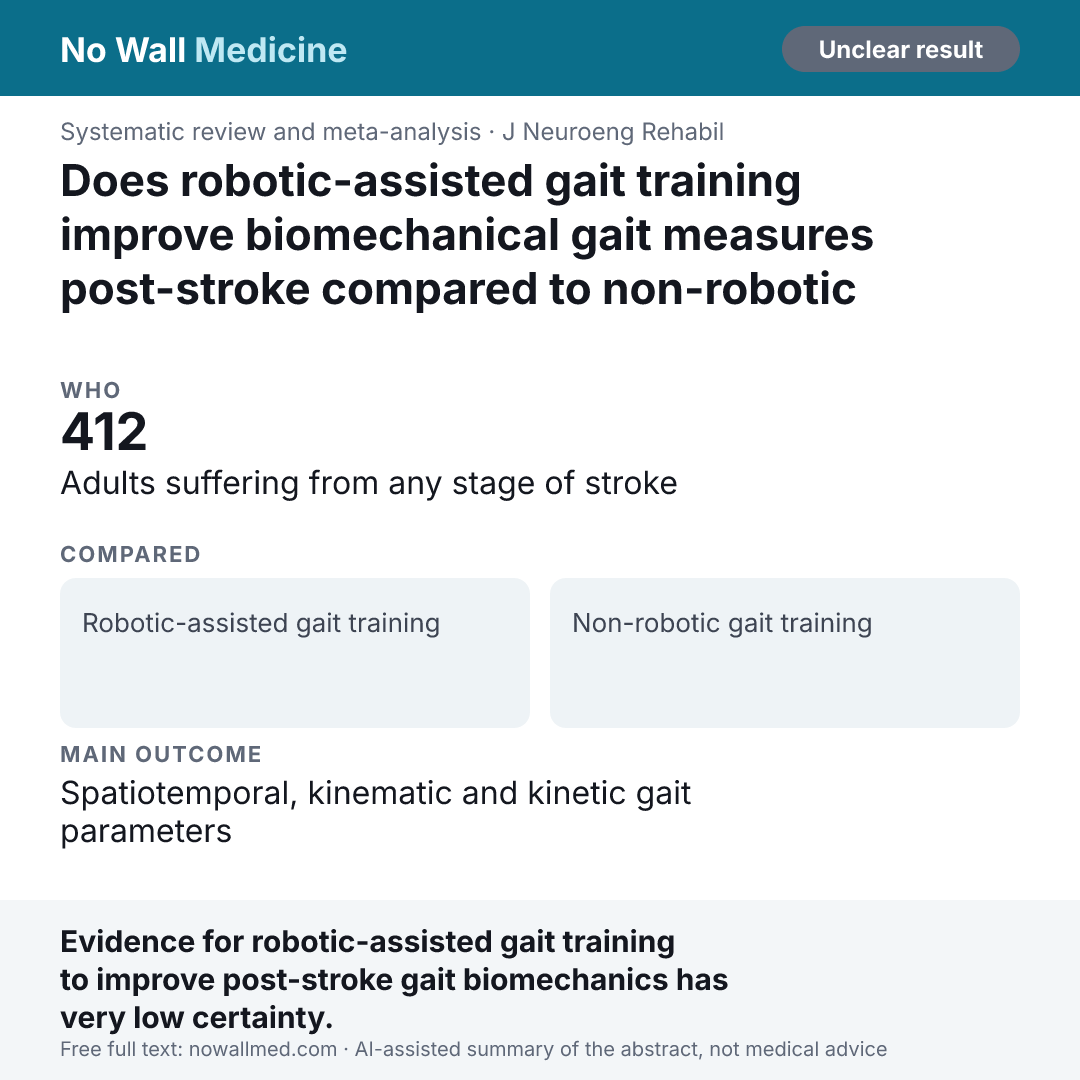
Effect of robotic-assisted gait training on objective biomechanical measures of gait in persons post-stroke: a systematic review and meta-analysis
Key result: Robotic gait training slightly improved stride length post-stroke
Key points
- Thirteen studies with 412 individuals compared robotic-assisted gait training to other therapies.
- Robotic-assisted gait training slightly improved stride length by 2.86 cm and step length by 2.67 cm.
- Most studies had a high risk of bias or some concerns, affecting the certainty of the evidence.
Why it matters: The effect of robotic-assisted gait training on gait movement patterns post-stroke was not comprehensively reviewed
Limitation the authors note: The review found serious weaknesses in almost all domains, including risk of bias, consistency, directness, and precision of the findings
Discussion prompts
- Would these patients look like yours? Who was left out?
- Is the main outcome one that matters to patients?
- Is the difference large enough to change what you do?
Cite: Nedergård H, Arumugam A, Sandlund M, Bråndal A, Häger CK. Effect of robotic-assisted gait training on objective biomechanical measures of gait in persons post-stroke: a systematic review and meta-analysis. J Neuroeng Rehabil. 2021;18(1):64. doi:10.1186/s12984-021-00857-9
Free full text: PubMed Central · Summary and visual abstract: nowallmed.com/a/effect-of-robotic-assisted-gait-training-on-objective-biomechanical-pjewll/ (AI-assisted from the abstract; check the paper before relying on it).