Effect of Shared Decision-Making for Stroke Prevention on Treatment Adherence and Safety Outcomes in Patients With Atrial Fibrillation: A Randomized Clinical Trial
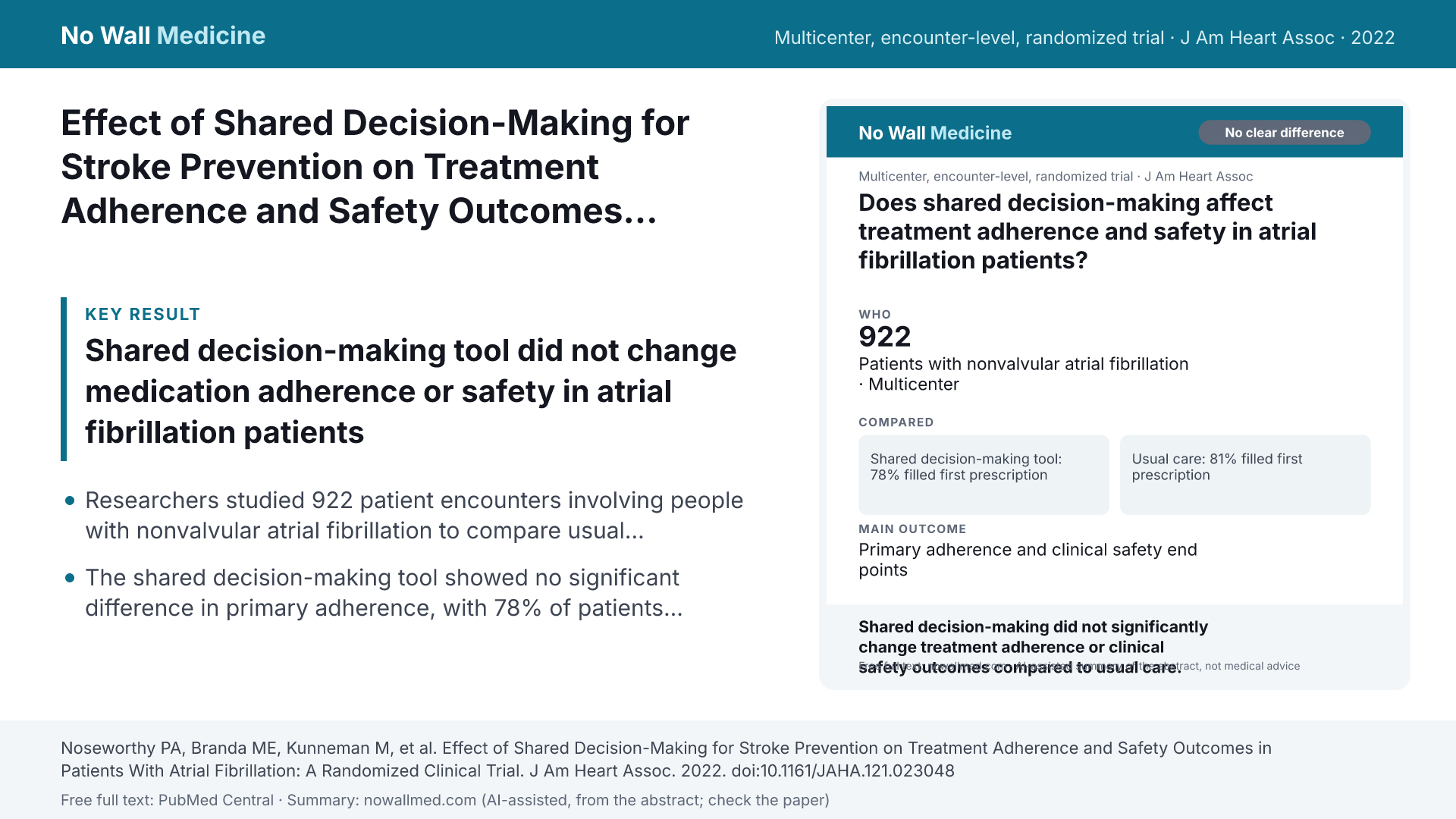
Key result: Shared decision-making tool did not change medication adherence or safety in atrial fibrillation patients
Key points
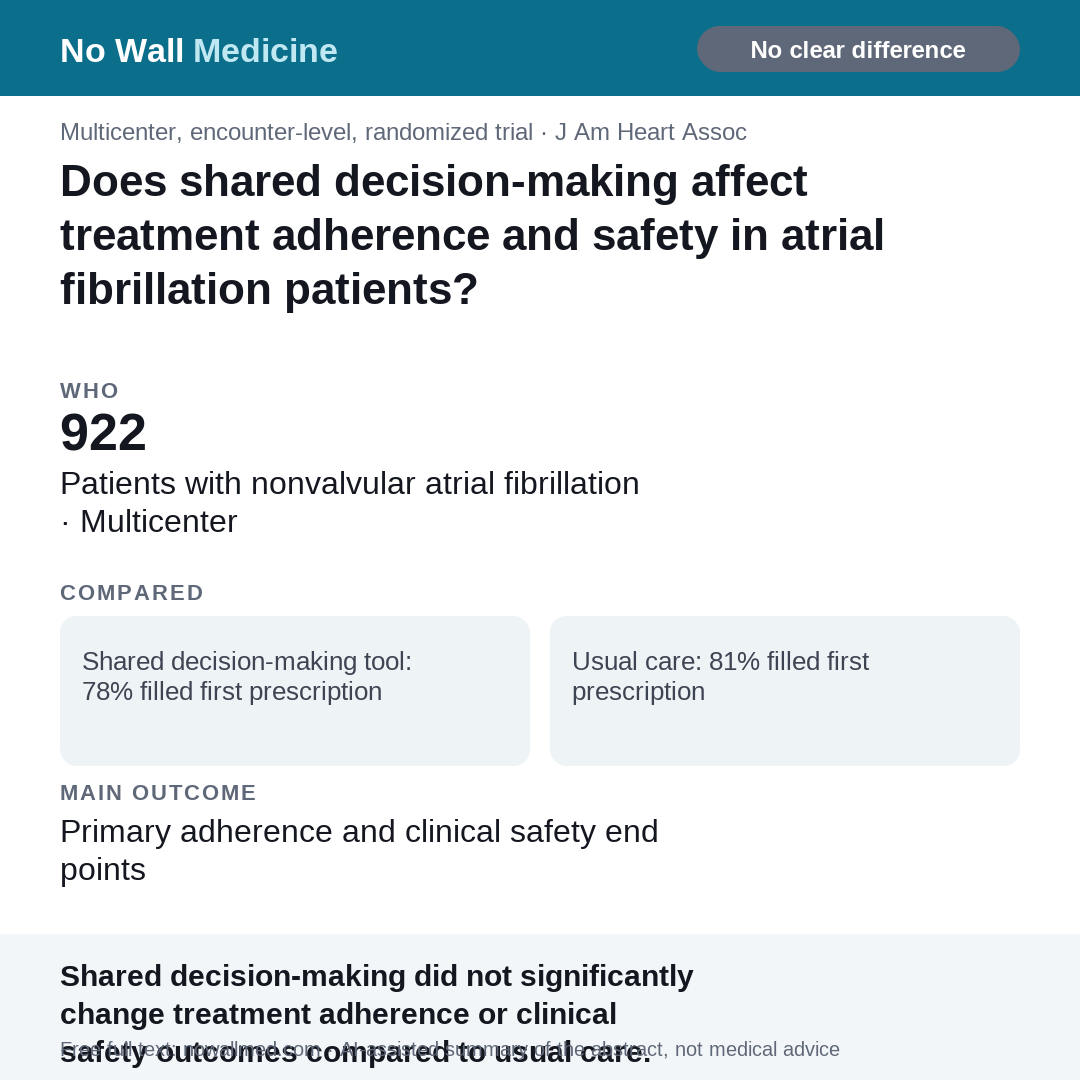
- Researchers studied 922 patient encounters involving people with nonvalvular atrial fibrillation to compare usual care against usual care plus a shared decision-making tool.
- The shared decision-making tool showed no significant difference in primary adherence, with 78% of patients filling their first prescription compared to 81% in usual care.
- Safety outcomes, including strokes and major bleeding, occurred in 13% of the shared decision-making group and 14% of the usual care group.
Why it matters: It was unknown if using a shared decision-making tool during clinical encounters would change how well patients follow anticoagulation treatment plans or affect clinical safety.
Discussion prompts
- Would these patients look like yours? Who was left out?
- Is the main outcome one that matters to patients?
- Is the difference large enough to change what you do?
Cite: Noseworthy PA, Branda ME, Kunneman M, et al. Effect of Shared Decision-Making for Stroke Prevention on Treatment Adherence and Safety Outcomes in Patients With Atrial Fibrillation: A Randomized Clinical Trial. J Am Heart Assoc. 2022. doi:10.1161/JAHA.121.023048
Free full text: PubMed Central · Summary and visual abstract: nowallmed.com/a/effect-of-shared-decision-making-for-stroke-prevention-on-treatment-14zn07b/ (AI-assisted from the abstract; check the paper before relying on it).