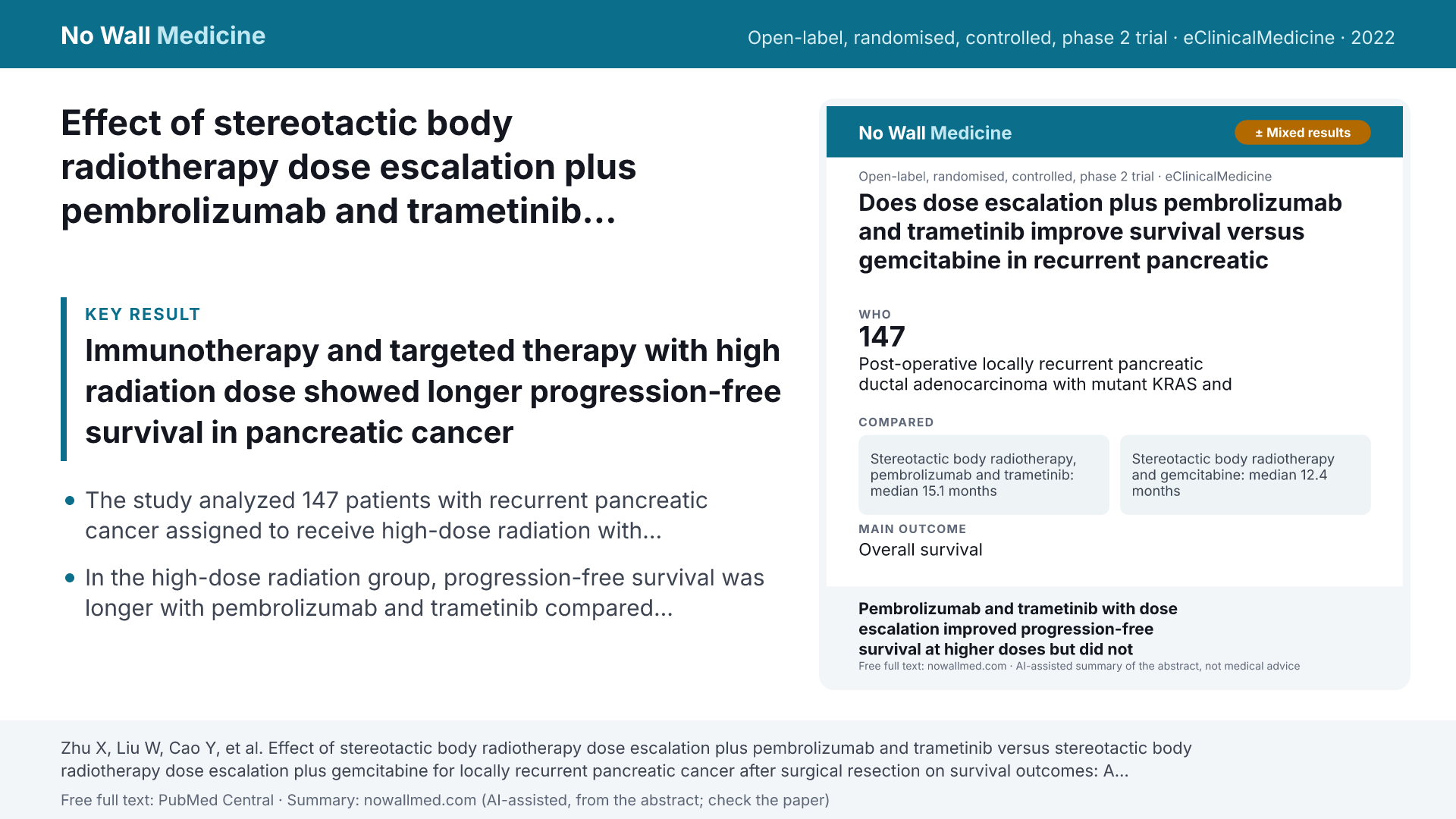
Effect of stereotactic body radiotherapy dose escalation plus pembrolizumab and trametinib versus stereotactic body radiotherapy dose escalation plus gemcitabine for locally recurrent pancreatic cancer after surgical resection on survival outcomes: A secondary analysis of an open-label, randomised, controlled, phase 2 trial
Key result: Immunotherapy and targeted therapy with high radiation dose showed longer progression-free survival in pancreatic cancer
Key points
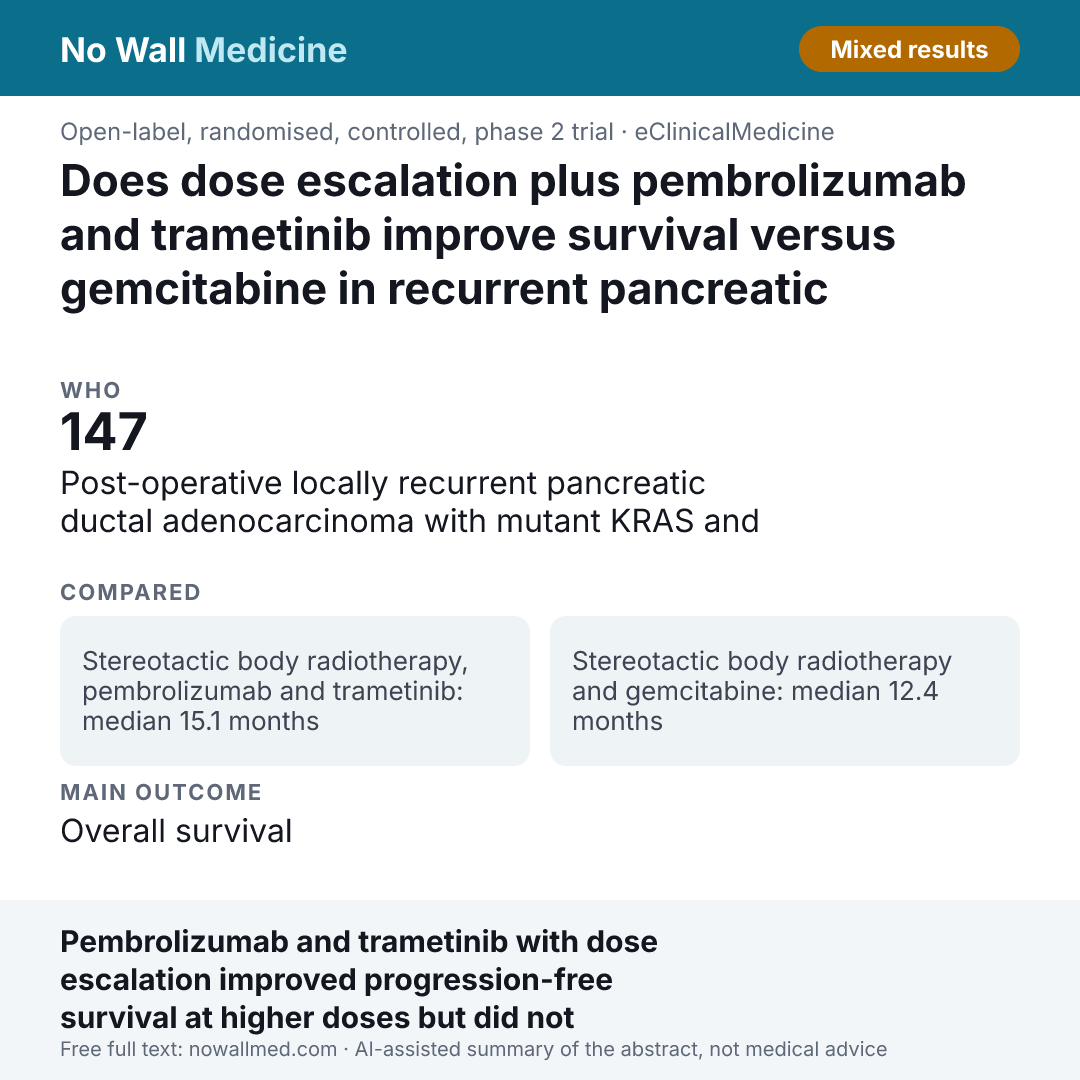
- The study analyzed 147 patients with recurrent pancreatic cancer assigned to receive high-dose radiation with either pembrolizumab and trametinib or gemcitabine.
- In the high-dose radiation group, progression-free survival was longer with pembrolizumab and trametinib compared to gemcitabine, with a median of 8.6 vs. 5.0 months.
- Overall survival did not reach statistical significance between the two groups, with a median of 15.1 vs. 12.4 months.
Limitation the authors note: The authors noted the small sample size and that this was a post-hoc analysis not powered to determine significance.
Discussion prompts
- Would these patients look like yours? Who was left out?
- Is the main outcome one that matters to patients?
- Is the difference large enough to change what you do?
Cite: Zhu X, Liu W, Cao Y, et al. Effect of stereotactic body radiotherapy dose escalation plus pembrolizumab and trametinib versus stereotactic body radiotherapy dose escalation plus gemcitabine for locally recurrent pancreatic cancer after surgical resection on survival outcomes: A secondary analysis of an open-label, randomised, controlled, phase 2 trial. EClinicalMedicine. 2023;55:101764. doi:10.1016/j.eclinm.2022.101764
Free full text: PubMed Central · Summary and visual abstract: nowallmed.com/a/effect-of-stereotactic-body-radiotherapy-dose-escalation-plus-1mttov2/ (AI-assisted from the abstract; check the paper before relying on it).