Intensive diabetes management did not affect pancreatic beta cell function in newly diagnosed youth
Effect of Tight Glycemic Control on Pancreatic Beta Cell Function in Newly Diagnosed Pediatric Type 1 Diabetes: A Randomized Clinical Trial
Randomized, double-blind, clinical trialNo clear difference
Does intensive diabetes management preserve pancreatic beta cell function in newly diagnosed pediatric type 1 diabetes?
Who
113
Youths with newly diagnosed type 1 diabetes aged 7 to 17 years · 6 centers in the United States
Compared
Intensive diabetes management: 0.45 pmol/mL
Standard care: 0.50 pmol/mL
Main outcome
mixed-meal tolerance test-stimulated C-peptide area under the curve
Result: -0.01 (95% CI, -0.11 to 0.10)
Bottom line: Intensive diabetes management achieved excellent glucose control but did not affect the decline in pancreatic C-peptide secretion.
JAMA · 2023-02-25Download image
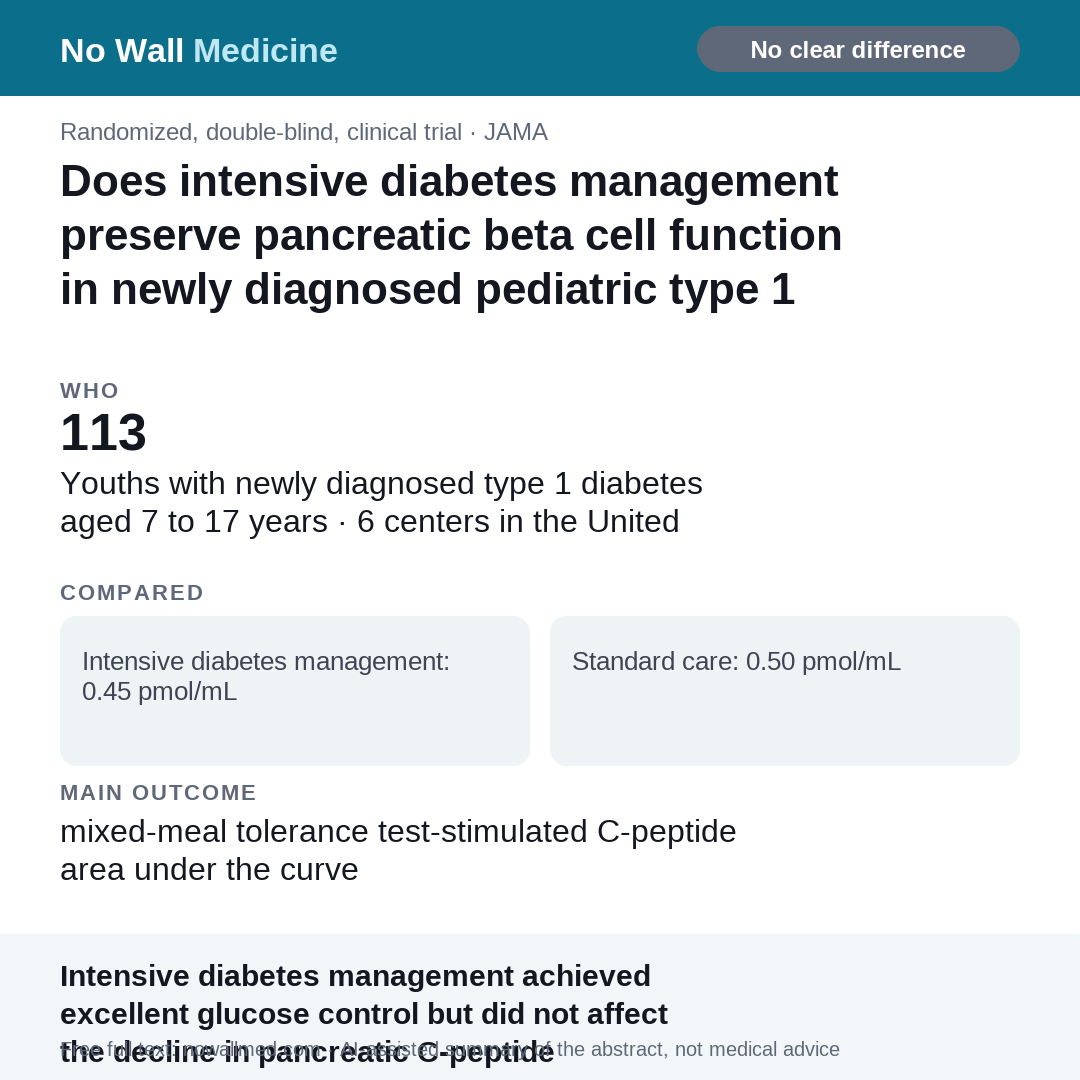
Clinical question: Does intensive diabetes management preserve pancreatic beta cell function in newly diagnosed pediatric type 1 diabetes?
Why it matters: It is unknown if achieving near-normal glucose levels immediately after a type 1 diabetes diagnosis can preserve pancreatic beta cell function by reducing glucotoxicity.
Key points
- Researchers studied 113 youths aged 7 to 17 years with newly diagnosed type 1 diabetes, comparing intensive management with automated insulin delivery to standard care.
- At 52 weeks, the mean C-peptide area under the curve, a measure of pancreatic beta cell function, was 0.45 pmol/mL in the intensive group and 0.50 pmol/mL in the standard group.
- The intensive management group spent a mean of 78% of time in the target glucose range of 70 to 180 mg/dL compared to 64% in the standard care group.
Headline and key points written with AI from the paper’s abstract, with every number checked against it. Read the paper before relying on them.
Topics
Cite this article
McVean J, Forlenza GP, Beck RW, Bauza C, Bailey R, Buckingham B. Effect of Tight Glycemic Control on Pancreatic Beta Cell Function in Newly Diagnosed Pediatric Type 1 Diabetes: A Randomized Clinical Trial. JAMA. 2023. doi:10.1001/jama.2023.2063
Spotted a mistake? Suggest a correction