Transcranial direct current stimulation improved symptoms in 40 brain injury patients
Effect of transcranial direct current stimulation on paroxysmal sympathetic hyperexcitability with acquired brain injury and cortical excitability: a randomized, double-blind, sham-controlled pilot study
Randomized, double-blind, sham-controlled pilot studyBenefit found
Does combining transcranial direct current stimulation with medication treat paroxysmal sympathetic hyperexcitability?
Who
40
Patients with paroxysmal sympathetic hyperexcitability and acquired brain injury · Single-center
Compared
active transcranial direct current stimulation: more substantial improvements in changes of PSH-AM, CRS-R, and medication reduction ratios
sham transcranial direct current stimulation
Main outcome
Paroxysmal Sympathetic Hyperactivity Assessment Measure and cortical excitability
Bottom line: Combining multi-target transcranial direct current stimulation with medication improves clinical efficacy and cortical excitability in paroxysmal sympathetic hyperexcitability.
J Neuroeng Rehabil · 2025-02-25Download image
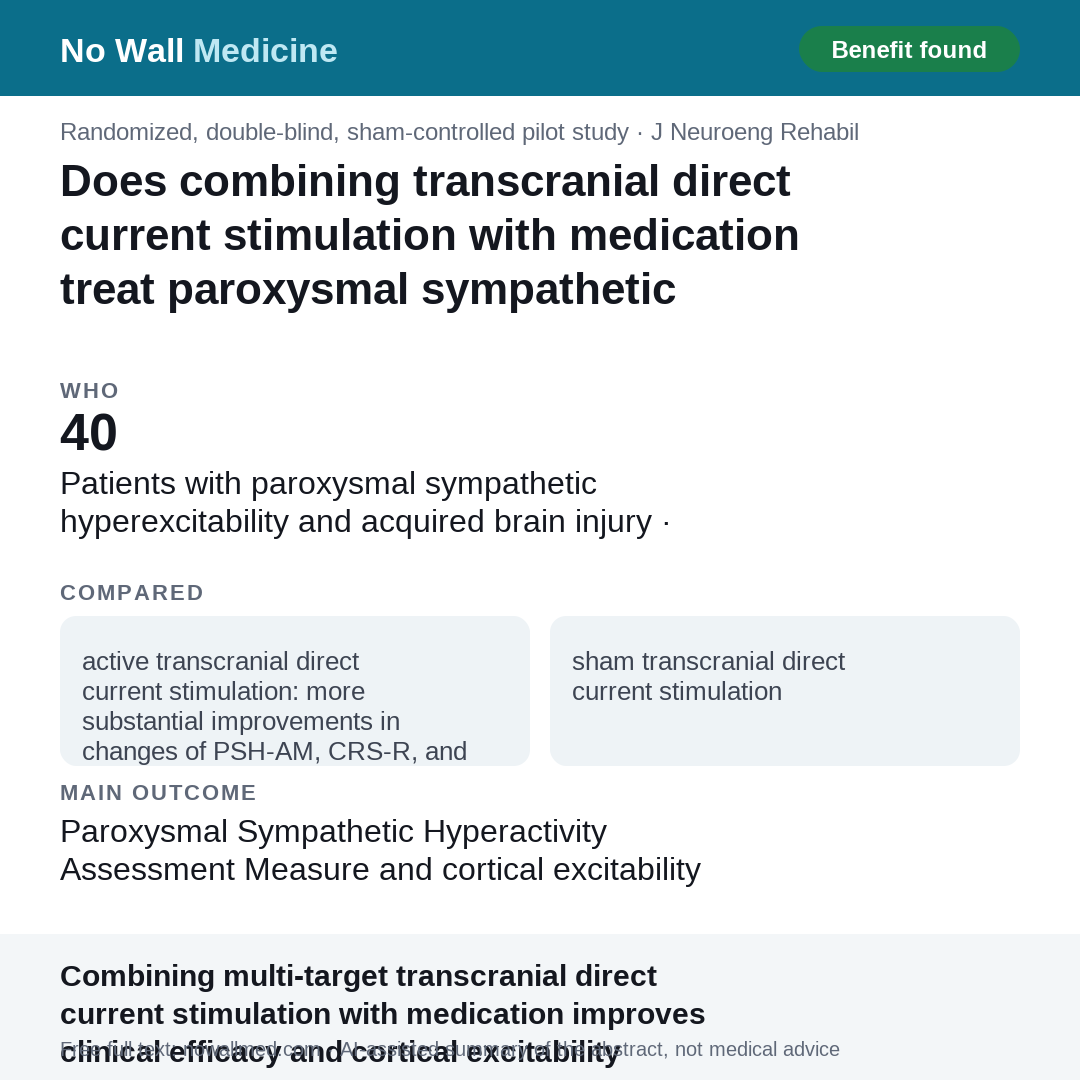
Clinical question: Does combining transcranial direct current stimulation with medication treat paroxysmal sympathetic hyperexcitability?
Why it matters: The effectiveness of transcranial direct current stimulation for paroxysmal sympathetic hyperexcitation was unknown
Key points
- 40 patients with paroxysmal sympathetic hyperexcitation were randomly assigned to active or sham transcranial direct current stimulation.
- The active group showed more improvements in symptoms and medication reduction ratios.
- Active transcranial direct current stimulation was linked to enhanced cortical excitability.
Limitation the authors note: This was a single-center pilot study
Headline and key points written with AI from the paper’s abstract, with every number checked against it. Read the paper before relying on them.
Was this summary helpful?
Subject terms
Cite this article
Liu M, Li Y, Zhao J, Liu B, Duan G, Guo Q. Effect of transcranial direct current stimulation on paroxysmal sympathetic hyperexcitability with acquired brain injury and cortical excitability: a randomized, double-blind, sham-controlled pilot study. J Neuroeng Rehabil. 2025. doi:10.1186/s12984-025-01583-2
Spotted a mistake? Suggest a correction
Top studies every Monday
The week’s key trials and guidelines in your specialties, plus any topics you follow. By email, free.
Get the weekly digest