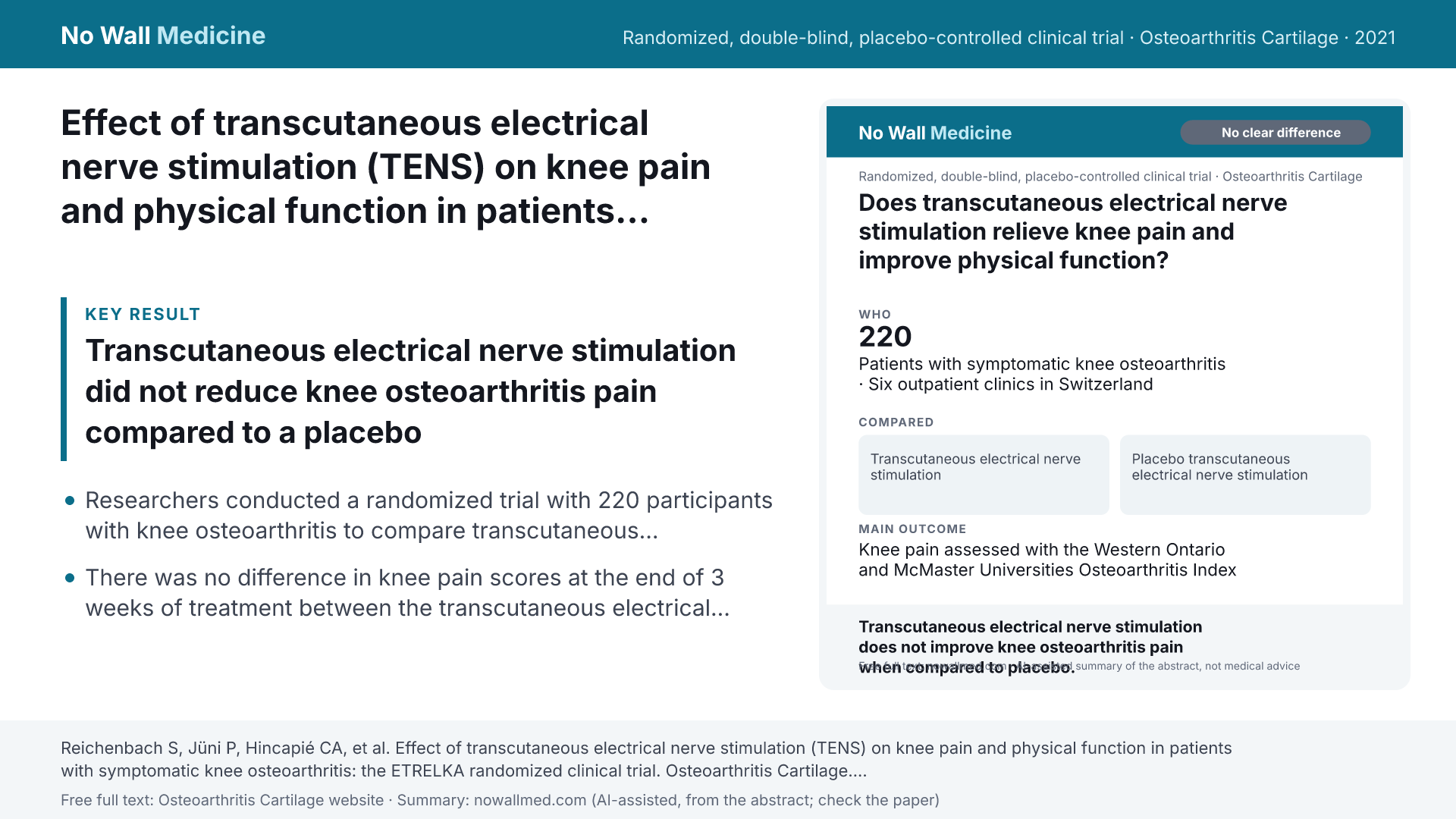
Transcutaneous electrical nerve stimulation did not reduce knee osteoarthritis pain compared to a placebo
Effect of transcutaneous electrical nerve stimulation (TENS) on knee pain and physical function in patients with symptomatic knee osteoarthritis: the ETRELKA randomized clinical trial
Randomized, double-blind, placebo-controlled clinical trialNo clear difference
Does transcutaneous electrical nerve stimulation relieve knee pain and improve physical function?
Who
220
Patients with symptomatic knee osteoarthritis · Six outpatient clinics in Switzerland
Compared
Transcutaneous electrical nerve stimulation
Placebo transcutaneous electrical nerve stimulation
Main outcome
Knee pain assessed with the Western Ontario and McMaster Universities Osteoarthritis Index pain subscale
Result: mean difference -0.06 (95% CI -0.41 to 0.29)
Bottom line: Transcutaneous electrical nerve stimulation does not improve knee osteoarthritis pain when compared to placebo.
Osteoarthritis Cartilage · 2021-11-23Download image
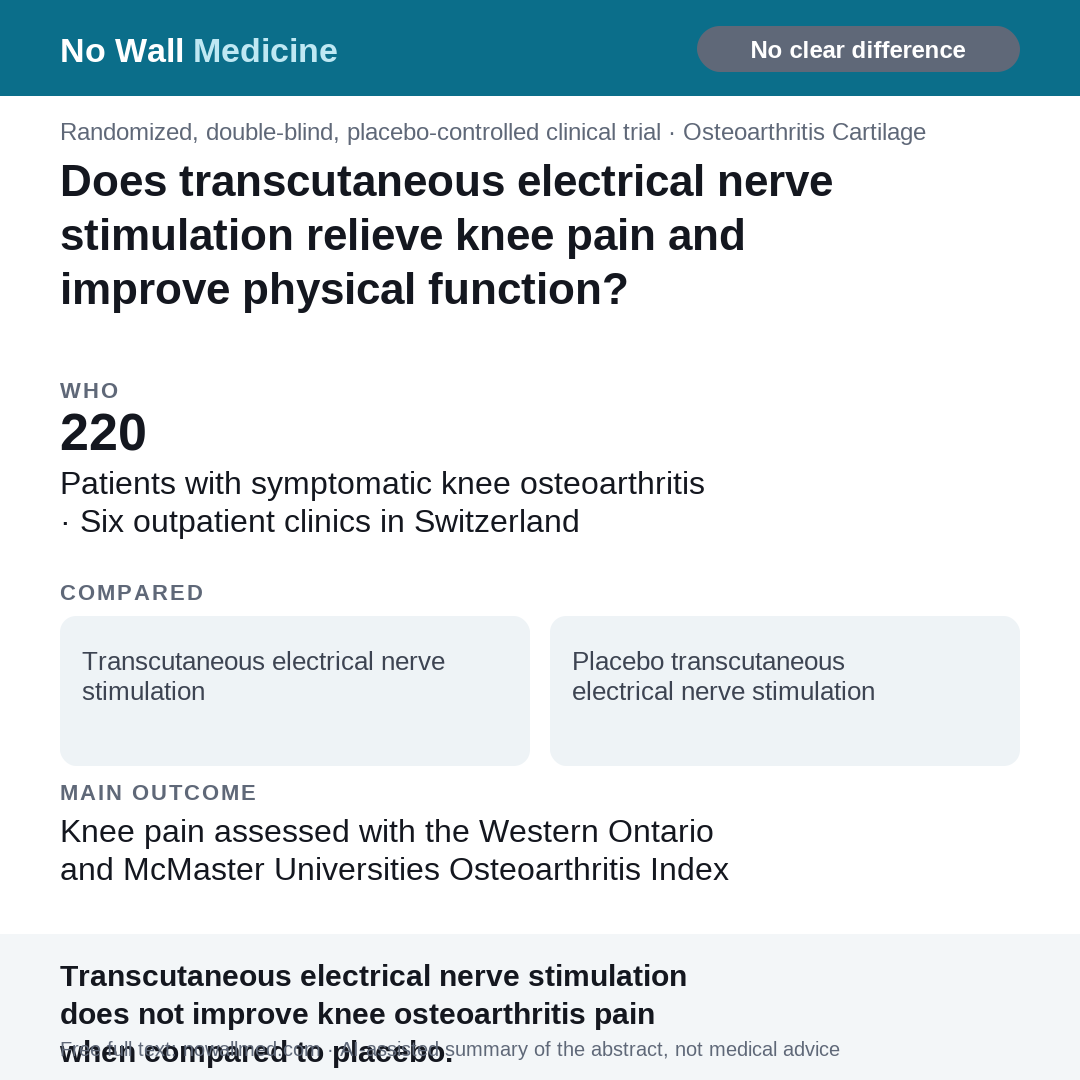
Clinical question: Does transcutaneous electrical nerve stimulation relieve knee pain and improve physical function?
Why it matters: It was unknown if transcutaneous electrical nerve stimulation is more effective than a placebo for relieving pain and improving physical function in patients with knee osteoarthritis.
Key points
- Researchers conducted a randomized trial with 220 participants with knee osteoarthritis to compare transcutaneous electrical nerve stimulation (electrical stimulation through the skin) against a placebo.
- There was no difference in knee pain scores at the end of 3 weeks of treatment between the transcutaneous electrical nerve stimulation group and the placebo group (mean difference -0.06; 95%CI -0.41 to 0.29; P = 0.74).
- Adverse events were similar between the groups, with 10.4% of the transcutaneous electrical nerve stimulation group and 10.6% of the placebo group reporting events (P = 0.95).
Headline and key points written with AI from the paper’s abstract, with every number checked against it. Read the paper before relying on them.
Was this summary helpful?
Subject terms
Cite this article
Reichenbach S, Jüni P, Hincapié CA, Schneider C, Meli DN, Schürch R. Effect of transcutaneous electrical nerve stimulation (TENS) on knee pain and physical function in patients with symptomatic knee osteoarthritis: the ETRELKA randomized clinical trial. Osteoarthritis Cartilage. 2021. doi:10.1016/j.joca.2021.10.015
Spotted a mistake? Suggest a correction
Top studies every Monday
The week’s key trials and guidelines in your specialties, plus any topics you follow. By email, free.
Get the weekly digest