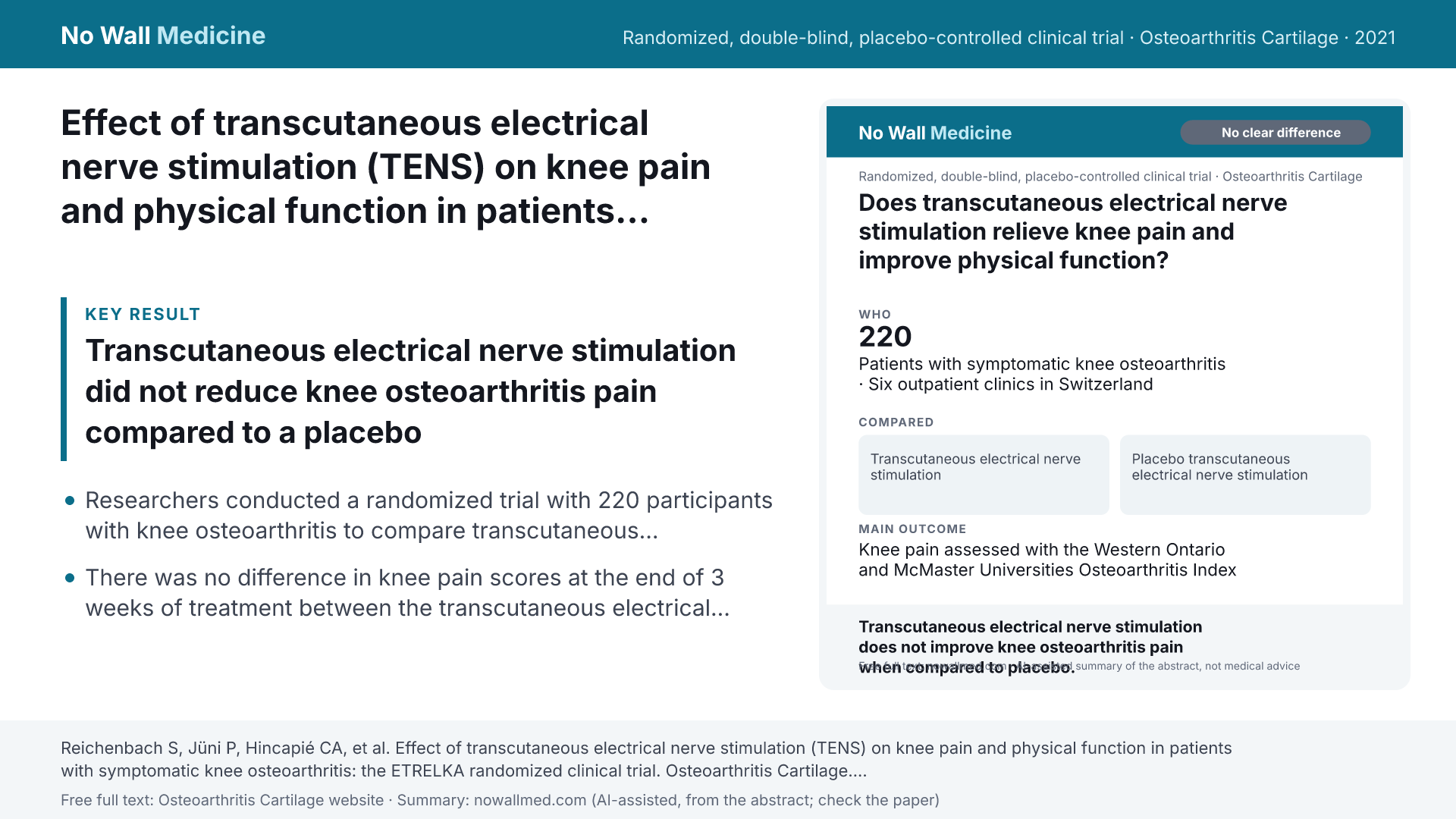
Effect of transcutaneous electrical nerve stimulation (TENS) on knee pain and physical function in patients with symptomatic knee osteoarthritis: the ETRELKA randomized clinical trial
Key result: Transcutaneous electrical nerve stimulation did not reduce knee osteoarthritis pain compared to a placebo
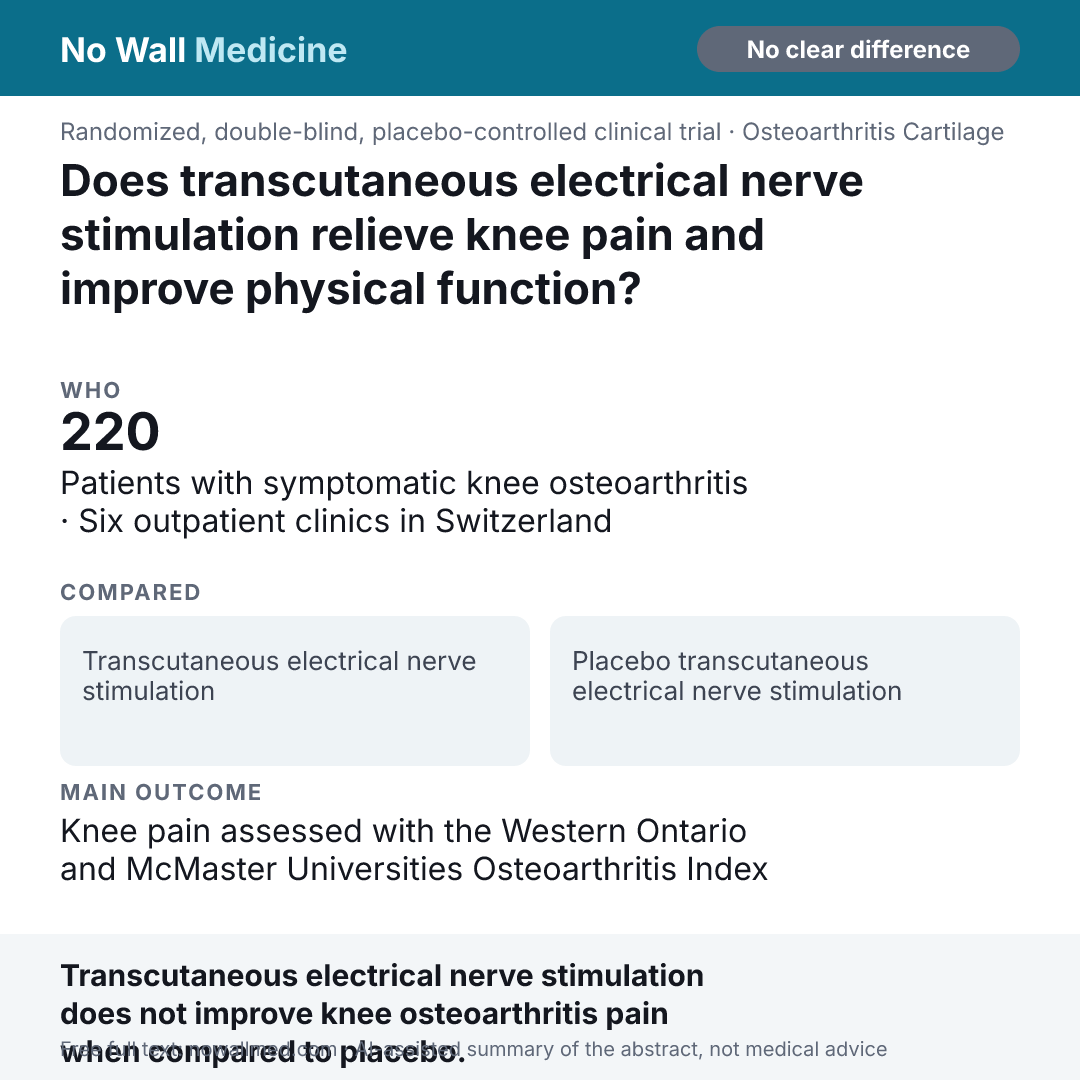
Randomized, double-blind, placebo-controlled clinical trialNo clear difference
Does transcutaneous electrical nerve stimulation relieve knee pain and improve physical function?
Who
220
Patients with symptomatic knee osteoarthritis · Six outpatient clinics in Switzerland
Compared
Transcutaneous electrical nerve stimulation
Placebo transcutaneous electrical nerve stimulation
Main outcome
Knee pain assessed with the Western Ontario and McMaster Universities Osteoarthritis Index pain subscale
Result: mean difference -0.06 (95% CI -0.41 to 0.29)
Bottom line: Transcutaneous electrical nerve stimulation does not improve knee osteoarthritis pain when compared to placebo.
Osteoarthritis Cartilage · 2021-11-23 · Save PNG
Key points
- Researchers conducted a randomized trial with 220 participants with knee osteoarthritis to compare transcutaneous electrical nerve stimulation (electrical stimulation through the skin) against a placebo.
- There was no difference in knee pain scores at the end of 3 weeks of treatment between the transcutaneous electrical nerve stimulation group and the placebo group (mean difference -0.06; 95%CI -0.41 to 0.29; P = 0.74).
- Adverse events were similar between the groups, with 10.4% of the transcutaneous electrical nerve stimulation group and 10.6% of the placebo group reporting events (P = 0.95).
Discussion prompts
- Would these patients look like yours? Who was left out?
- Is the main outcome one that matters to patients?
- Is the difference large enough to change what you do?
Cite: Reichenbach S, Jüni P, Hincapié CA, et al. Effect of transcutaneous electrical nerve stimulation (TENS) on knee pain and physical function in patients with symptomatic knee osteoarthritis: the ETRELKA randomized clinical trial. Osteoarthritis Cartilage. 2022;30(3):426-435. doi:10.1016/j.joca.2021.10.015
Free full text: Osteoarthritis Cartilage website · Summary and visual abstract: nowallmed.com/a/effect-of-transcutaneous-electrical-nerve-stimulation-tens-on-knee-3p6jba/ (AI-assisted from the abstract; check the paper before relying on it).