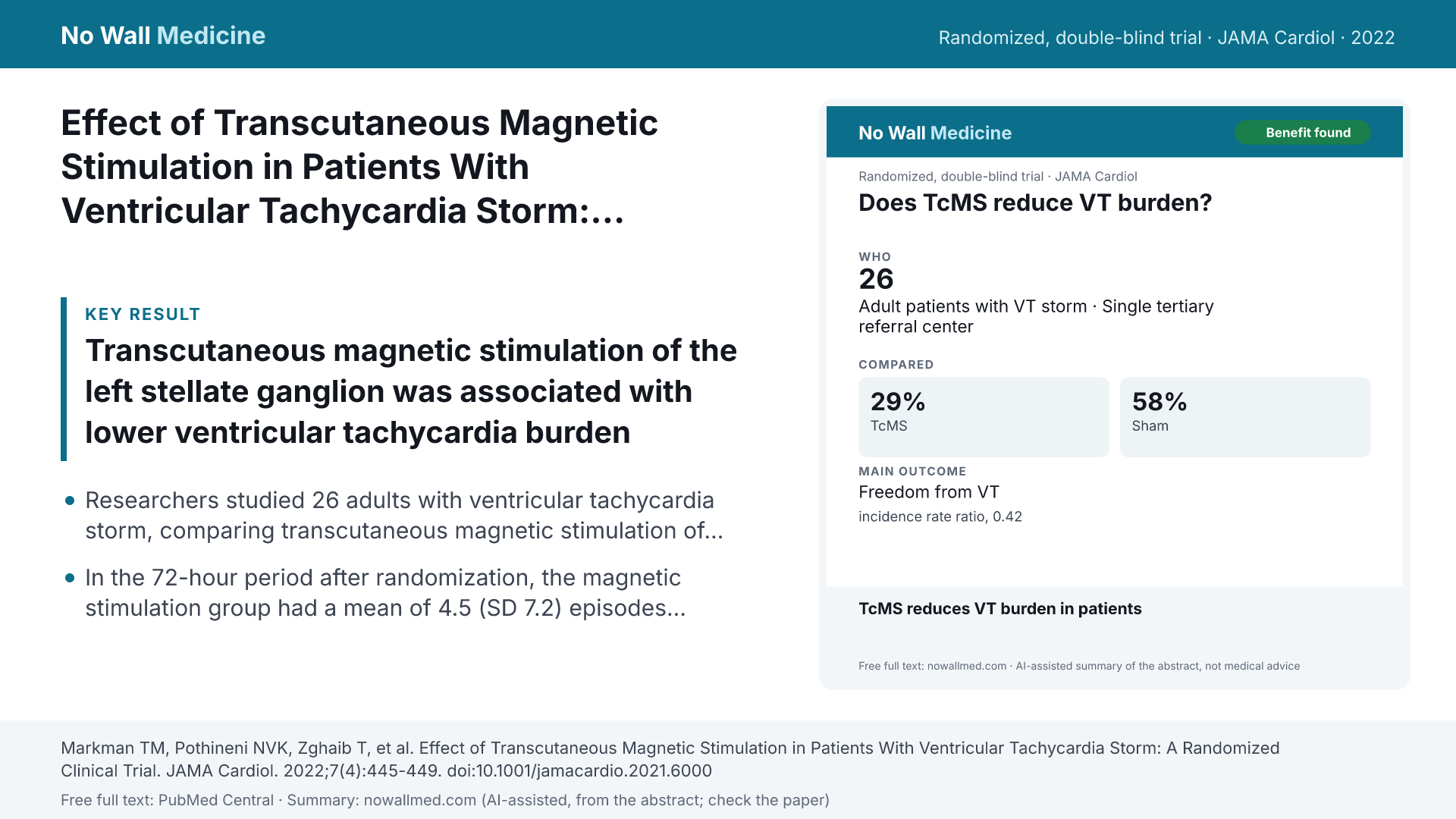
Effect of Transcutaneous Magnetic Stimulation in Patients With Ventricular Tachycardia Storm: A Randomized Clinical Trial
Key result: Transcutaneous magnetic stimulation of the left stellate ganglion was associated with lower ventricular tachycardia burden
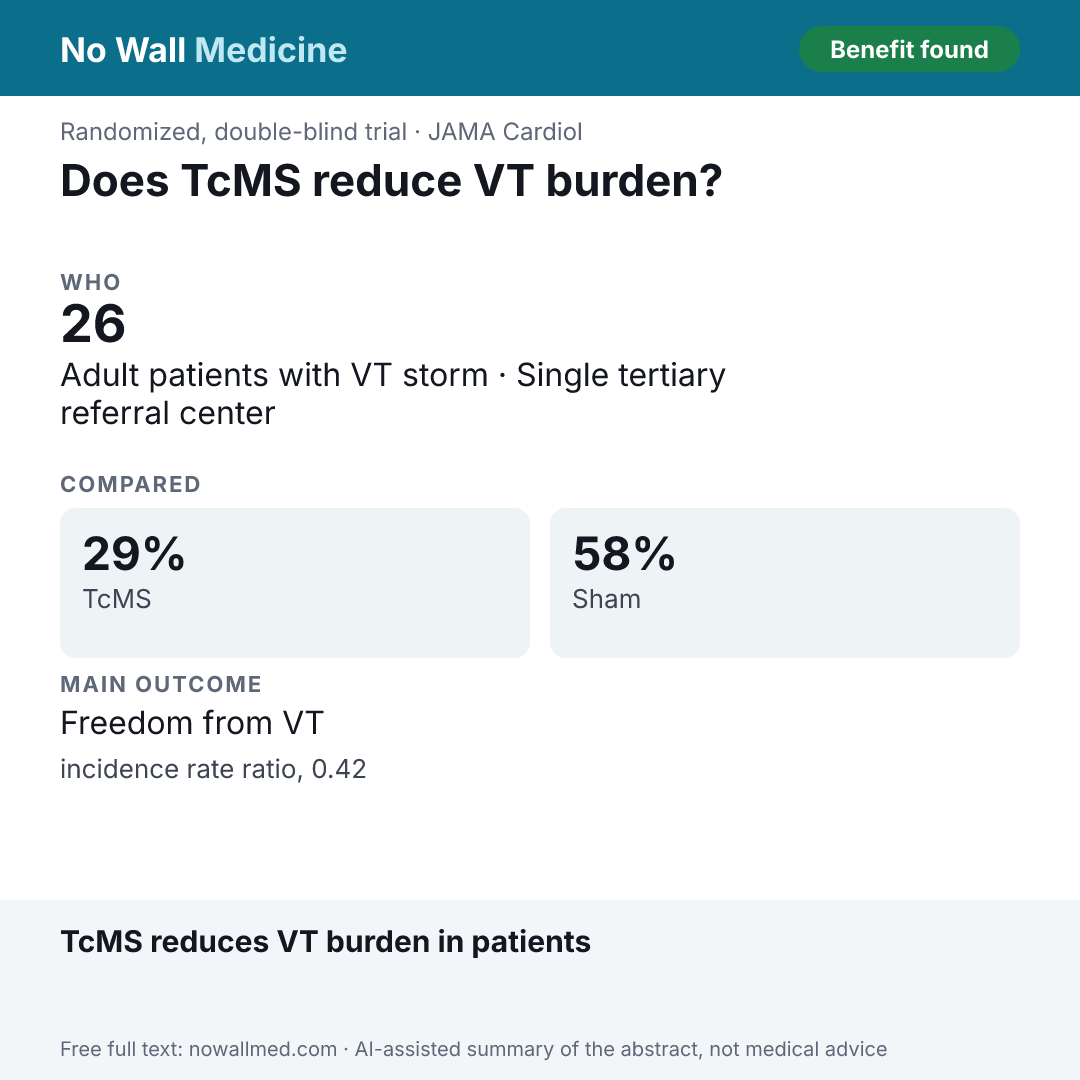
Randomized, double-blind trialBenefit found
Does TcMS reduce VT burden?
Who
26
Adult patients with VT storm · Single tertiary referral center
Compared
29%TcMS (4/14)
58%Sham (7/12)
Main outcome
Freedom from VT
Result: incidence rate ratio, 0.42
Bottom line: TcMS reduces VT burden in patients
JAMA Cardiol · 2022-02-17 · Save PNG
Key points
- Researchers studied 26 adults with ventricular tachycardia storm, comparing transcutaneous magnetic stimulation of the left stellate ganglion to a sham stimulation.
- In the 72-hour period after randomization, the magnetic stimulation group had a mean of 4.5 (SD 7.2) episodes compared to 10.7 (SD 13.8) in the sham group.
- The primary outcome of freedom from ventricular tachycardia in the first 24 hours showed no statistically significant difference between the groups.
Discussion prompts
- Would these patients look like yours? Who was left out?
- Is the main outcome one that matters to patients?
- Is the difference large enough to change what you do?
Cite: Markman TM, Pothineni NVK, Zghaib T, et al. Effect of Transcutaneous Magnetic Stimulation in Patients With Ventricular Tachycardia Storm: A Randomized Clinical Trial. JAMA Cardiol. 2022;7(4):445-449. doi:10.1001/jamacardio.2021.6000
Free full text: PubMed Central · Summary and visual abstract: nowallmed.com/a/effect-of-transcutaneous-magnetic-stimulation-in-patients-with-6x04n7/ (AI-assisted from the abstract; check the paper before relying on it).