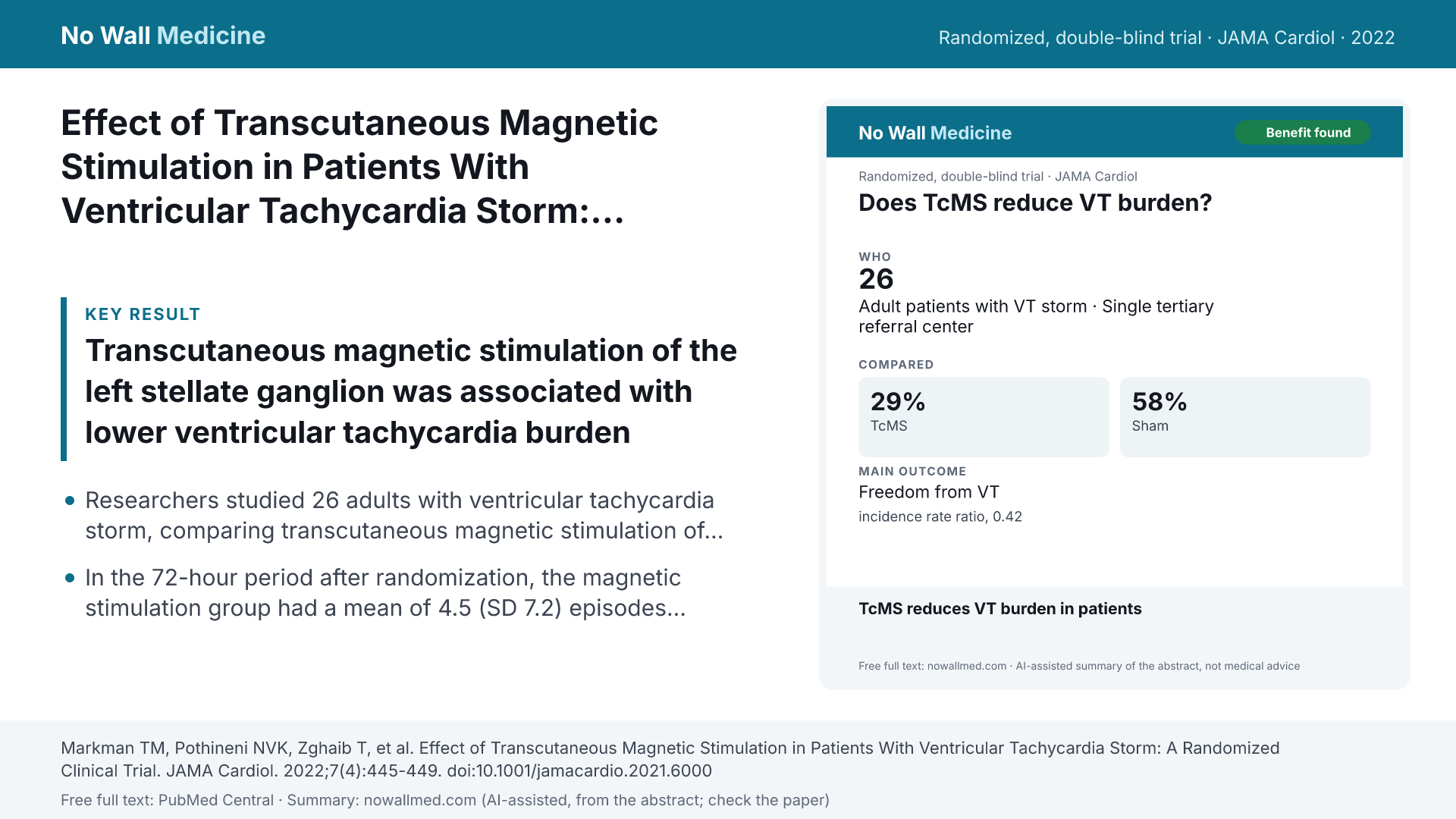
Transcutaneous magnetic stimulation of the left stellate ganglion was associated with lower ventricular tachycardia burden
Effect of Transcutaneous Magnetic Stimulation in Patients With Ventricular Tachycardia Storm: A Randomized Clinical Trial
Randomized, double-blind trialBenefit found
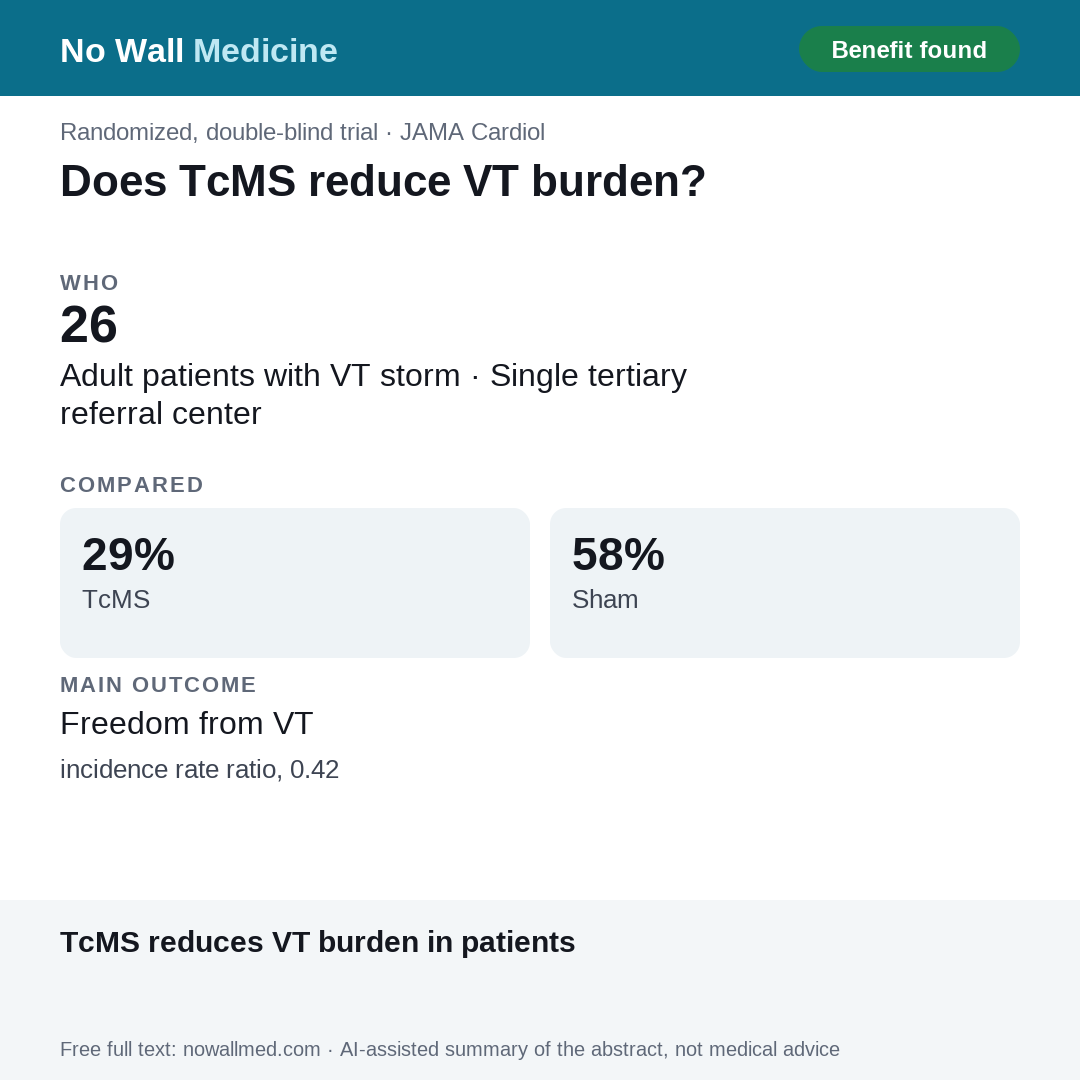
Does TcMS reduce VT burden?
Who
26
Adult patients with VT storm · Single tertiary referral center
Compared
29%TcMS (4/14)
58%Sham (7/12)
Main outcome
Freedom from VT
Result: incidence rate ratio, 0.42
Bottom line: TcMS reduces VT burden in patients
JAMA Cardiol · 2022-02-17Download image
Clinical question: Does TcMS reduce VT burden?
Why it matters: It is unknown if noninvasive transcutaneous magnetic stimulation of the left stellate ganglion is safe and effective for reducing heart rhythm disturbances in patients with ventricular tachycardia storm.
Key points
- Researchers studied 26 adults with ventricular tachycardia storm, comparing transcutaneous magnetic stimulation of the left stellate ganglion to a sham stimulation.
- In the 72-hour period after randomization, the magnetic stimulation group had a mean of 4.5 (SD 7.2) episodes compared to 10.7 (SD 13.8) in the sham group.
- The primary outcome of freedom from ventricular tachycardia in the first 24 hours showed no statistically significant difference between the groups.
Headline and key points written with AI from the paper’s abstract, with every number checked against it. Read the paper before relying on them.
Was this summary helpful?
Subject terms
Cite this article
Markman TM, Pothineni NVK, Zghaib T, et al. Effect of Transcutaneous Magnetic Stimulation in Patients With Ventricular Tachycardia Storm: A Randomized Clinical Trial. JAMA Cardiol. 2022. doi:10.1001/jamacardio.2021.6000
Spotted a mistake? Suggest a correction