Stepped care model reduced depressive symptoms more effectively than routine care in refugees
Effectiveness and cost-effectiveness for the treatment of depressive symptoms in refugees and asylum seekers: A multi-centred randomized controlled trial
Multicentre, clinician-blinded, randomised, controlled trialBenefit found
Is the Stepped Care and Collaborative Model effective for reducing depressive symptoms in refugees?
Who
584
Asylum seekers and refugees with depressive symptoms · Seven university sites in Germany
Compared
Stepped Care and Collaborative Model: PHQ-9 mean difference at T1 1.30
Treatment-as-usual
Main outcome
Change in depressive symptoms using Patient Health Questionnaire-9
Result: PHQ-9 mean difference at T1 1.30, 95% CI 1.12 to 1.48
Bottom line: The Stepped Care and Collaborative Model is more effective and cost-effective at reducing depressive symptoms than treatment-as-usual.
Funded by: Innovationsfond and German Ministry of Health
Lancet Reg Health Eur · 2022-06-06 · Save PNG
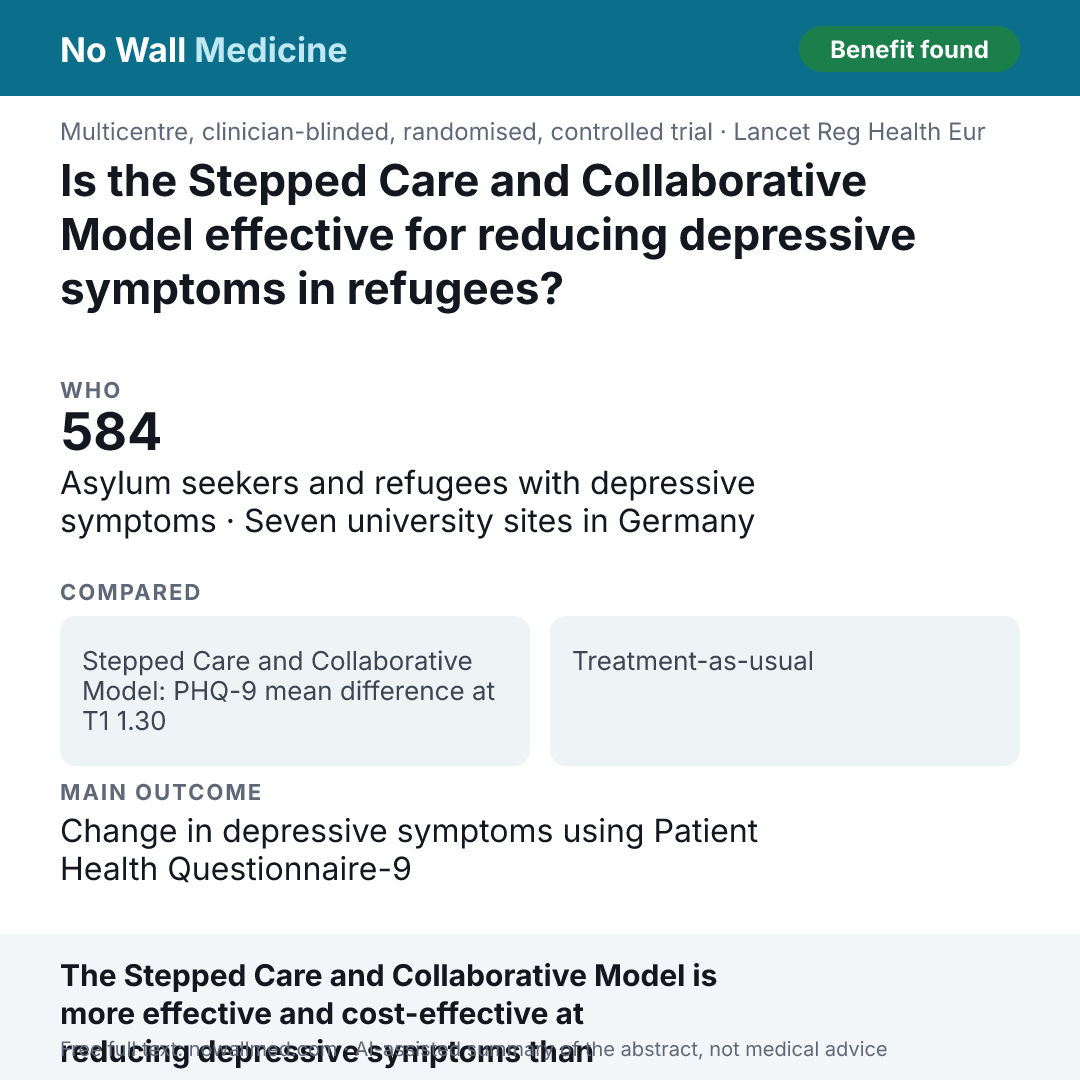
Clinical question: Is the Stepped Care and Collaborative Model effective for reducing depressive symptoms in refugees?
Why it matters: Refugee populations face high psychological distress alongside linguistic, institutional, financial, and cultural barriers to mental health resources.
Key points
- The study randomized 584 asylum seekers and refugees in Germany to either a Stepped Care and Collaborative Model or routine care.
- After 12 weeks, the Stepped Care and Collaborative Model resulted in significantly lower Patient Health Questionnaire-9 scores compared to routine care.
- The Stepped Care and Collaborative Model was also found to be cost-effective for the primary outcome and quality-adjusted life years.
Headline and key points written with AI from the paper’s abstract, with every number checked against it. Read the paper before relying on them.
Was this summary helpful?
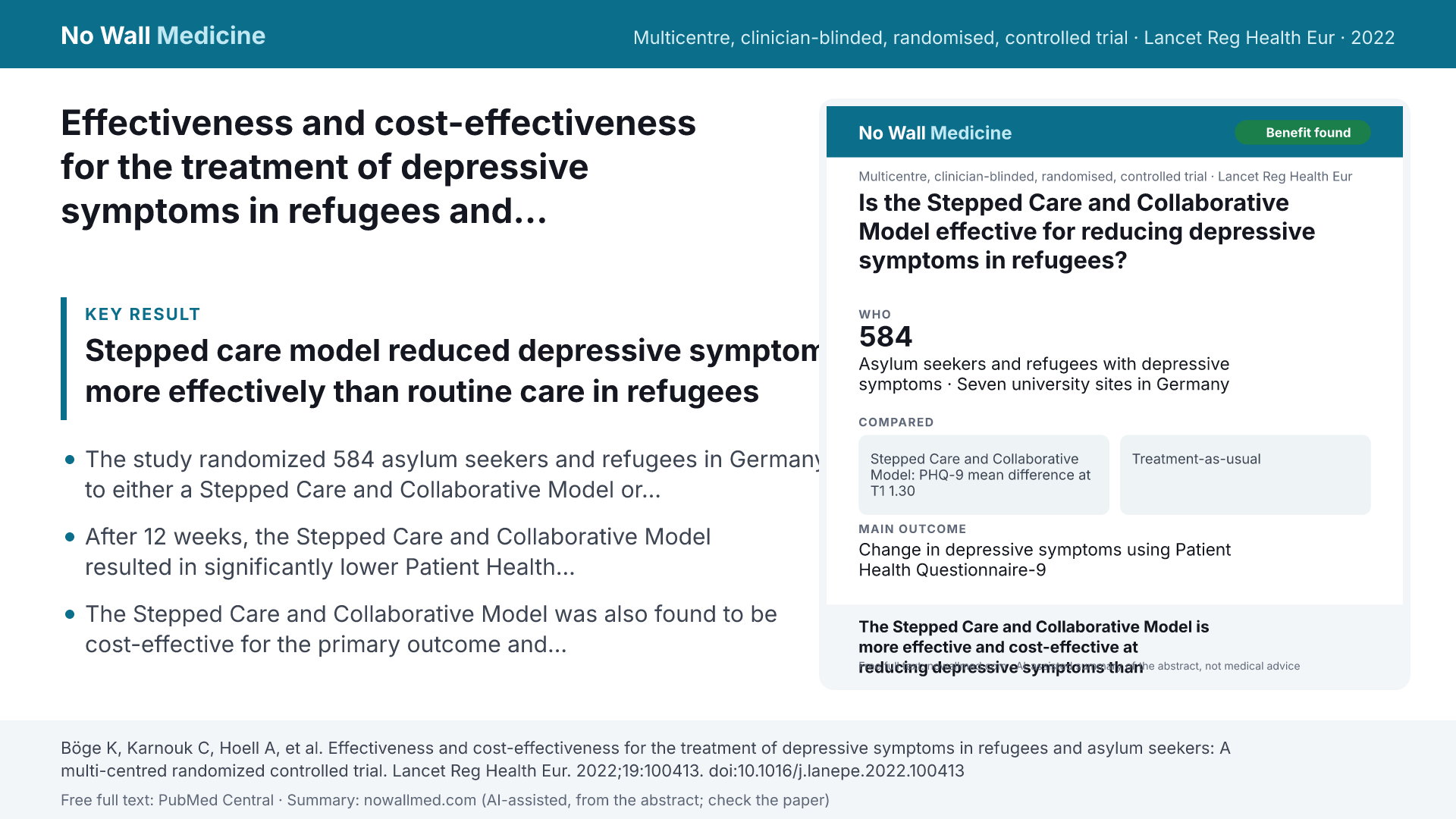
Headline, design, result, key points, caveat and citation as plain text.
Cite this article
Böge K, Karnouk C, Hoell A, et al. Effectiveness and cost-effectiveness for the treatment of depressive symptoms in refugees and asylum seekers: A multi-centred randomized controlled trial. Lancet Reg Health Eur. 2022. doi:10.1016/j.lanepe.2022.100413
Spotted a mistake? Suggest a correction