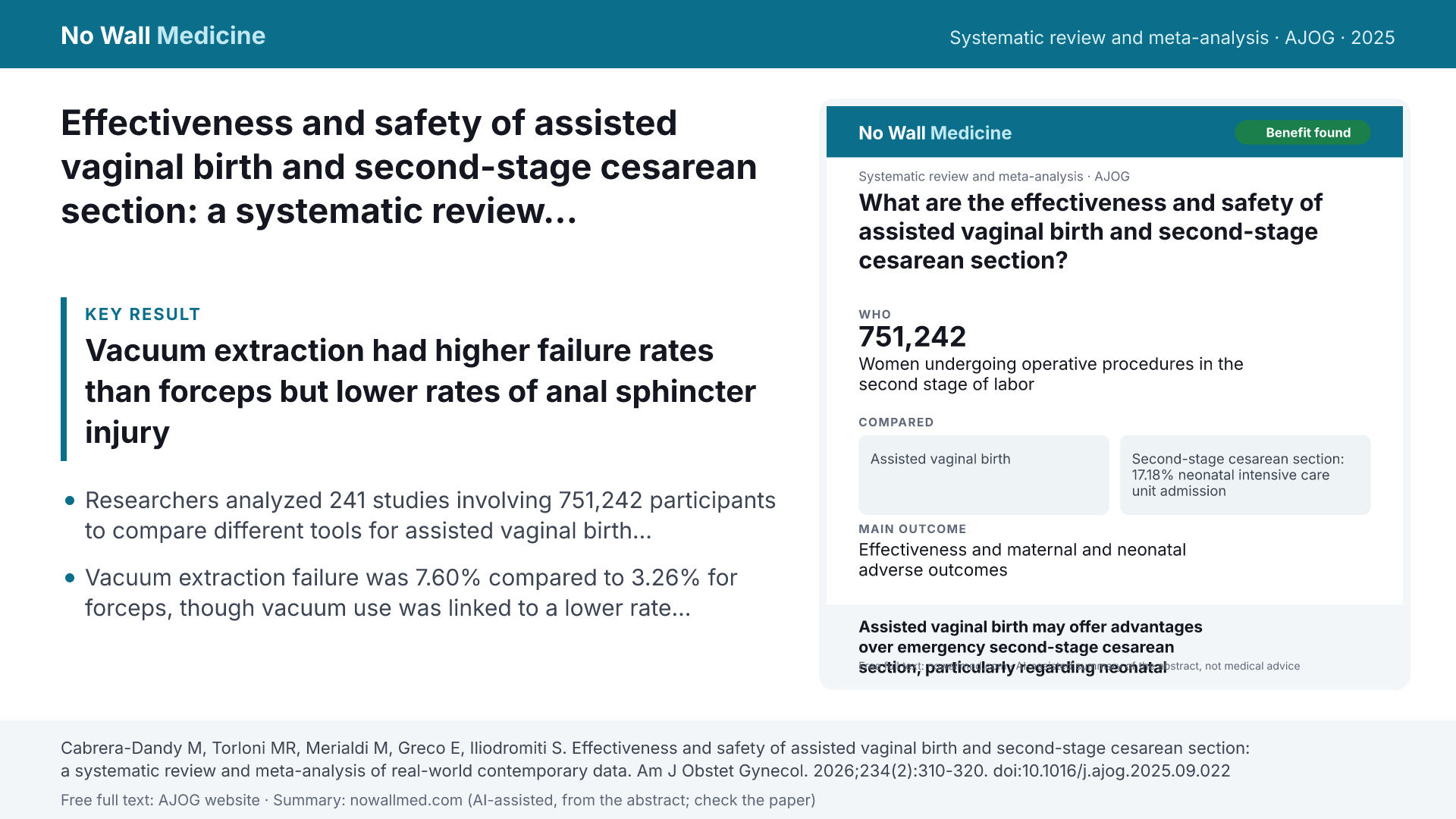
Effectiveness and safety of assisted vaginal birth and second-stage cesarean section: a systematic review and meta-analysis of real-world contemporary data
Key result: Vacuum extraction had higher failure rates than forceps but lower rates of anal sphincter injury
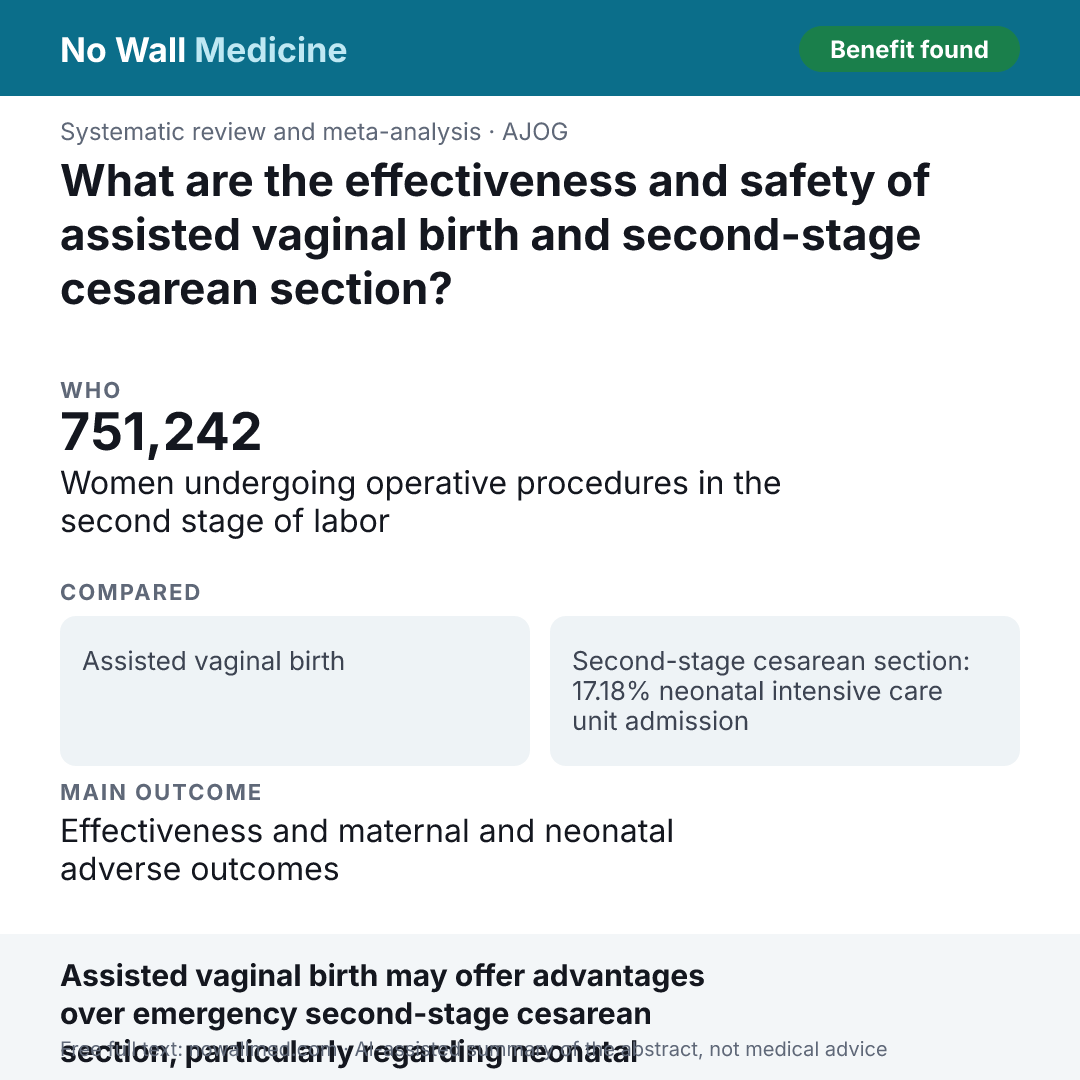
Key points
- Researchers analyzed 241 studies involving 751,242 participants to compare different tools for assisted vaginal birth and second-stage cesarean section.
- Vacuum extraction failure was 7.60% compared to 3.26% for forceps, though vacuum use was linked to a lower rate of obstetric anal sphincter injury.
- Second-stage cesarean section was associated with higher rates of neonatal intensive care unit admission (17.18%) and neonatal death (1.95%) compared to assisted vaginal birth.
Why it matters: Evidence is needed to understand the effectiveness of different instruments for assisted vaginal birth and the risks of second-stage cesarean section.
Discussion prompts
- Would these patients look like yours? Who was left out?
- Is the main outcome one that matters to patients?
- Is the difference large enough to change what you do?
Cite: Cabrera-Dandy M, Torloni MR, Merialdi M, Greco E, Iliodromiti S. Effectiveness and safety of assisted vaginal birth and second-stage cesarean section: a systematic review and meta-analysis of real-world contemporary data. Am J Obstet Gynecol. 2026;234(2):310-320. doi:10.1016/j.ajog.2025.09.022
Free full text: AJOG website · Summary and visual abstract: nowallmed.com/a/effectiveness-and-safety-of-assisted-vaginal-birth-and-second-stage-1090f9c/ (AI-assisted from the abstract; check the paper before relying on it).