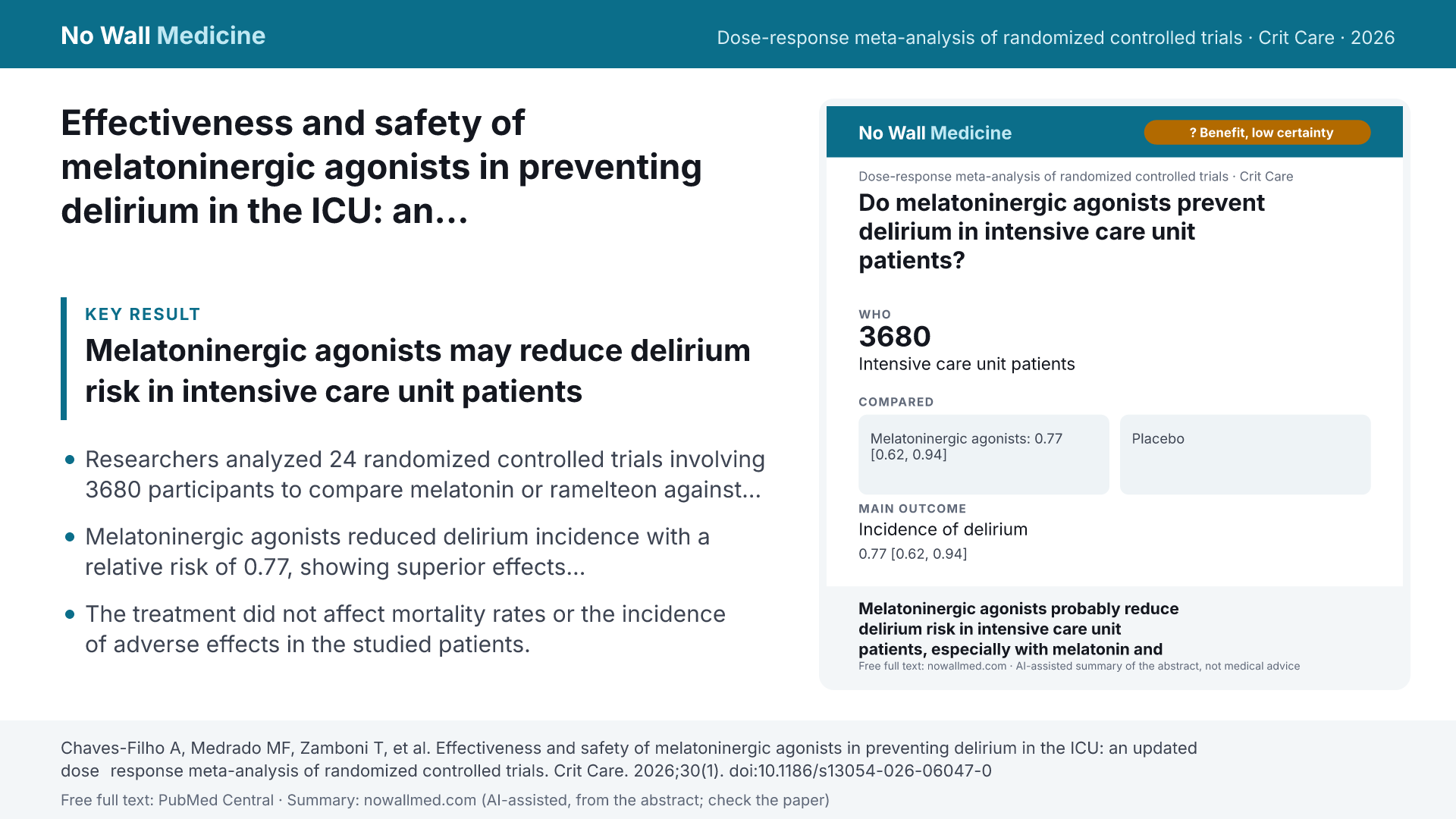
Effectiveness and safety of melatoninergic agonists in preventing delirium in the ICU: an updated dose‒response meta-analysis of randomized controlled trials
Key result: Melatoninergic agonists may reduce delirium risk in intensive care unit patients
Key points
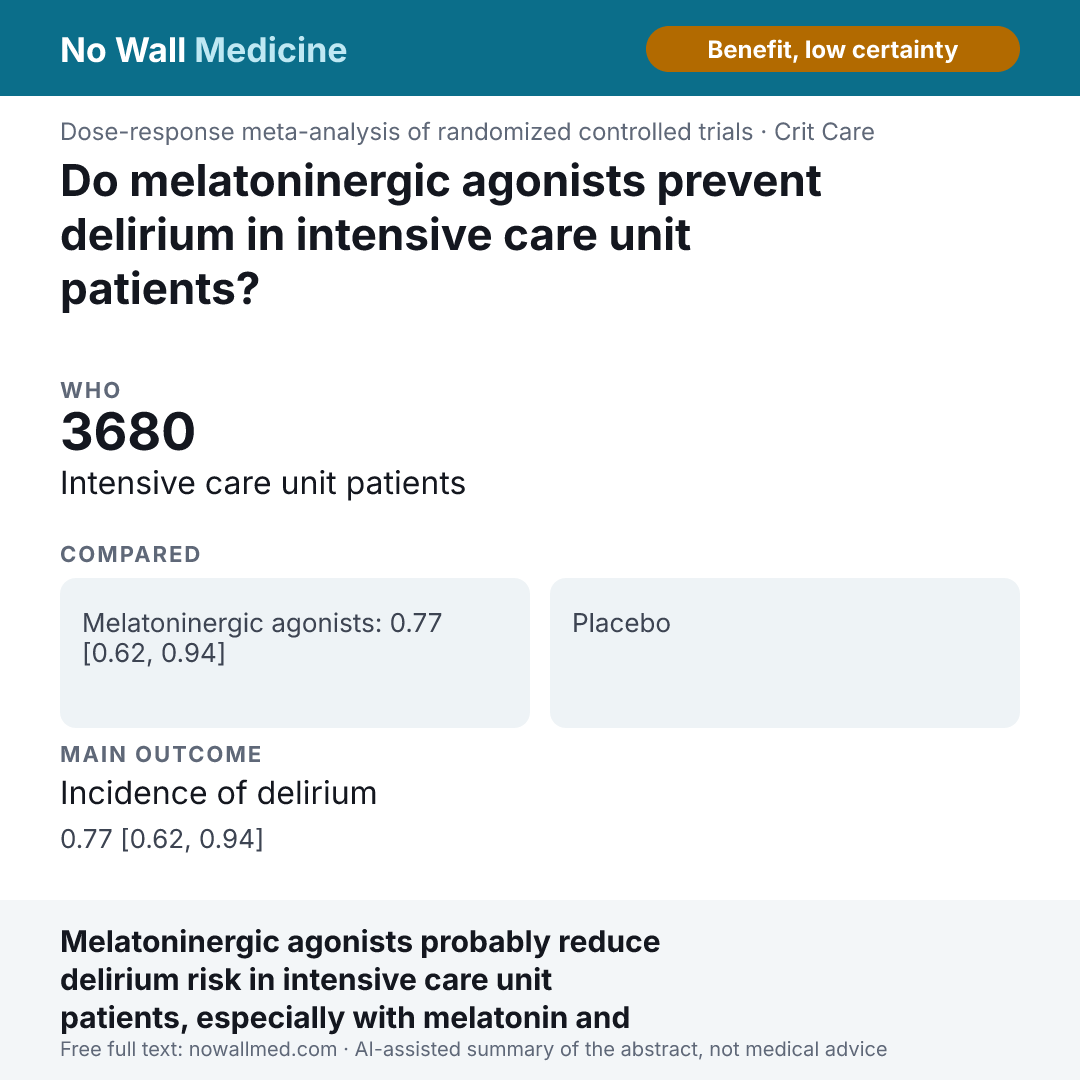
- Researchers analyzed 24 randomized controlled trials involving 3680 participants to compare melatonin or ramelteon against a placebo.
- Melatoninergic agonists reduced delirium incidence with a relative risk of 0.77, showing superior effects in surgical-type intensive care units.
- The treatment did not affect mortality rates or the incidence of adverse effects in the studied patients.
Why it matters: Current findings are conflicting regarding whether melatonin can prevent delirium in intensive care unit patients.
Limitation the authors note: The magnitude of effect was modest, with low-certainty evidence and moderate heterogeneity.
Discussion prompts
- Would these patients look like yours? Who was left out?
- Is the main outcome one that matters to patients?
- Is the difference large enough to change what you do?
Cite: Chaves-Filho A, Medrado MF, Zamboni T, et al. Effectiveness and safety of melatoninergic agonists in preventing delirium in the ICU: an updated dose‒response meta-analysis of randomized controlled trials. Crit Care. 2026;30(1). doi:10.1186/s13054-026-06047-0
Free full text: PubMed Central · Summary and visual abstract: nowallmed.com/a/effectiveness-and-safety-of-melatoninergic-agonists-in-preventing-4yrx4v/ (AI-assisted from the abstract; check the paper before relying on it).