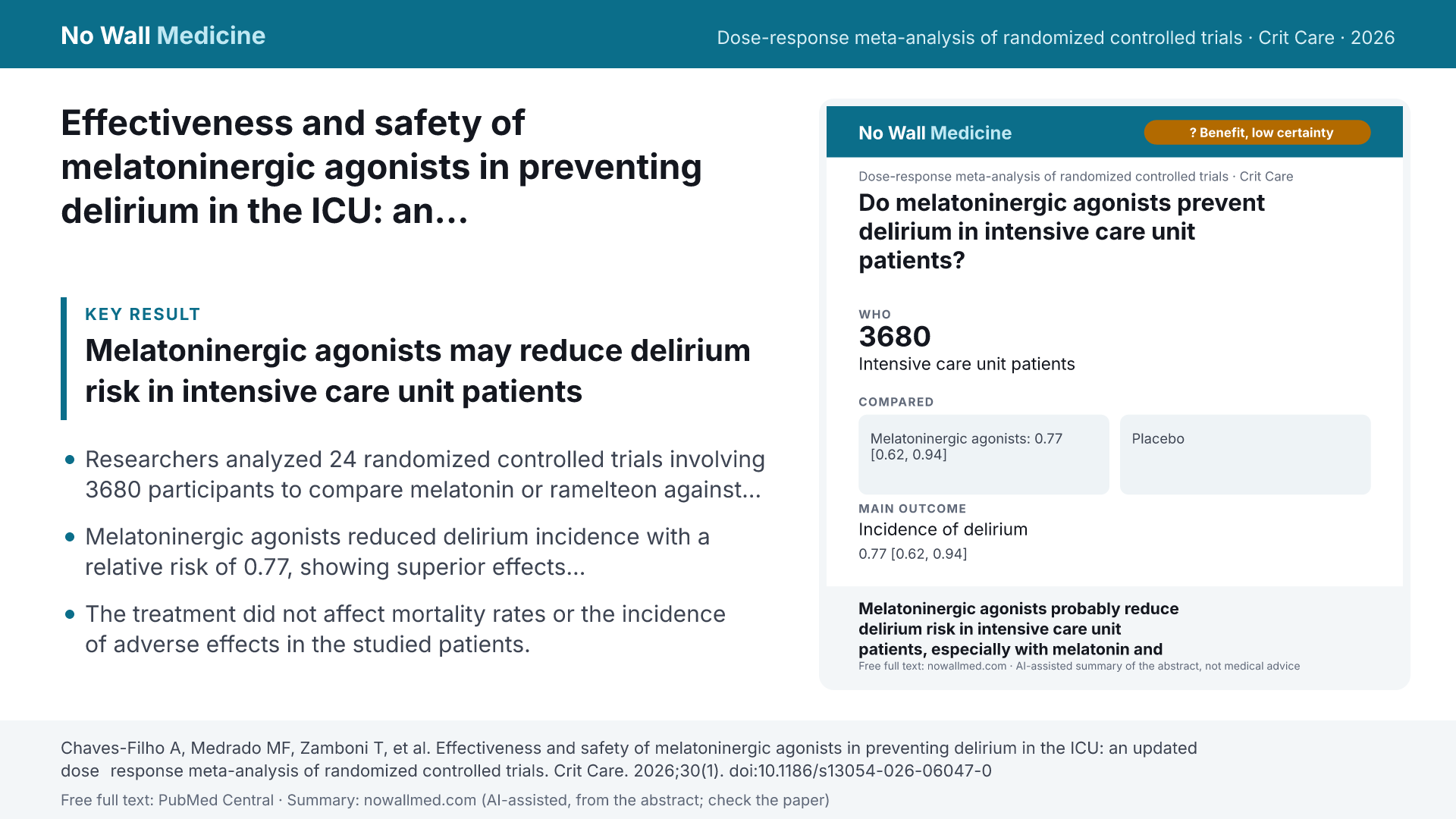
Melatoninergic agonists may reduce delirium risk in intensive care unit patients
Effectiveness and safety of melatoninergic agonists in preventing delirium in the ICU: an updated dose‒response meta-analysis of randomized controlled trials
Dose-response meta-analysis of randomized controlled trialsBenefit found
Do melatoninergic agonists prevent delirium in intensive care unit patients?
Who
3680
Intensive care unit patients
Compared
Melatoninergic agonists: 0.77 [0.62, 0.94]
Placebo
Main outcome
Incidence of delirium
Result: 0.77 [0.62, 0.94]
Bottom line: Melatoninergic agonists probably reduce delirium risk in intensive care unit patients, especially with melatonin and longer intervention durations.
Limitation: Low-certainty evidence, modest effect magnitude, and moderate heterogeneity.
Crit Care · 2026-06-17Download image
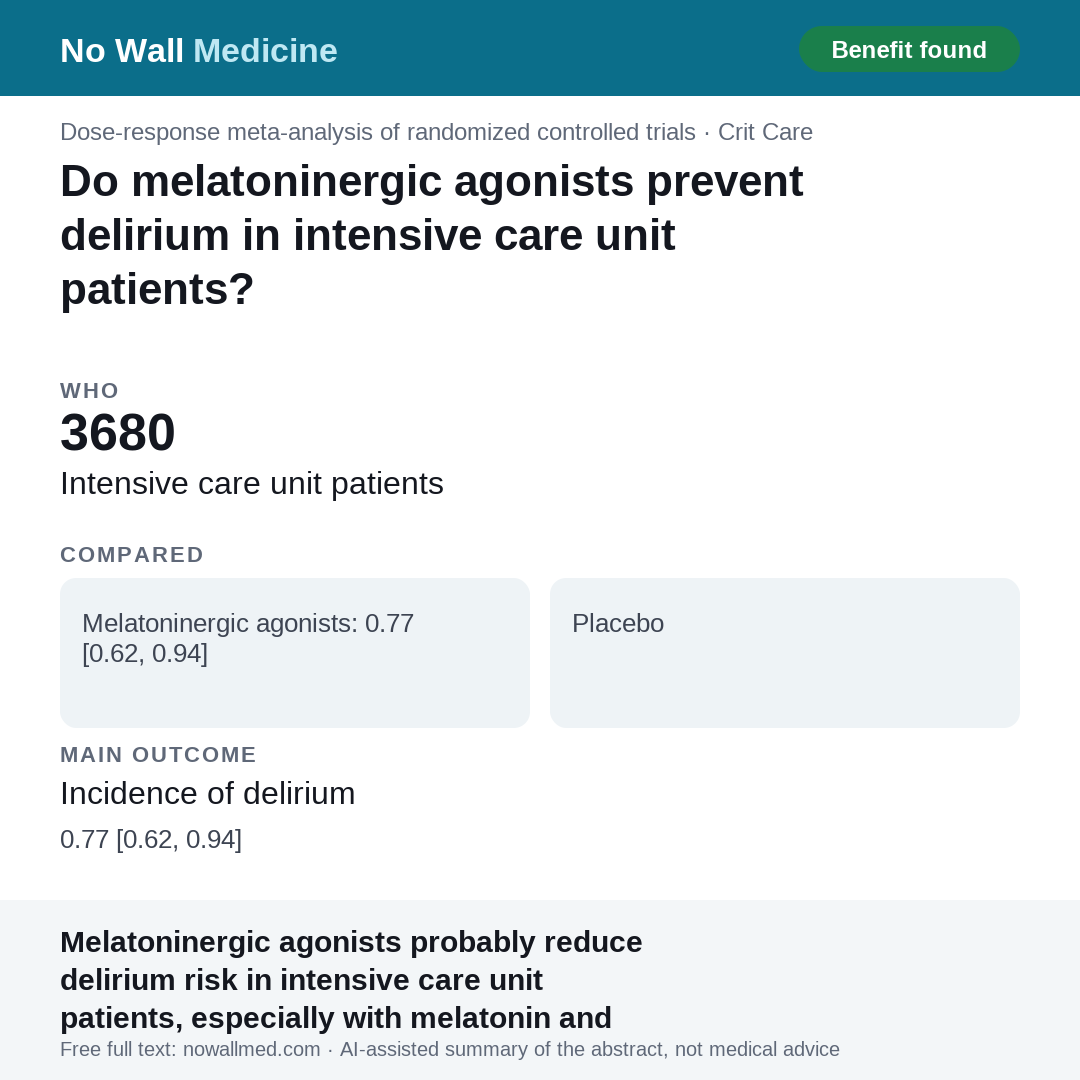
Clinical question: Do melatoninergic agonists prevent delirium in intensive care unit patients?
Why it matters: Current findings are conflicting regarding whether melatonin can prevent delirium in intensive care unit patients.
Key points
- Researchers analyzed 24 randomized controlled trials involving 3680 participants to compare melatonin or ramelteon against a placebo.
- Melatoninergic agonists reduced delirium incidence with a relative risk of 0.77, showing superior effects in surgical-type intensive care units.
- The treatment did not affect mortality rates or the incidence of adverse effects in the studied patients.
Limitation the authors note: The magnitude of effect was modest, with low-certainty evidence and moderate heterogeneity.
Headline and key points written with AI from the paper’s abstract, with every number checked against it. Read the paper before relying on them.
Was this summary helpful?
Subject terms
Cite this article
Chaves-Filho A, Medrado MF, Zamboni T, et al. Effectiveness and safety of melatoninergic agonists in preventing delirium in the ICU: an updated dose‒response meta-analysis of randomized controlled trials. Crit Care. 2026. doi:10.1186/s13054-026-06047-0
Spotted a mistake? Suggest a correction