Dietitian-led care lowered HbA1c more than usual care in Nepali diabetes patients
Effectiveness of a dietician-led intervention in reducing glycated haemoglobin among people with type 2 diabetes in Nepal: a single centre, open-label, randomised controlled trial
Open-label, two-armed, hospital-based, randomised controlled trialBenefit found
Does a dietician-led dietary intervention reduce glycated haemoglobin in people with type 2 diabetes?
Who
156
People with type 2 diabetes aged 24-64 years with HbA1c >6.5% · Tribhuvan University Teaching Hospital, Kathmandu, Nepal
Compared
dietician-led dietary intervention: decreased by 0.48 (95% CI: -0.80 to -0.16)
usual care control: increased by 0.22 (95% CI: -0.21 to 0.66)
Main outcome
change in glycated haemoglobin level over six months
Result: 0.61 (95% CI: -1.04 to -0.17; p = 0.006)
Bottom line: A dietician-led intervention improved glycaemic control and clinical outcomes among people with type 2 diabetes in Nepal.
Funded by: University Grants Commission (UGC), Nepal
Lancet Reg Health Southeast Asia · 2023-09-25 · Save PNG
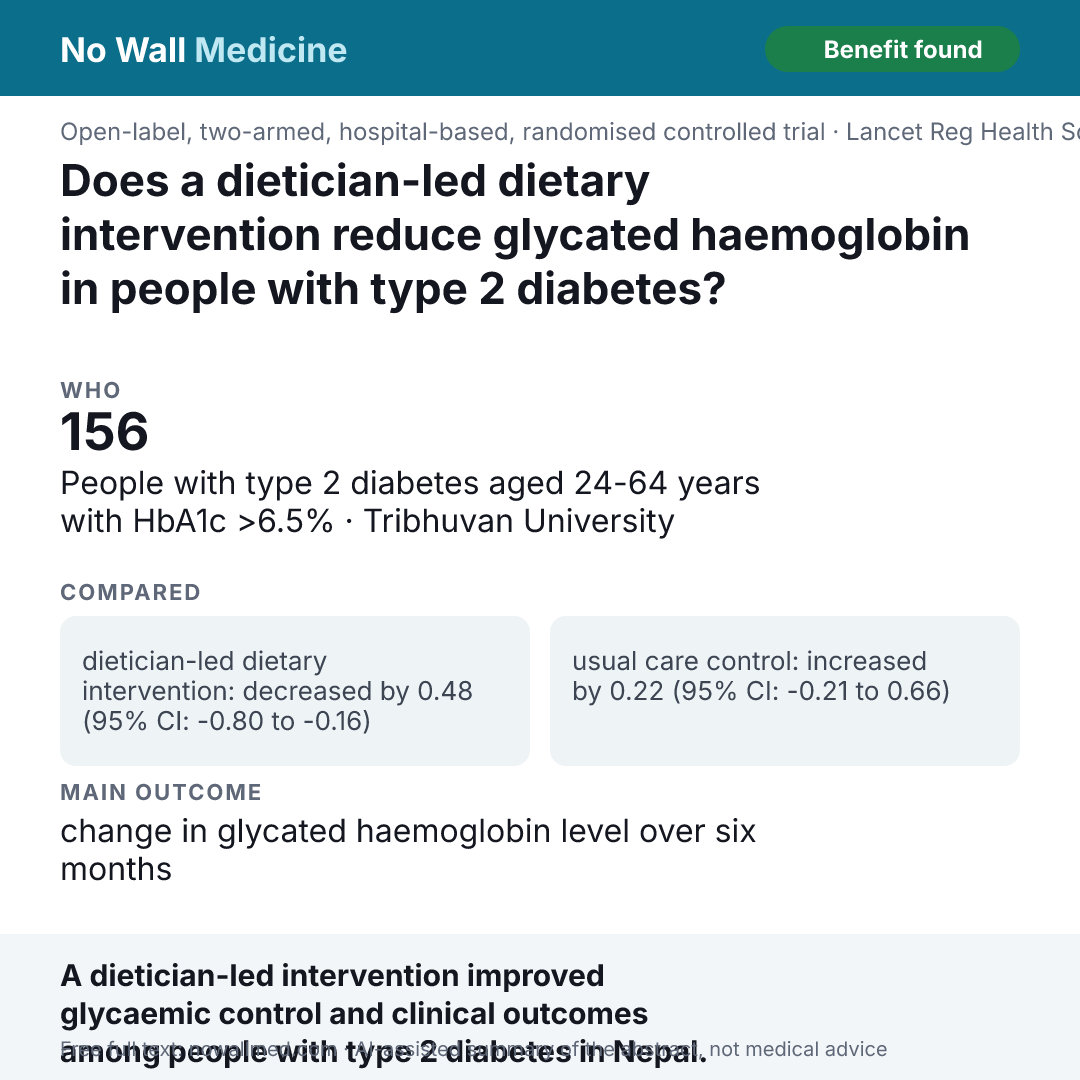
Clinical question: Does a dietician-led dietary intervention reduce glycated haemoglobin in people with type 2 diabetes?
Why it matters: Research on dietary management for type 2 diabetes in low-income and middle-income countries like Nepal was previously limited.
Key points
- 156 people with type 2 diabetes aged 24-64 years were randomized to dietitian-led intervention or usual care in Nepal.
- Adjusted HbA1c reduction was 0.61% in the intervention group versus usual care, a statistically significant difference.
- Fasting blood glucose decreased by 18.96 mg/dL, and BMI, waist circumference, and PAID scores improved in the intervention group.
Limitation the authors note: The trial was conducted at a single centre in Kathmandu, Nepal, and was open-label.
Headline and key points written with AI from the paper’s abstract, with every number checked against it. Read the paper before relying on them.
Was this summary helpful?
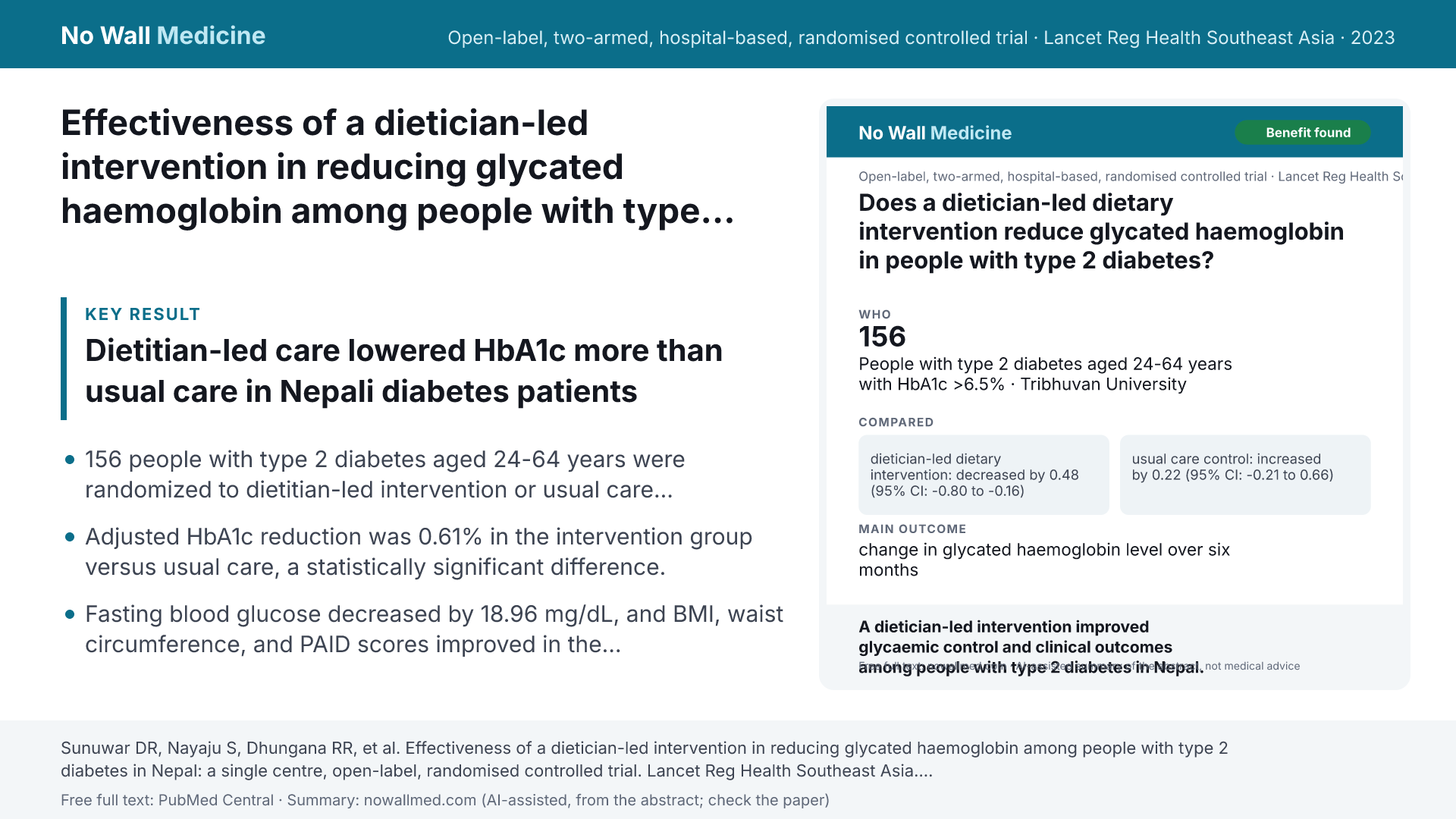
Headline, design, result, key points, caveat and citation as plain text.
Cite this article
Sunuwar DR, Nayaju S, Dhungana RR, et al. Effectiveness of a dietician-led intervention in reducing glycated haemoglobin among people with type 2 diabetes in Nepal: a single centre, open-label, randomised controlled trial. Lancet Reg Health Southeast Asia. 2023;18:100285. doi:10.1016/j.lansea.2023.100285
Spotted a mistake? Suggest a correction