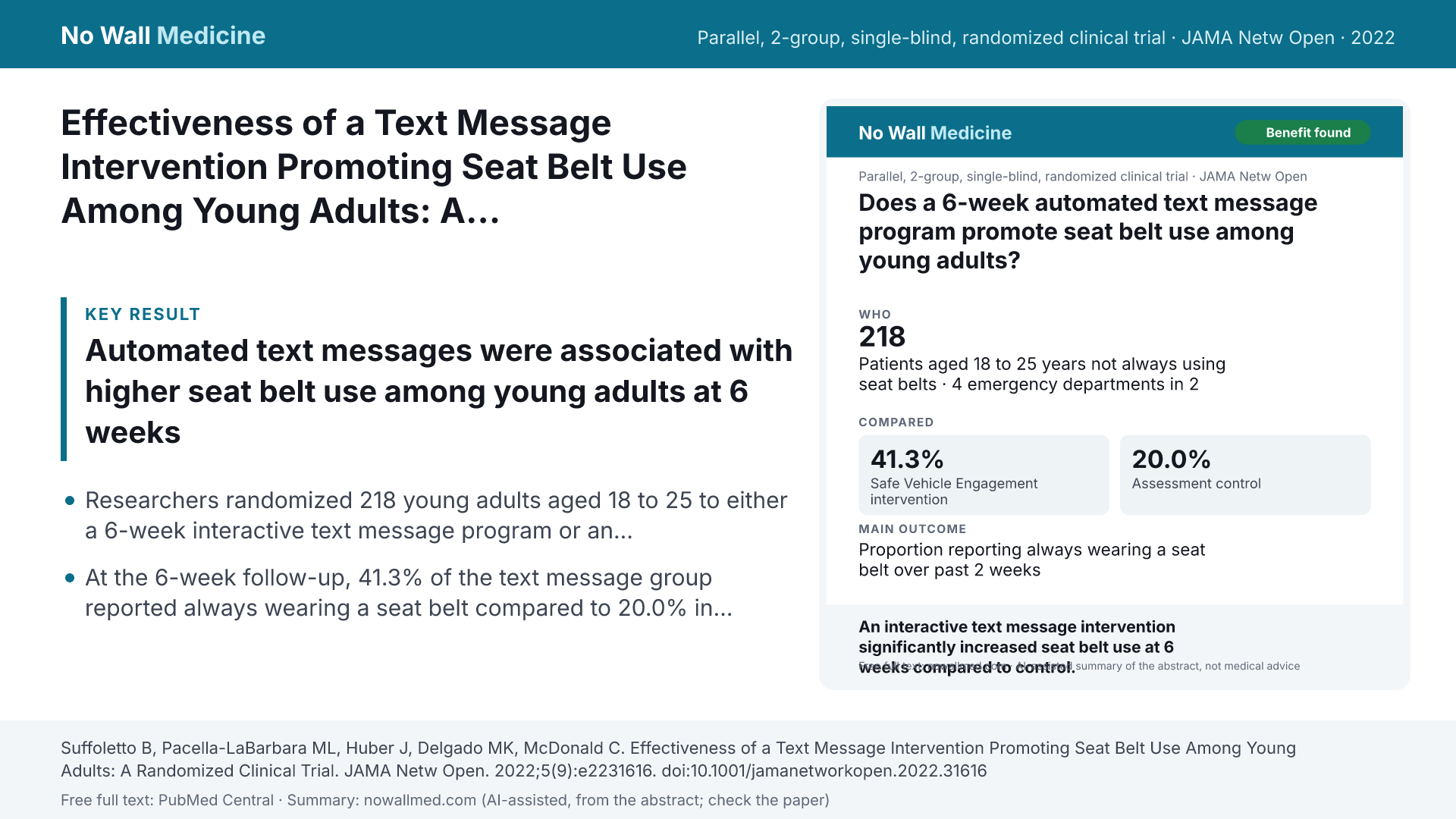
Effectiveness of a Text Message Intervention Promoting Seat Belt Use Among Young Adults: A Randomized Clinical Trial
Key result: Automated text messages were associated with higher seat belt use among young adults at 6 weeks
Key points
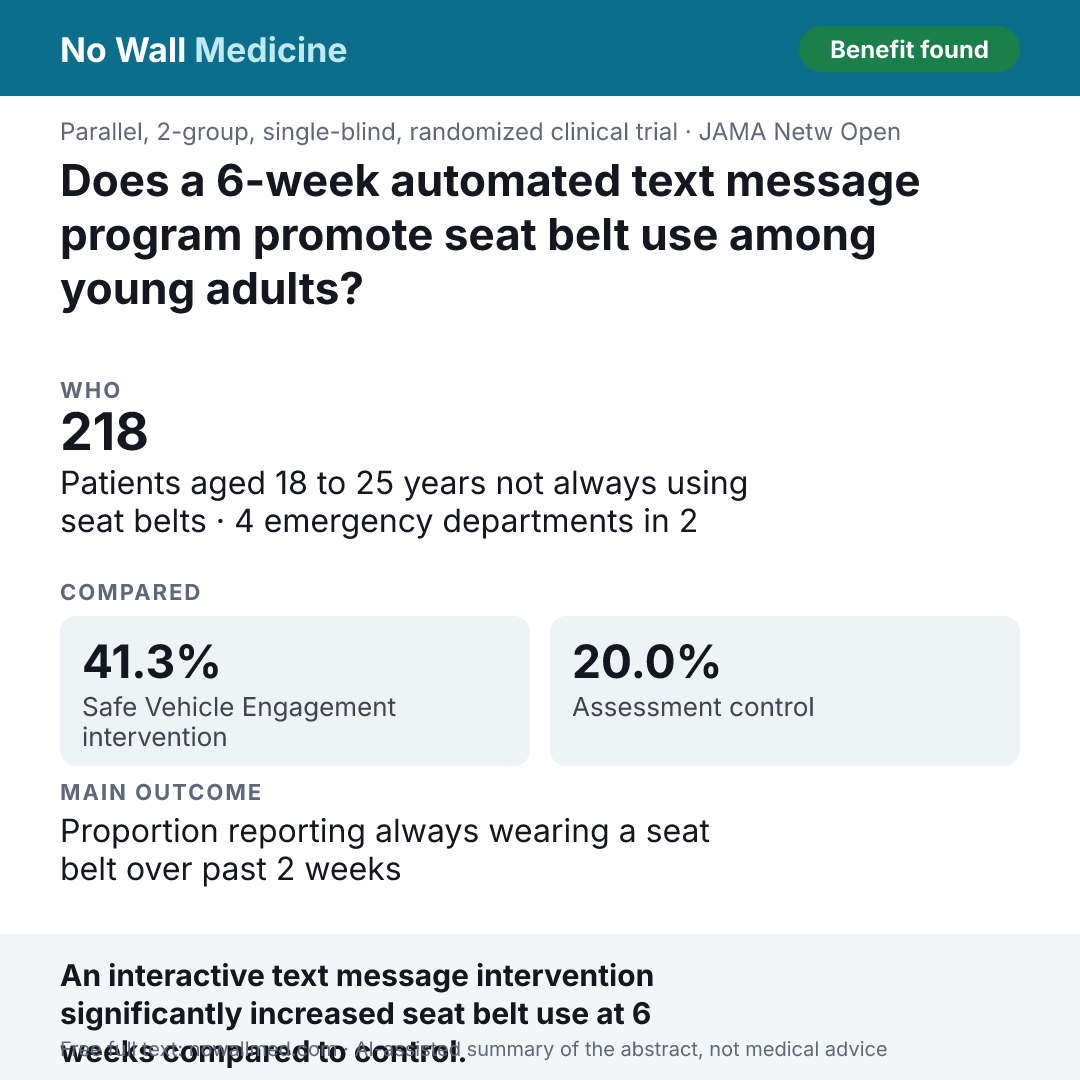
- Researchers randomized 218 young adults aged 18 to 25 to either a 6-week interactive text message program or an assessment control group.
- At the 6-week follow-up, 41.3% of the text message group reported always wearing a seat belt compared to 20.0% in the control group.
- At 12 weeks, the rate of always wearing a seat belt was 42.8% for the text message group and 30.7% for the control group, which was not a statistically significant difference.
Why it matters: Young adults report the lowest rates of seat belt use, but it is unknown if automated text message programs can effectively promote consistent use.
Discussion prompts
- Would these patients look like yours? Who was left out?
- Is the main outcome one that matters to patients?
- Is the difference large enough to change what you do?
Cite: Suffoletto B, Pacella-LaBarbara ML, Huber J, Delgado MK, McDonald C. Effectiveness of a Text Message Intervention Promoting Seat Belt Use Among Young Adults: A Randomized Clinical Trial. JAMA Netw Open. 2022;5(9):e2231616. doi:10.1001/jamanetworkopen.2022.31616
Free full text: PubMed Central · Summary and visual abstract: nowallmed.com/a/effectiveness-of-a-text-message-intervention-promoting-seat-belt-use-gkfkgj/ (AI-assisted from the abstract; check the paper before relying on it).