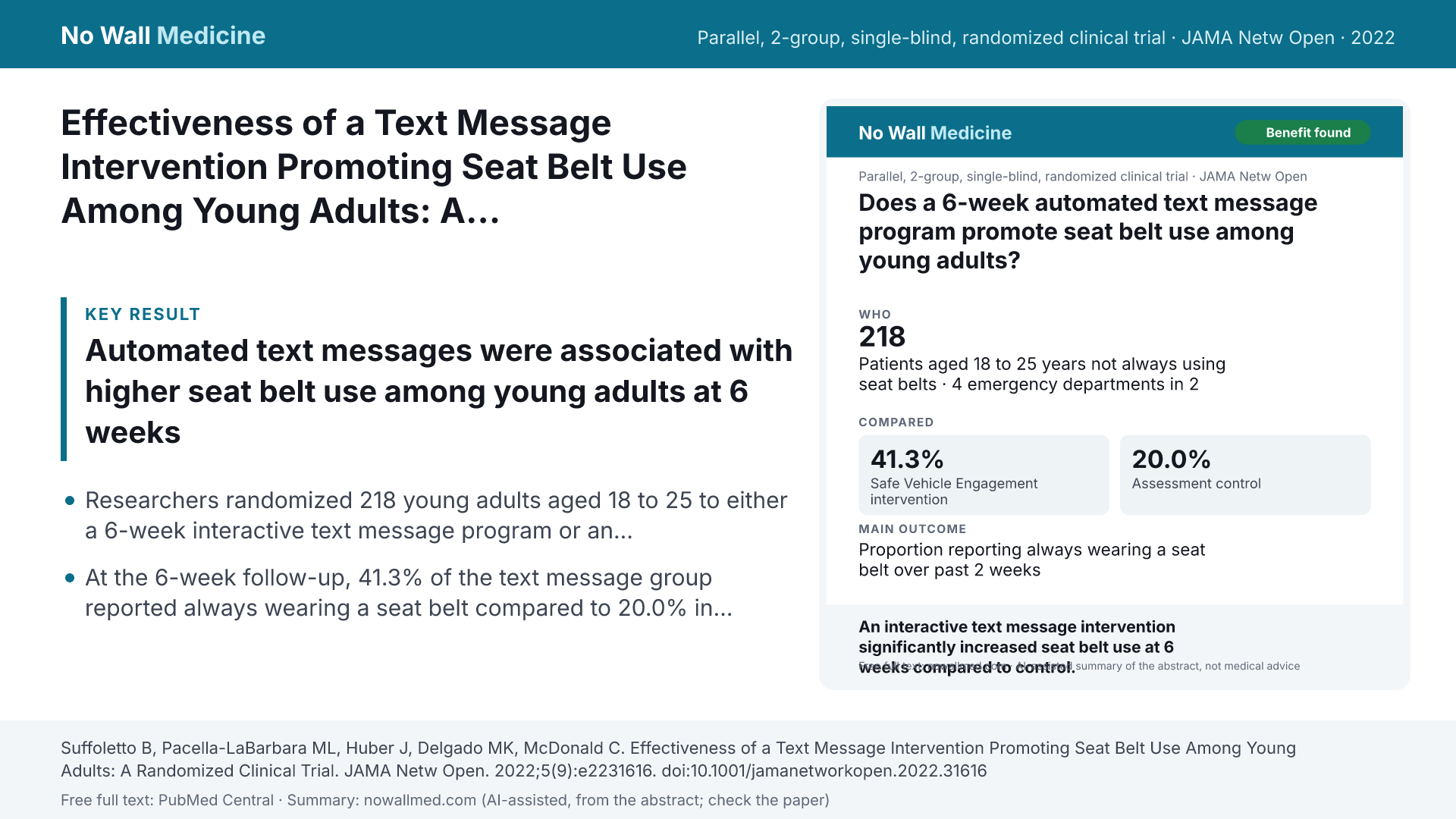
Automated text messages were associated with higher seat belt use among young adults at 6 weeks
Effectiveness of a Text Message Intervention Promoting Seat Belt Use Among Young Adults: A Randomized Clinical Trial
Parallel, 2-group, single-blind, randomized clinical trialBenefit found
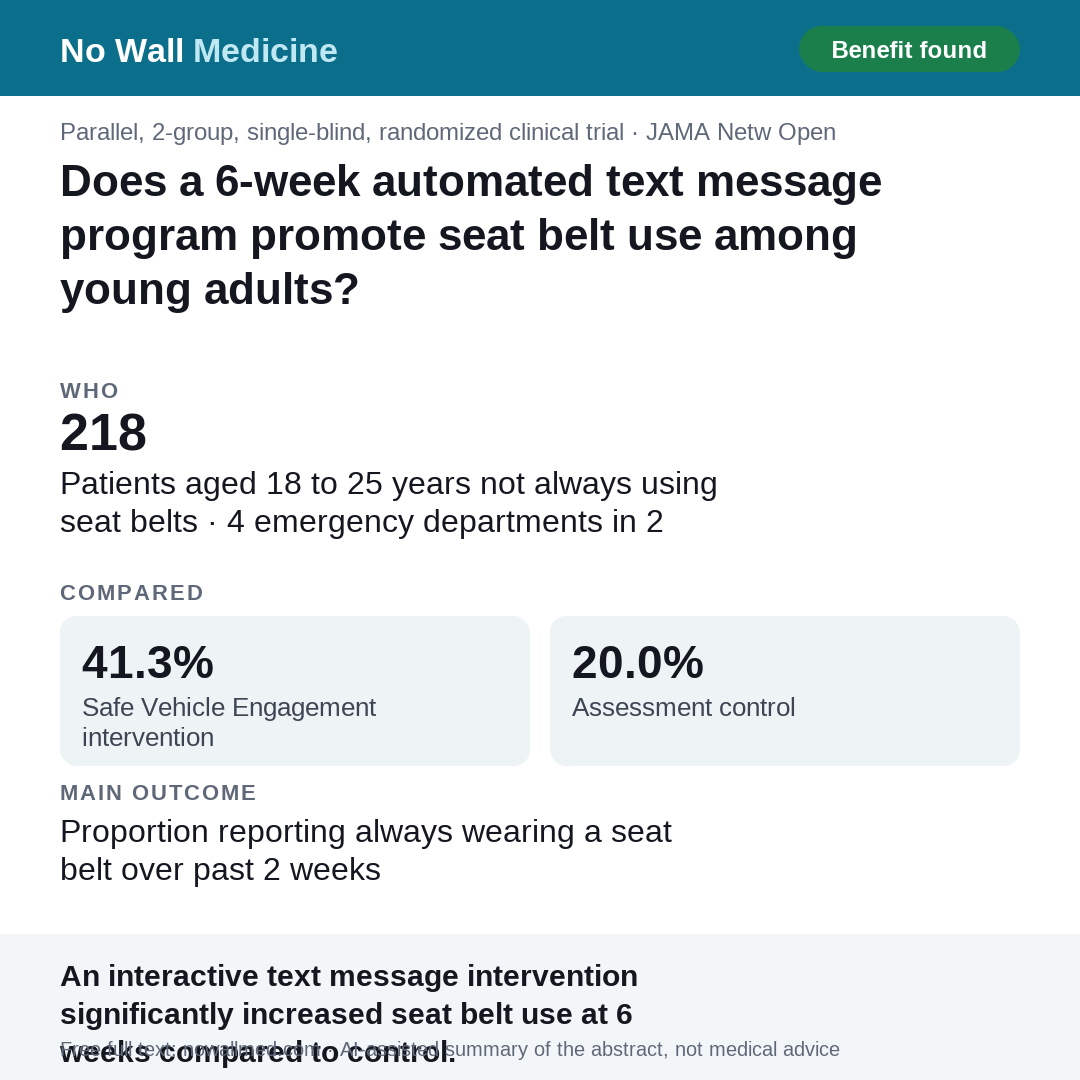
Does a 6-week automated text message program promote seat belt use among young adults?
Who
218
Patients aged 18 to 25 years not always using seat belts · 4 emergency departments in 2 Pennsylvania cities
Compared
41.3%Safe Vehicle Engagement intervention (95% CI, 30.6%-52.0%)
20.0%Assessment control (95% CI, 10.6%-29.3%)
Main outcome
Proportion reporting always wearing a seat belt over past 2 weeks
Result: odds ratio 2.8 (95% CI 1.4-5.8)
Bottom line: An interactive text message intervention significantly increased seat belt use at 6 weeks compared to control.
JAMA Netw Open · 2022-09-01Download image
Clinical question: Does a 6-week automated text message program promote seat belt use among young adults?
Why it matters: Young adults report the lowest rates of seat belt use, but it is unknown if automated text message programs can effectively promote consistent use.
Key points
- Researchers randomized 218 young adults aged 18 to 25 to either a 6-week interactive text message program or an assessment control group.
- At the 6-week follow-up, 41.3% of the text message group reported always wearing a seat belt compared to 20.0% in the control group.
- At 12 weeks, the rate of always wearing a seat belt was 42.8% for the text message group and 30.7% for the control group, which was not a statistically significant difference.
Headline and key points written with AI from the paper’s abstract, with every number checked against it. Read the paper before relying on them.
Was this summary helpful?
Subject terms
Cite this article
Suffoletto B, Pacella-LaBarbara ML, Huber J, Delgado MK, McDonald C. Effectiveness of a Text Message Intervention Promoting Seat Belt Use Among Young Adults: A Randomized Clinical Trial. JAMA Netw Open. 2022. doi:10.1001/jamanetworkopen.2022.31616
Spotted a mistake? Suggest a correction