Financial incentives increased inhaled asthma medication adherence in children during a three month trial
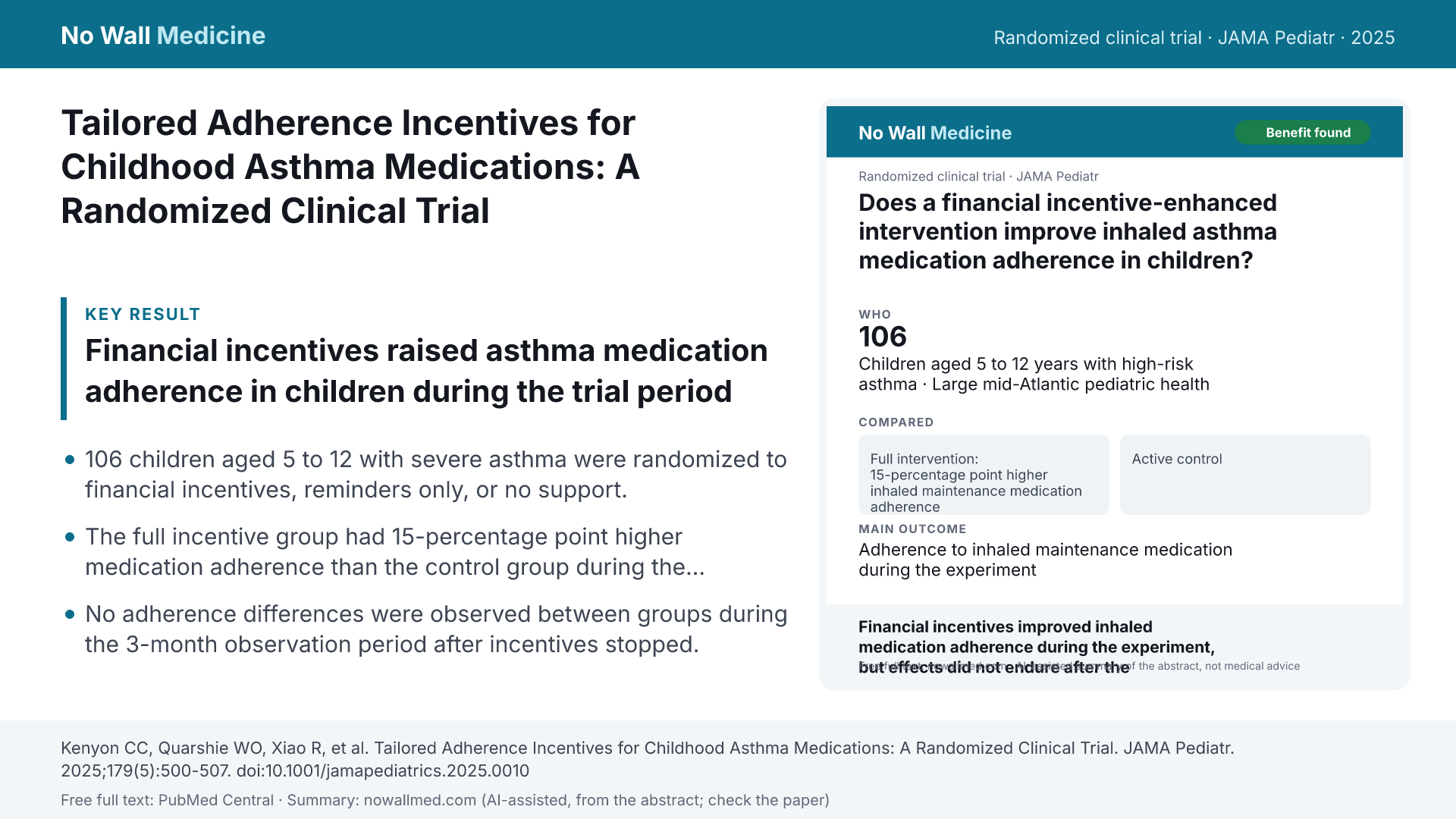
Tailored Adherence Incentives for Childhood Asthma Medications: A Randomized Clinical Trial
Randomized clinical trialBenefit found
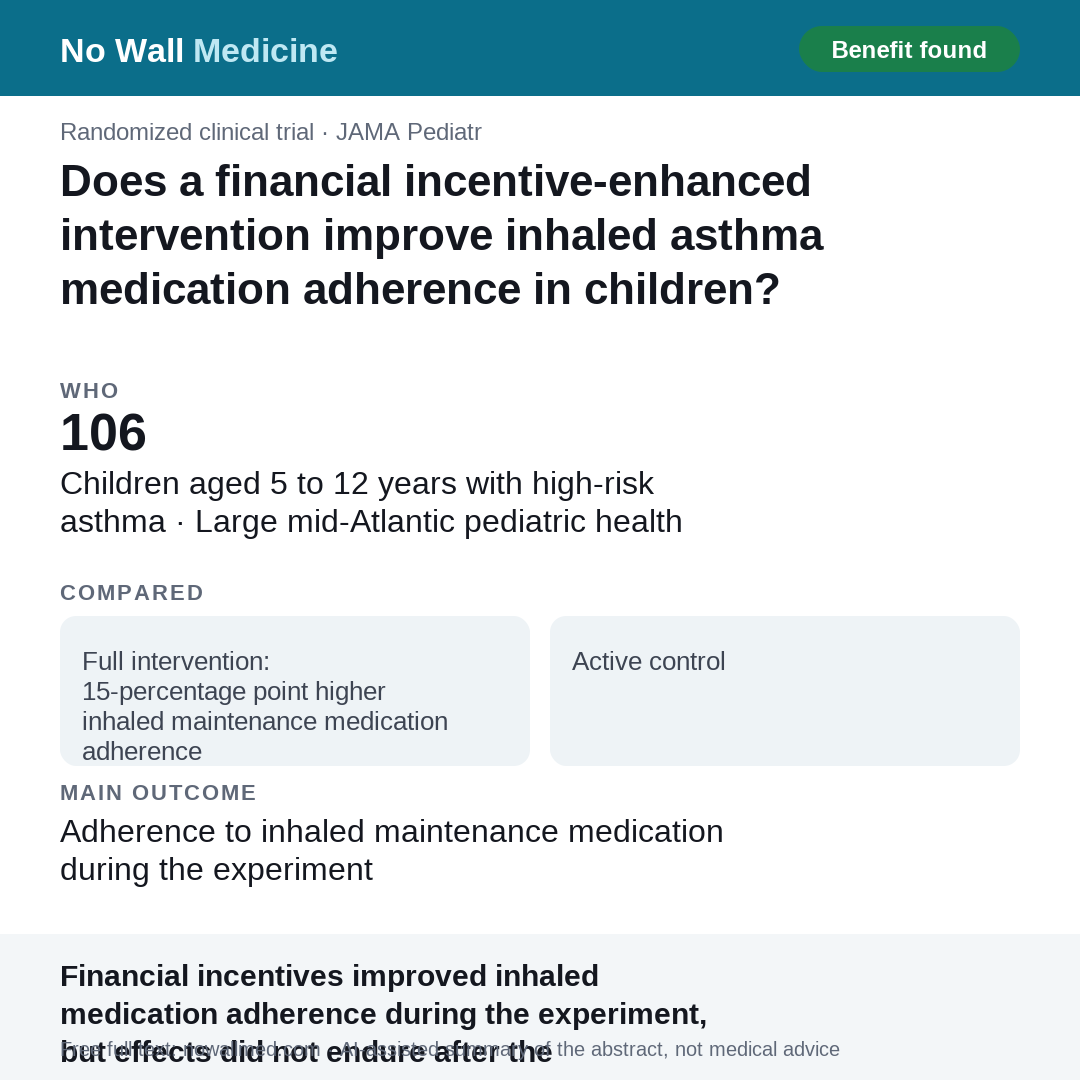
Does a financial incentive-enhanced intervention improve inhaled asthma medication adherence in children?
Who
106
Children aged 5 to 12 years with high-risk asthma · Large mid-Atlantic pediatric health system in the US
Compared
Full intervention: 15-percentage point higher inhaled maintenance medication adherence
Active control
Main outcome
Adherence to inhaled maintenance medication during the experiment
Result: 15-percentage point (95% CI, 2-29 percentage points) higher
Bottom line: Financial incentives improved inhaled medication adherence during the experiment, but effects did not endure after the intervention ceased.
JAMA Pediatr · 2025-03-17Download image
Clinical question: Does a financial incentive-enhanced intervention improve inhaled asthma medication adherence in children?
Why it matters: It is unknown if financial incentives can improve adherence to inhaled asthma preventive medications in high-risk, predominantly racially minoritized pediatric populations.
Key points
- Researchers studied 99 children aged 8.0 years with asthma who were randomized to receive either full intervention, hybrid intervention, or an active control.
- During the experiment, the full intervention group had a 15-percentage point higher adherence to inhaled maintenance medication compared to the active control group.
- No differences in medication adherence were observed during the three month observation interval after the incentives and reminders were removed.
Headline and key points written with AI from the paper’s abstract, with every number checked against it. Read the paper before relying on them.
Was this summary helpful?
Subject terms
Cite this article
Kenyon CC, Quarshie WO, Xiao R, Yazdani M, Flaherty CM, Floyd GC. Tailored Adherence Incentives for Childhood Asthma Medications: A Randomized Clinical Trial. JAMA Pediatr. 2025. doi:10.1001/jamapediatrics.2025.0010
Spotted a mistake? Suggest a correction