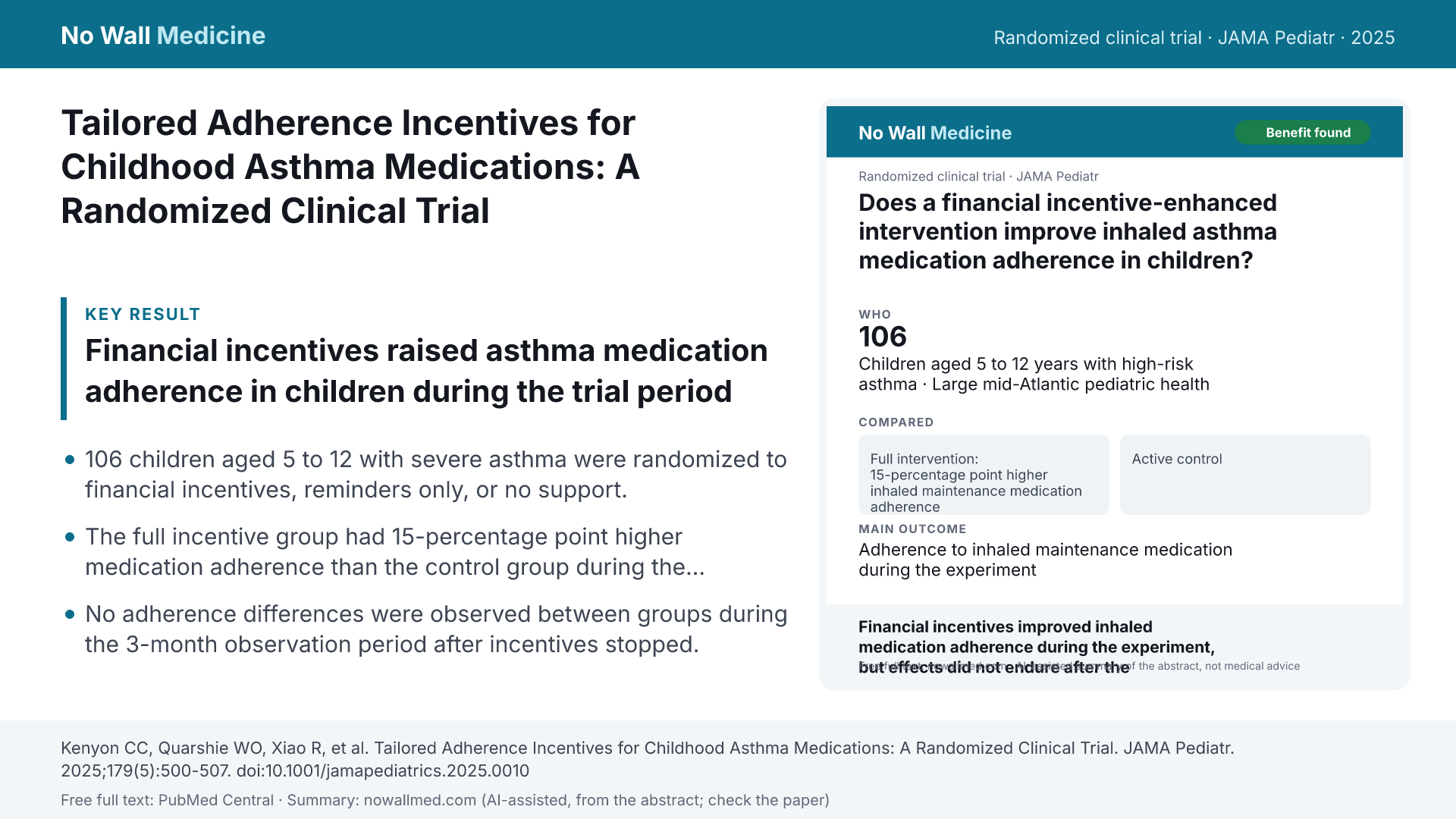
Tailored Adherence Incentives for Childhood Asthma Medications: A Randomized Clinical Trial
Key result: Financial incentives raised asthma medication adherence in children during the trial period
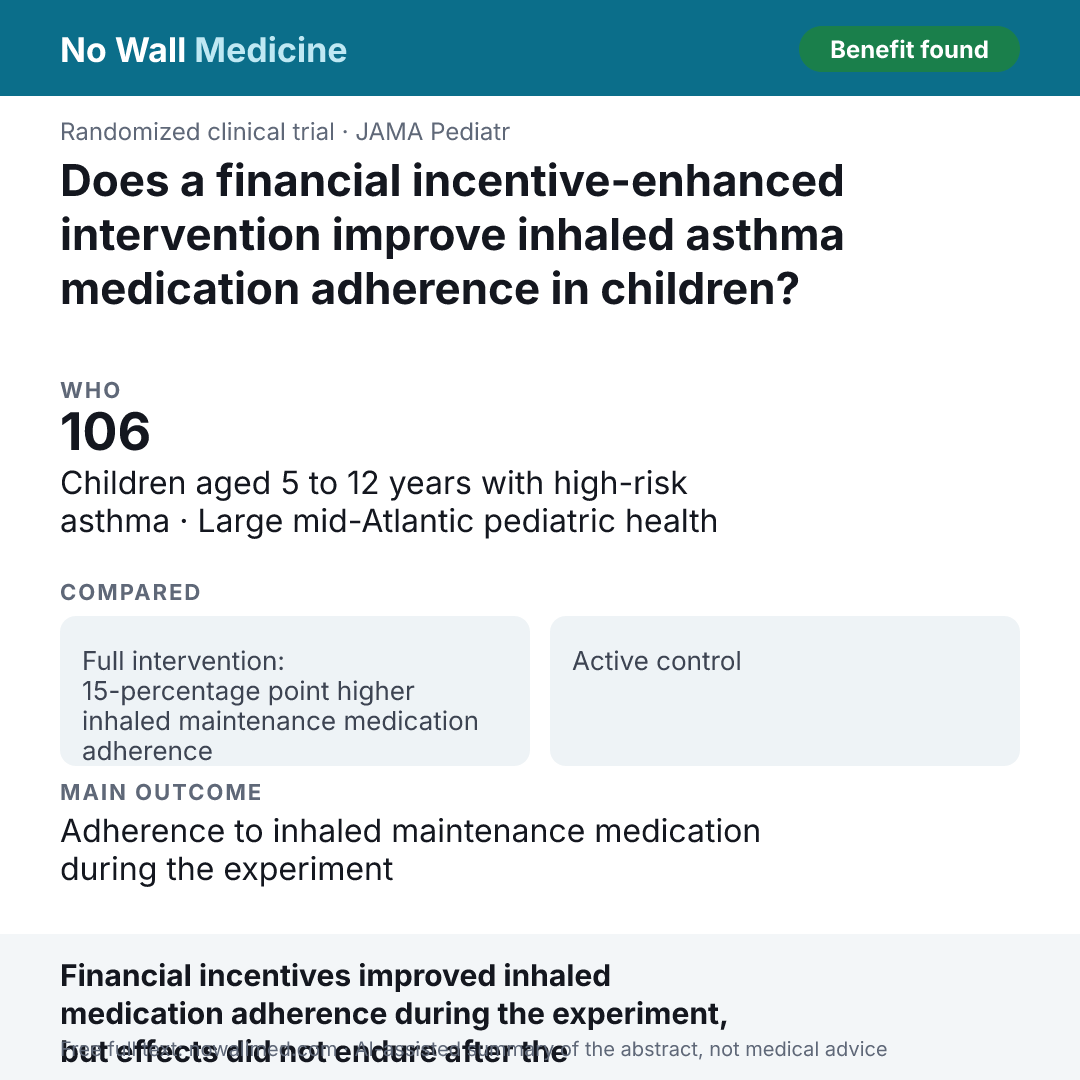
Randomized clinical trialBenefit found
Does a financial incentive-enhanced intervention improve inhaled asthma medication adherence in children?
Who
106
Children aged 5 to 12 years with high-risk asthma · Large mid-Atlantic pediatric health system in the US
Compared
Full intervention: 15-percentage point higher inhaled maintenance medication adherence
Active control
Main outcome
Adherence to inhaled maintenance medication during the experiment
Result: 15-percentage point (95% CI, 2-29 percentage points) higher
Bottom line: Financial incentives improved inhaled medication adherence during the experiment, but effects did not endure after the intervention ceased.
JAMA Pediatr · 2025-03-17 · Save PNG
Key points
- 106 children aged 5 to 12 with severe asthma were randomized to financial incentives, reminders only, or no support.
- The full incentive group had 15-percentage point higher medication adherence than the control group during the 3-month experiment.
- No adherence differences were observed between groups during the 3-month observation period after incentives stopped.
Discussion prompts
- Would these patients look like yours? Who was left out?
- Is the main outcome one that matters to patients?
- Is the difference large enough to change what you do?
Cite: Kenyon CC, Quarshie WO, Xiao R, et al. Tailored Adherence Incentives for Childhood Asthma Medications: A Randomized Clinical Trial. JAMA Pediatr. 2025;179(5):500-507. doi:10.1001/jamapediatrics.2025.0010
Free full text: PubMed Central · Summary and visual abstract: nowallmed.com/a/tailored-adherence-incentives-for-childhood-asthma-medications-a-thvqc/ (AI-assisted from the abstract; check the paper before relying on it).