Effectiveness of an in-office intervention to improve general practitioners' support for tobacco smoking cessation: results from a randomised controlled trial (TABAC-PRO)
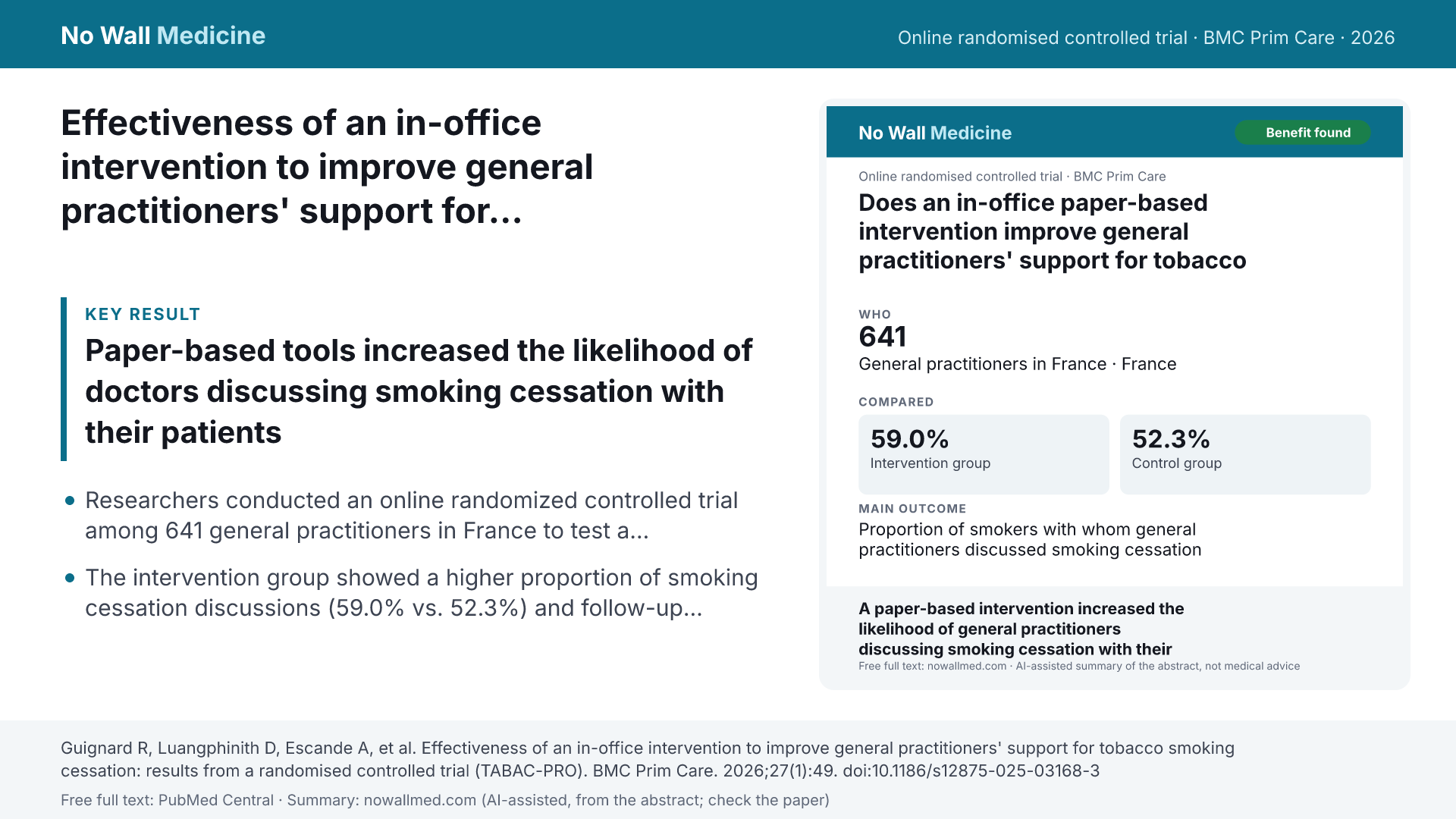
Key result: Paper-based tools increased the likelihood of doctors discussing smoking cessation with their patients
Key points
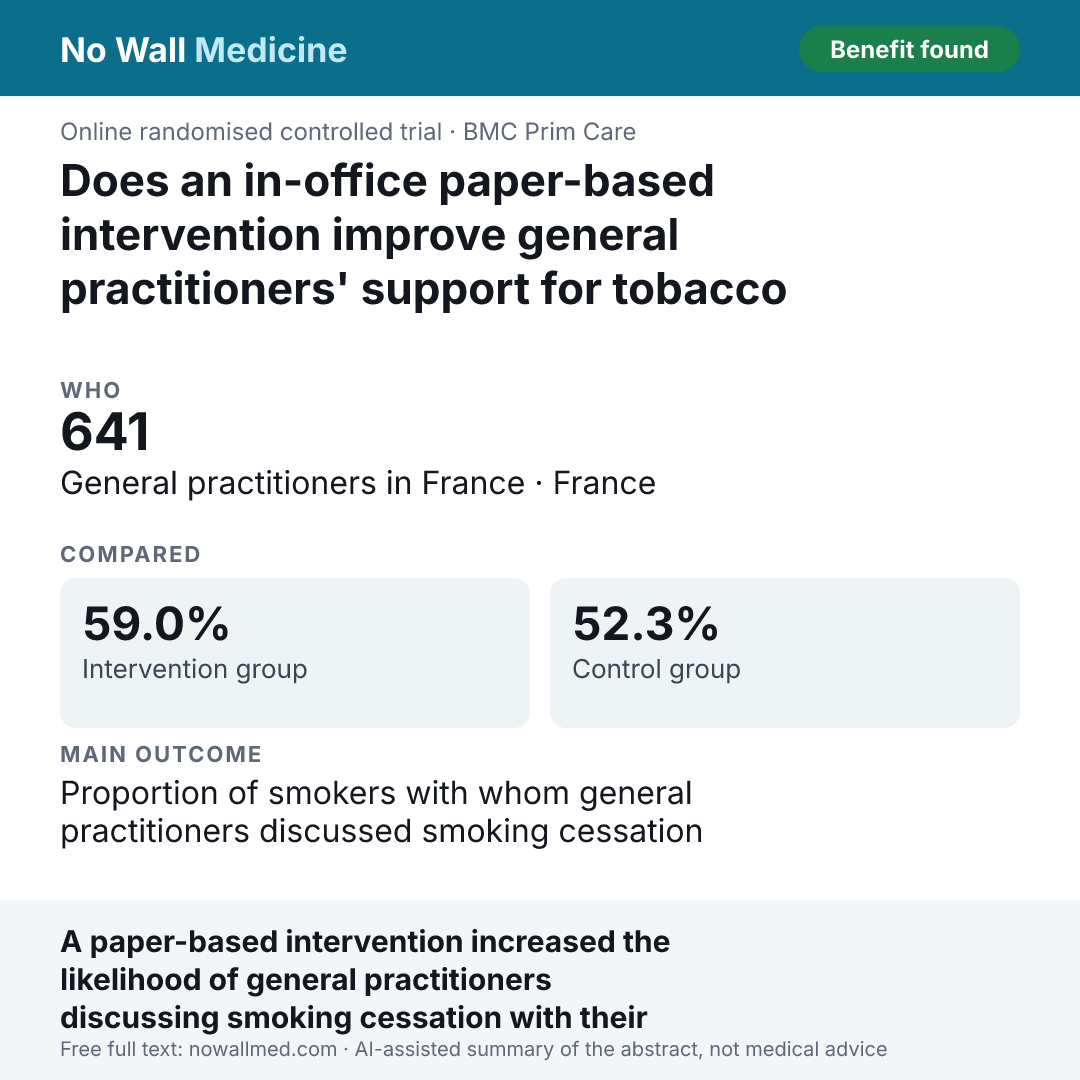
- Researchers conducted an online randomized controlled trial among 641 general practitioners in France to test a behavioral science-based intervention kit.
- The intervention group showed a higher proportion of smoking cessation discussions (59.0% vs. 52.3%) and follow-up offers (73.8% vs. 60.3%) compared to the control group.
- There were no significant differences between the groups regarding the prescription of nicotine replacement therapy or referrals to other professionals.
In absolute numbers: Intervention group 59% vs Control group 52.3%, a difference of 6.7 percentage points (about 15 people treated for one more to benefit).
Why it matters: Support for tobacco smoking cessation provided by general practitioners is effective but remains quite rare in clinical practice.
Discussion prompts
- Would these patients look like yours? Who was left out?
- Is the main outcome one that matters to patients?
- Is the difference large enough to change what you do?
Cite: Guignard R, Luangphinith D, Escande A, et al. Effectiveness of an in-office intervention to improve general practitioners' support for tobacco smoking cessation: results from a randomised controlled trial (TABAC-PRO). BMC Prim Care. 2026;27(1):49. doi:10.1186/s12875-025-03168-3
Free full text: PubMed Central · Summary and visual abstract: nowallmed.com/a/effectiveness-of-an-in-office-intervention-to-improve-general-1q1uxhm/ (AI-assisted from the abstract; check the paper before relying on it).