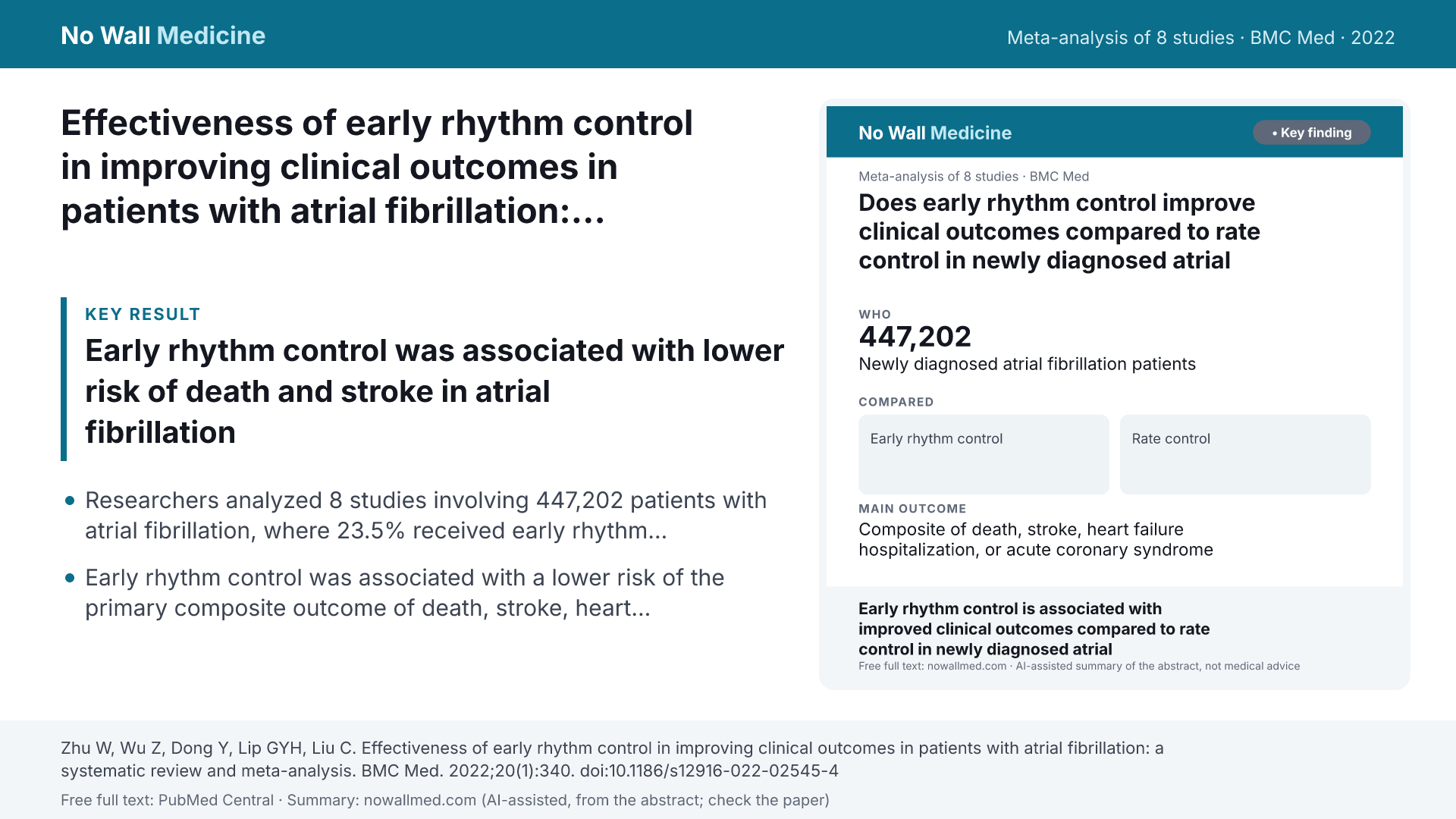
Early rhythm control was associated with lower risk of death and stroke in atrial fibrillation
Effectiveness of early rhythm control in improving clinical outcomes in patients with atrial fibrillation: a systematic review and meta-analysis
Meta-analysis of 8 studiesBenefit found
Does early rhythm control improve clinical outcomes compared to rate control in newly diagnosed atrial fibrillation?
Who
447,202
Newly diagnosed atrial fibrillation patients
Compared
Early rhythm control
Rate control
Main outcome
Composite of death, stroke, heart failure hospitalization, or acute coronary syndrome
Result: hazard ratio 0.88 (95% CI: 0.86-0.89)
Bottom line: Early rhythm control is associated with improved clinical outcomes compared to rate control in newly diagnosed atrial fibrillation patients.
BMC Med · 2022-10-13Download image
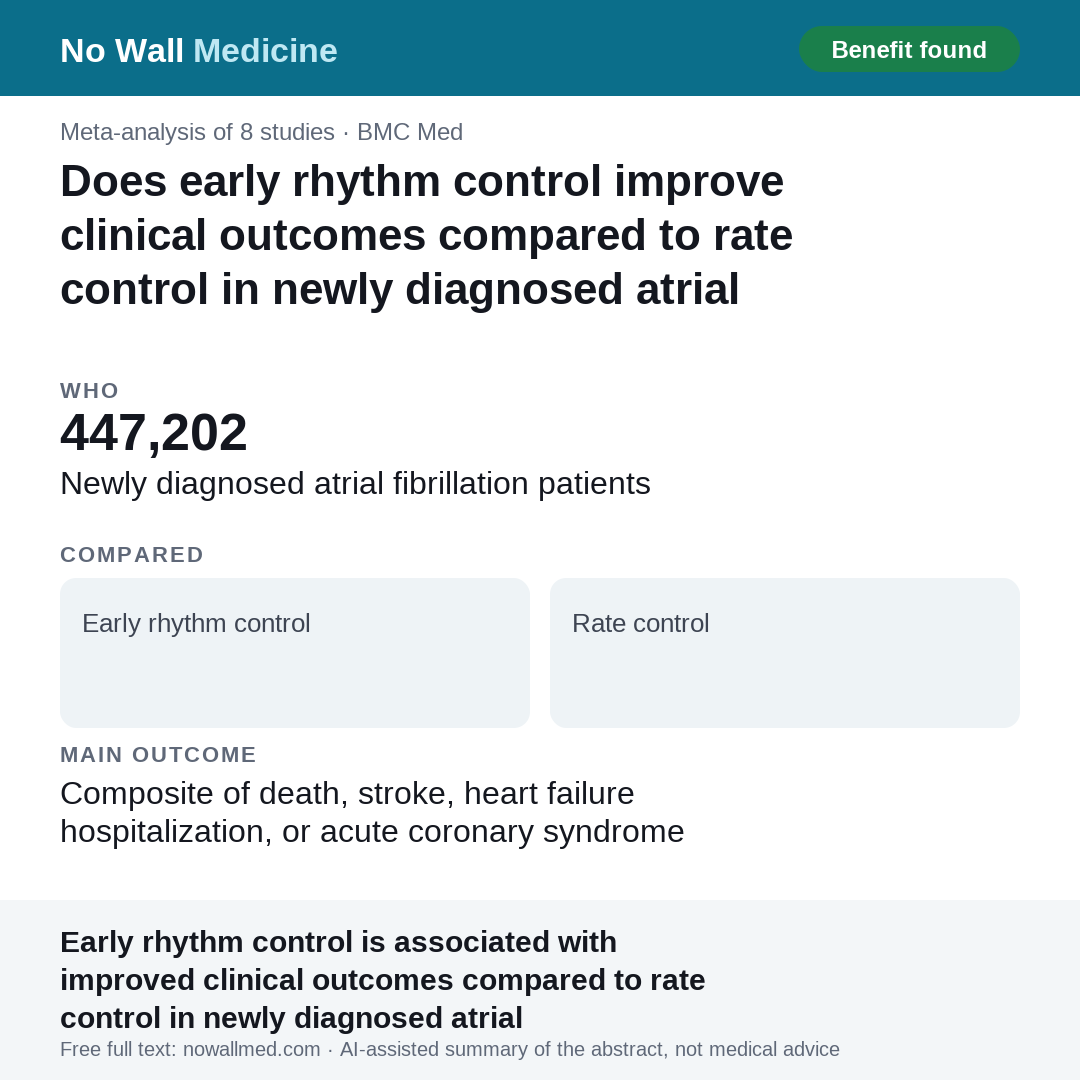
Clinical question: Does early rhythm control improve clinical outcomes compared to rate control in newly diagnosed atrial fibrillation?
Why it matters: The long-term prognostic outcomes of rhythm control compared with rate control remain inconclusive for patients with newly diagnosed atrial fibrillation.
Key points
- Researchers analyzed 8 studies involving 447,202 patients with atrial fibrillation, where 23.5% received early rhythm control therapy within 12 months of diagnosis.
- Early rhythm control was associated with a lower risk of the primary composite outcome of death, stroke, heart failure hospitalization, or acute coronary syndrome (HR = 0.88, 95% CI: 0.86-0.89).
- The strategy was also associated with lower risks for stroke or systemic embolism (HR = 0.78, 95% CI: 0.71-0.85), ischemic stroke (HR = 0.81, 95% CI: 0.69-0.94), and cardiovascular death (HR = 0.83, 95% CI: 0.70-0.99).
Headline and key points written with AI from the paper’s abstract, with every number checked against it. Read the paper before relying on them.
Was this summary helpful?
Subject terms
Cite this article
Zhu W, Wu Z, Dong Y, Lip GYH, Liu C. Effectiveness of early rhythm control in improving clinical outcomes in patients with atrial fibrillation: a systematic review and meta-analysis. BMC Med. 2022. doi:10.1186/s12916-022-02545-4
Spotted a mistake? Suggest a correction