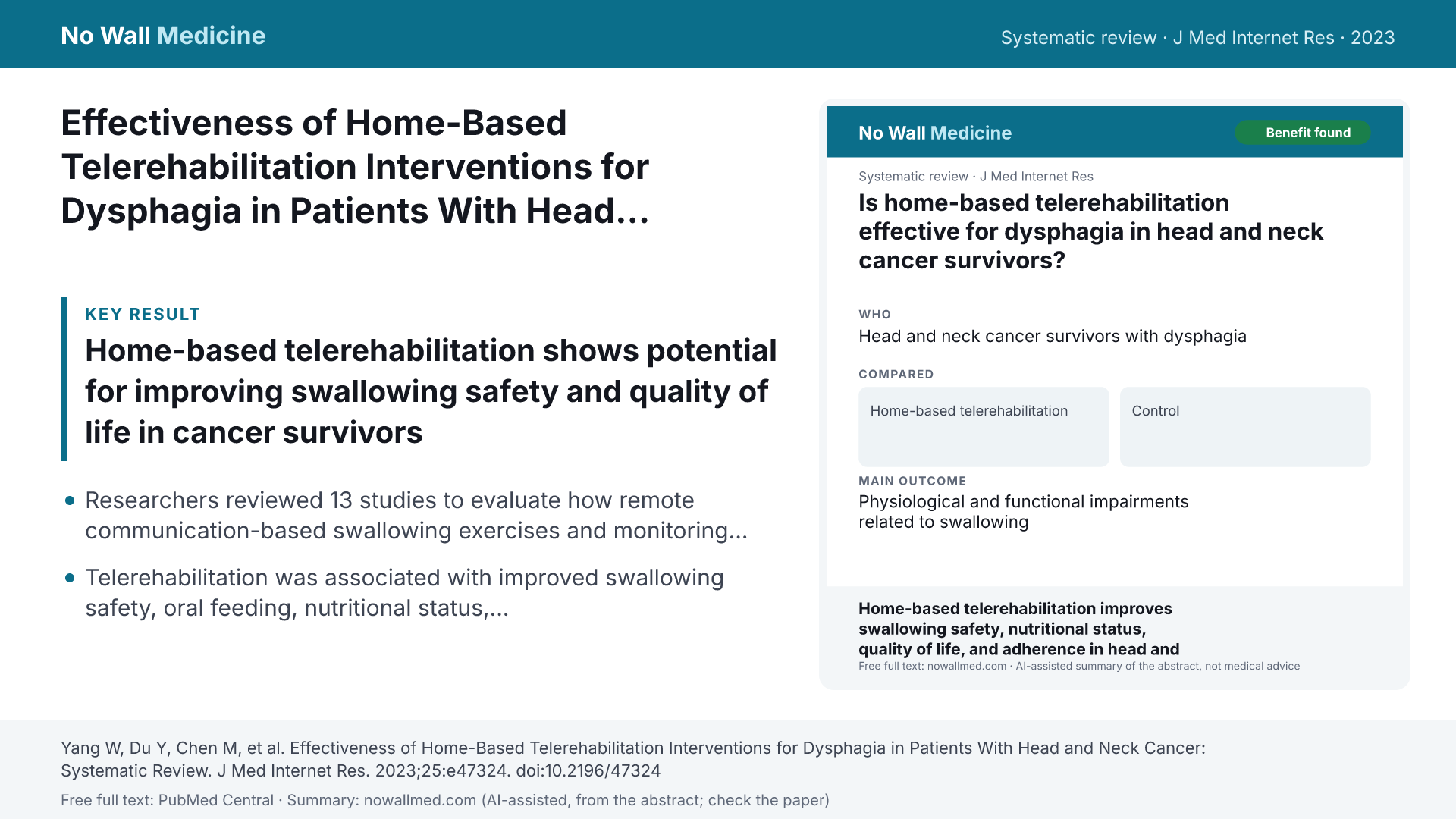
Effectiveness of Home-Based Telerehabilitation Interventions for Dysphagia in Patients With Head and Neck Cancer: Systematic Review
Key result: Home-based telerehabilitation shows potential for improving swallowing safety and quality of life in cancer survivors
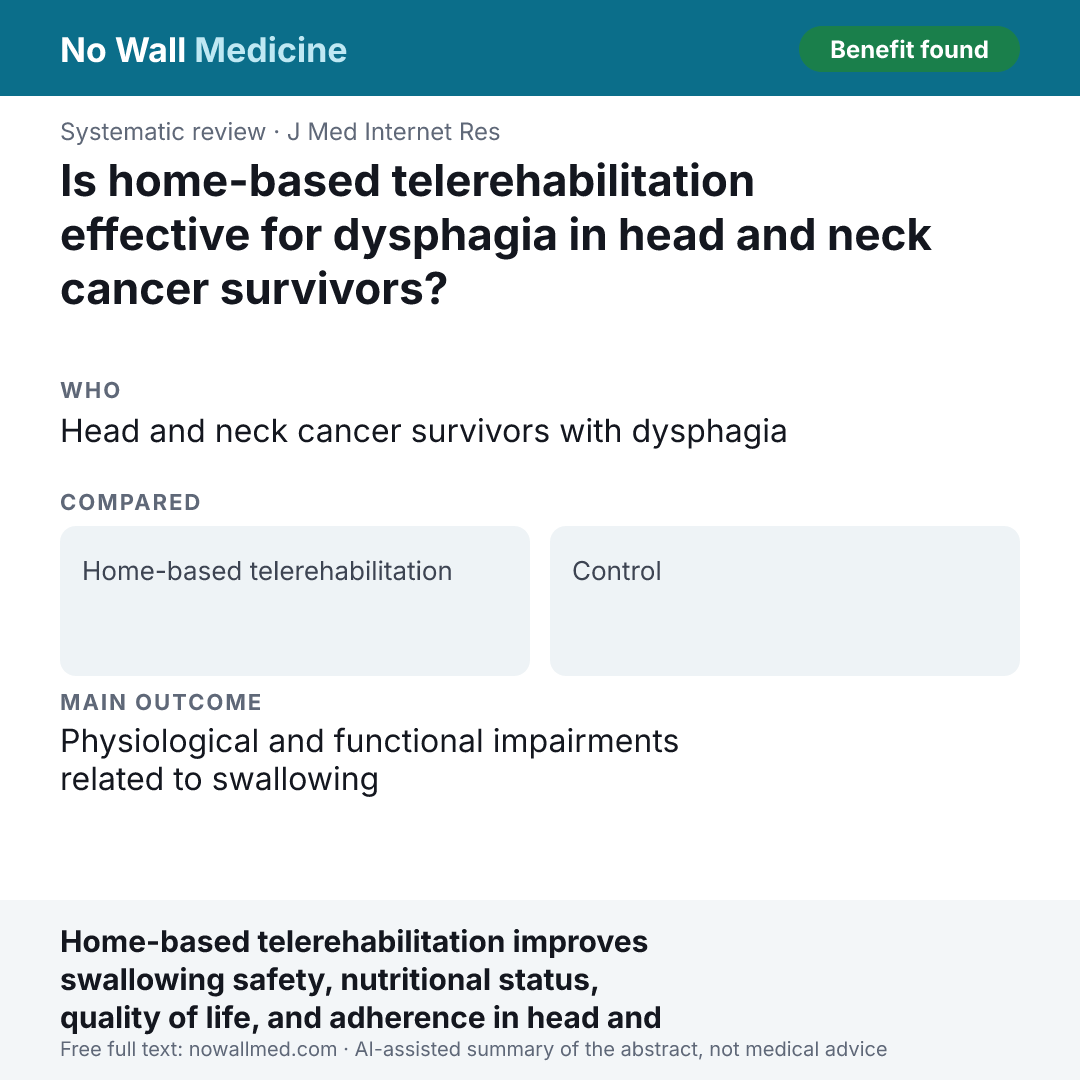
Systematic reviewBenefit found
Is home-based telerehabilitation effective for dysphagia in head and neck cancer survivors?
Who
Head and neck cancer survivors with dysphagia
Compared
Home-based telerehabilitation
Control
Main outcome
Physiological and functional impairments related to swallowing
Bottom line: Home-based telerehabilitation improves swallowing safety, nutritional status, quality of life, and adherence in head and neck cancer survivors.
Limitation: Current research is in its infancy and patient factors are highly diverse.
J Med Internet Res · 2023-09-08 · Save PNG
Key points
- Researchers reviewed 13 studies to evaluate how remote communication-based swallowing exercises and monitoring affect head and neck cancer survivors.
- Telerehabilitation was associated with improved swallowing safety, oral feeding, nutritional status, swallowing-related quality of life, and adherence to rehabilitation.
- The interventions were associated with reduced negative emotions, high participant satisfaction, and cost-effectiveness.
Discussion prompts
- Would these patients look like yours? Who was left out?
- Is the main outcome one that matters to patients?
- Is the difference large enough to change what you do?
Cite: Yang W, Du Y, Chen M, et al. Effectiveness of Home-Based Telerehabilitation Interventions for Dysphagia in Patients With Head and Neck Cancer: Systematic Review. J Med Internet Res. 2023;25:e47324. doi:10.2196/47324
Free full text: PubMed Central · Summary and visual abstract: nowallmed.com/a/effectiveness-of-home-based-telerehabilitation-interventions-for-1tm3hrz/ (AI-assisted from the abstract; check the paper before relying on it).