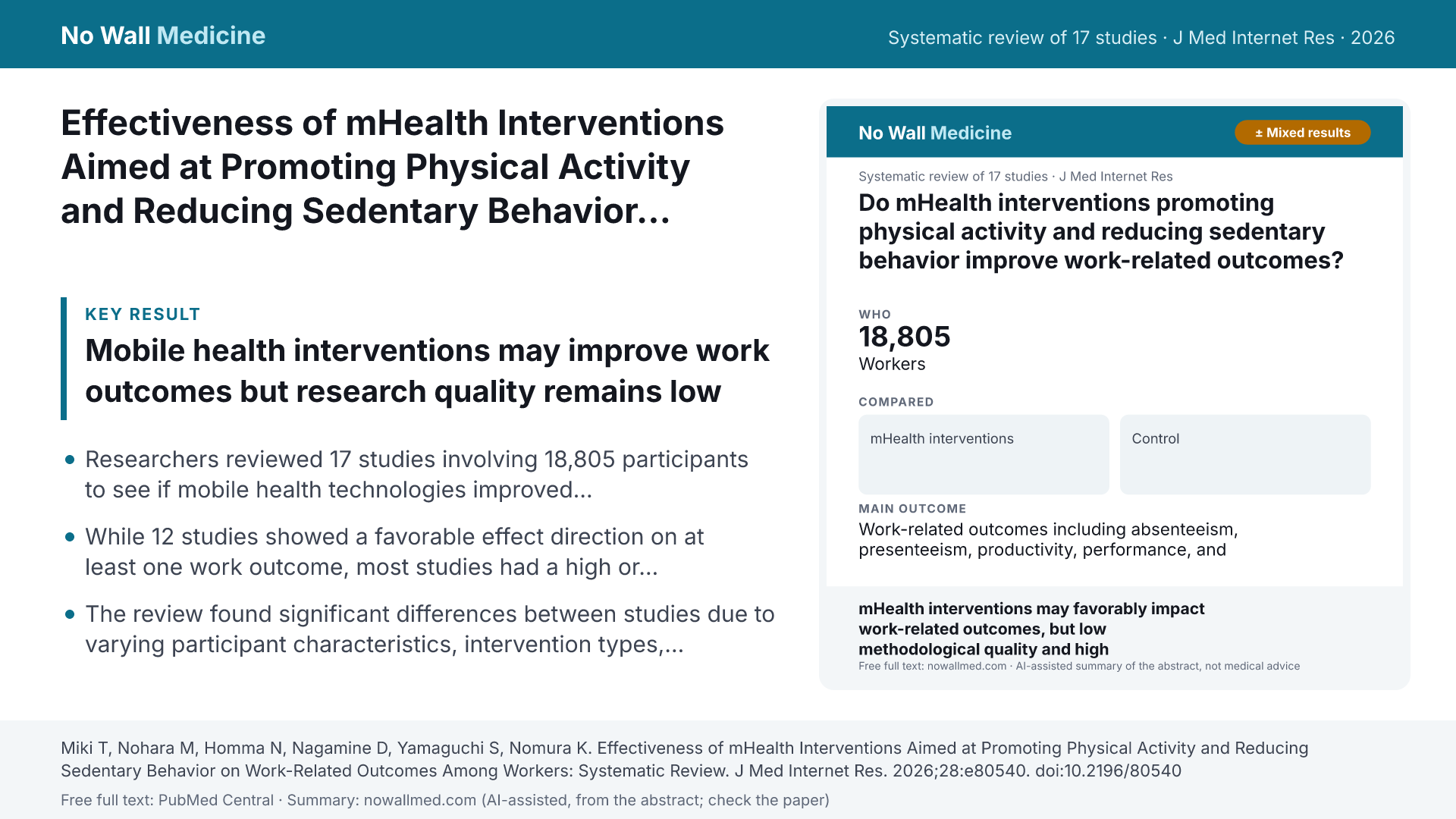
Effectiveness of mHealth Interventions Aimed at Promoting Physical Activity and Reducing Sedentary Behavior on Work-Related Outcomes Among Workers: Systematic Review
Key result: Mobile health interventions may improve work outcomes but research quality remains low
Key points
- Researchers reviewed 17 studies involving 18,805 participants to see if mobile health technologies improved work-related outcomes like productivity and absenteeism.
- While 12 studies showed a favorable effect direction on at least one work outcome, most studies had a high or critical risk of bias.
- The review found significant differences between studies due to varying participant characteristics, intervention types, and assessment tools used.
Why it matters: The impact of mobile health technologies on work-related outcomes remains unclear compared to traditional workplace-based interventions.
Limitation the authors note: The authors state that low methodological quality and high heterogeneity make it difficult to draw definitive conclusions.
Discussion prompts
- Would these patients look like yours? Who was left out?
- Is the main outcome one that matters to patients?
- Is the difference large enough to change what you do?
Cite: Miki T, Nohara M, Homma N, Nagamine D, Yamaguchi S, Nomura K. Effectiveness of mHealth Interventions Aimed at Promoting Physical Activity and Reducing Sedentary Behavior on Work-Related Outcomes Among Workers: Systematic Review. J Med Internet Res. 2026;28:e80540. doi:10.2196/80540
Free full text: PubMed Central · Summary and visual abstract: nowallmed.com/a/effectiveness-of-mhealth-interventions-aimed-at-promoting-physical-1afqaz4/ (AI-assisted from the abstract; check the paper before relying on it).