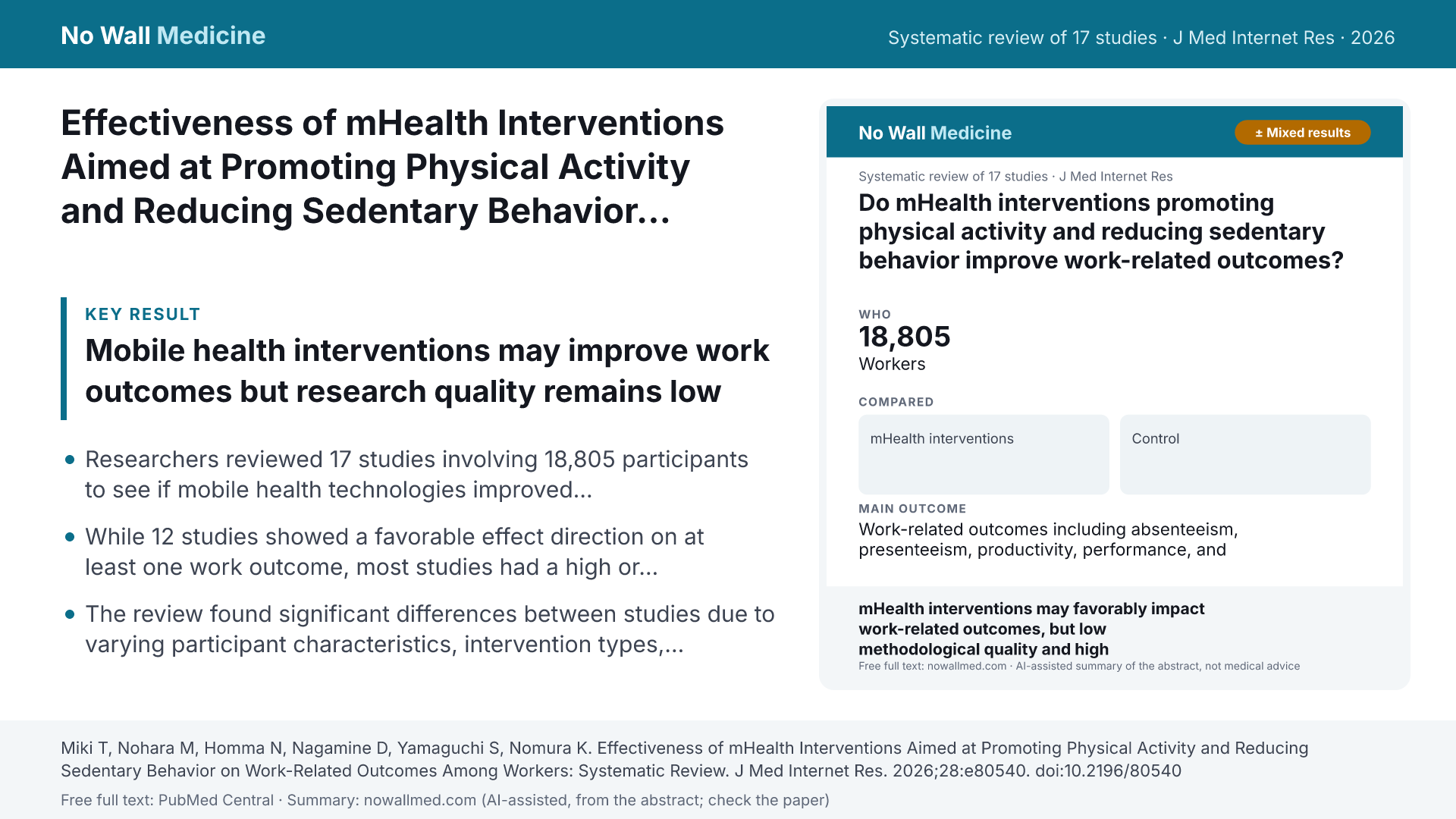
Mobile health interventions may improve work outcomes but research quality remains low
Effectiveness of mHealth Interventions Aimed at Promoting Physical Activity and Reducing Sedentary Behavior on Work-Related Outcomes Among Workers: Systematic Review
Systematic review of 17 studiesMixed results
Do mHealth interventions promoting physical activity and reducing sedentary behavior improve work-related outcomes?
Who
18,805
Workers
Compared
mHealth interventions
Control
Main outcome
Work-related outcomes including absenteeism, presenteeism, productivity, performance, and workability
Bottom line: mHealth interventions may favorably impact work-related outcomes, but low methodological quality and high heterogeneity prevent definitive conclusions.
Limitation: High risk of bias and considerable heterogeneity across studies due to diverse characteristics and assessment tools.
J Med Internet Res · 2026-05-07Download image
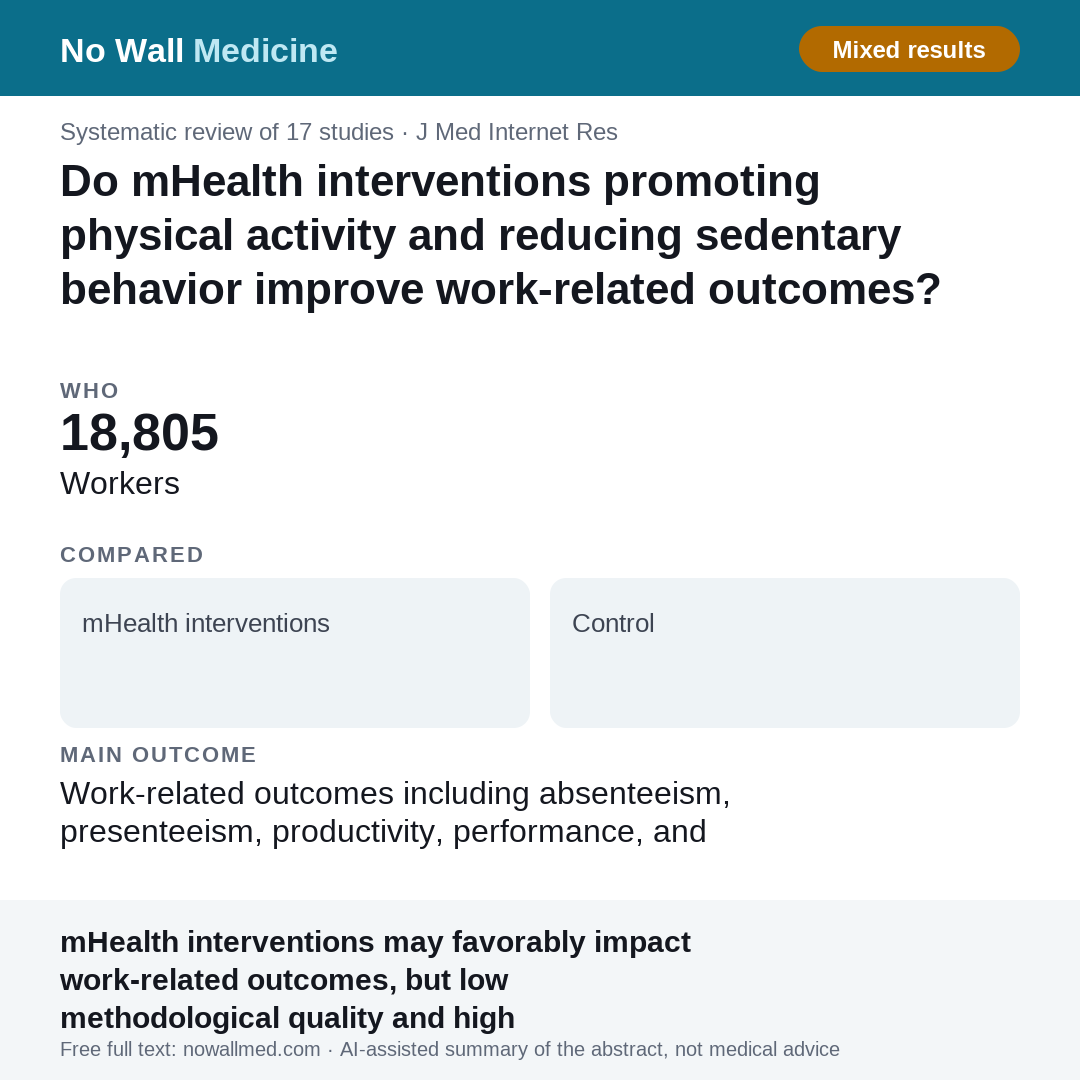
Clinical question: Do mHealth interventions promoting physical activity and reducing sedentary behavior improve work-related outcomes?
Why it matters: The impact of mobile health technologies on work-related outcomes remains unclear compared to traditional workplace-based interventions.
Key points
- Researchers reviewed 17 studies involving 18,805 participants to see if mobile health technologies improved work-related outcomes like productivity and absenteeism.
- While 12 studies showed a favorable effect direction on at least one work outcome, most studies had a high or critical risk of bias.
- The review found significant differences between studies due to varying participant characteristics, intervention types, and assessment tools used.
Limitation the authors note: The authors state that low methodological quality and high heterogeneity make it difficult to draw definitive conclusions.
Headline and key points written with AI from the paper’s abstract, with every number checked against it. Read the paper before relying on them.
Was this summary helpful?
Subject terms
Cite this article
Miki T, Nohara M, Homma N, Nagamine D, Yamaguchi S, Nomura K. Effectiveness of mHealth Interventions Aimed at Promoting Physical Activity and Reducing Sedentary Behavior on Work-Related Outcomes Among Workers: Systematic Review. J Med Internet Res. 2026. doi:10.2196/80540
Spotted a mistake? Suggest a correction