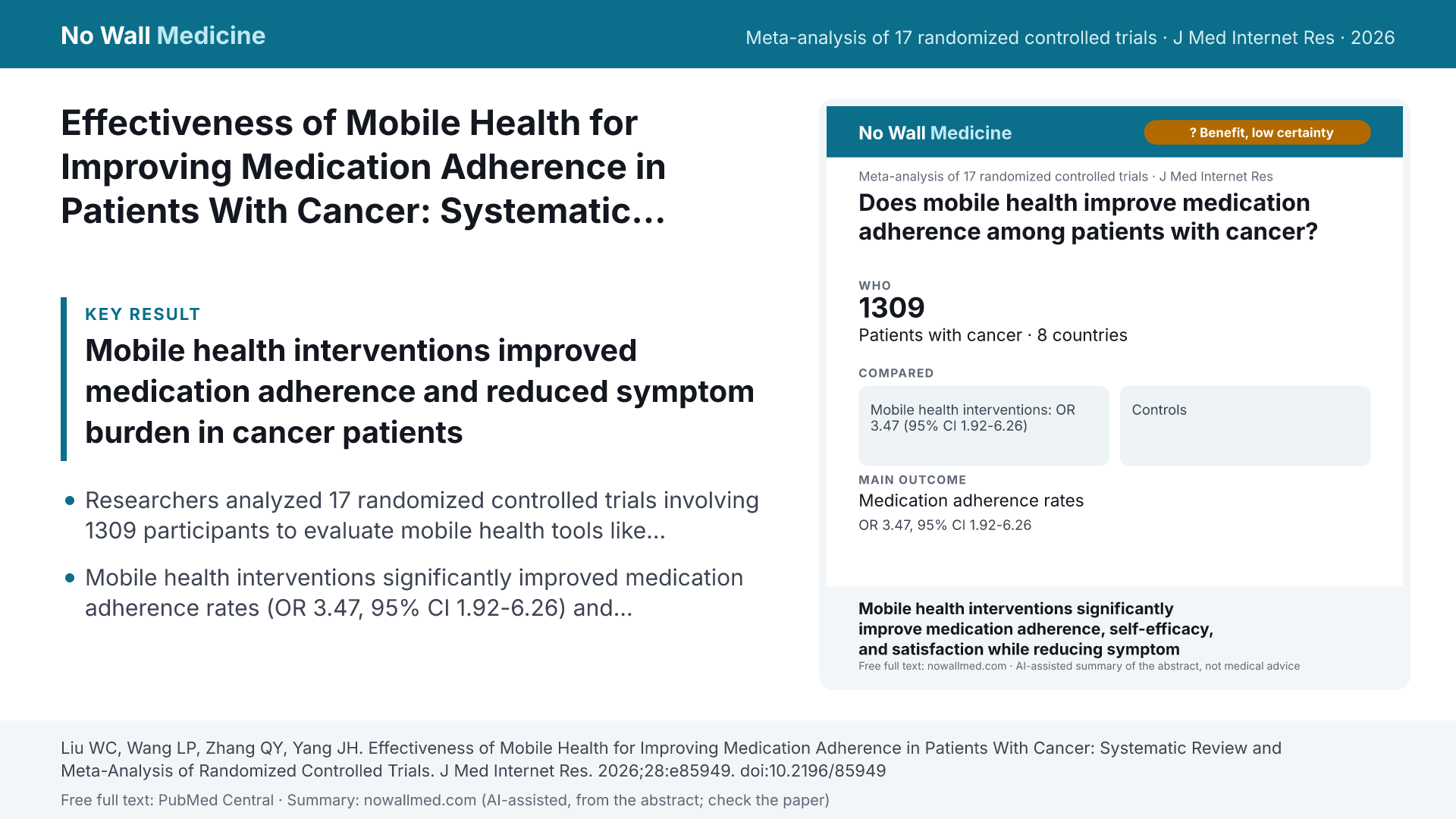
Effectiveness of Mobile Health for Improving Medication Adherence in Patients With Cancer: Systematic Review and Meta-Analysis of Randomized Controlled Trials
Key result: Mobile health interventions improved medication adherence and reduced symptom burden in cancer patients
Key points
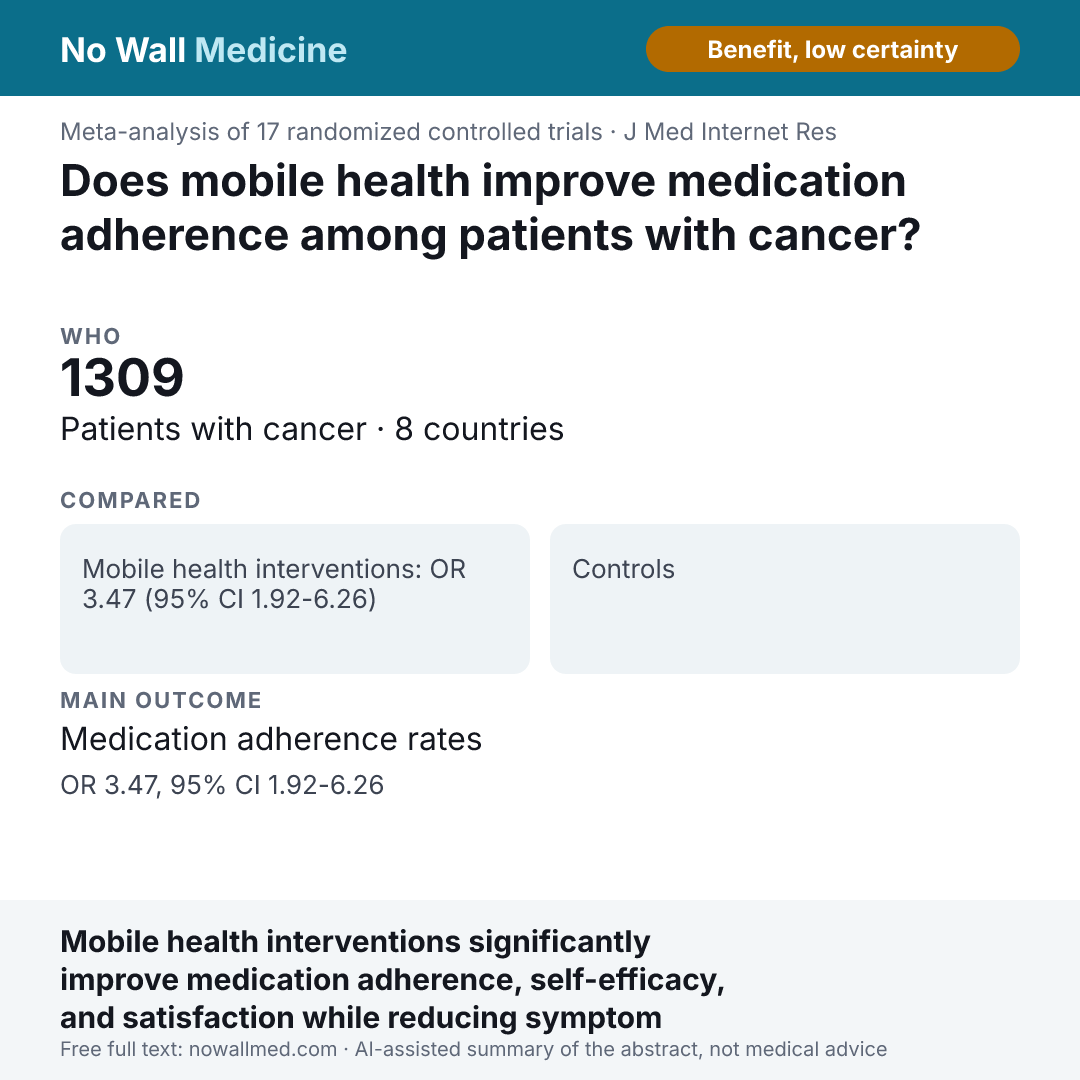
- Researchers analyzed 17 randomized controlled trials involving 1309 participants to evaluate mobile health tools like apps, websites, and text messaging.
- Mobile health interventions significantly improved medication adherence rates (OR 3.47, 95% CI 1.92-6.26) and adherence scores (SMD 1.01, 95% CI 0.51-1.52).
- These digital tools also improved self-efficacy and service satisfaction while reducing symptom burden (SMD -0.38, 95% CI -0.61 to -0.14), but had no significant effect on health literacy.
Why it matters: Systematic evidence regarding the effectiveness of mobile health for improving medication adherence in patients with cancer has been lacking.
Limitation the authors note: The authors noted substantial heterogeneity, a moderate risk of bias, and a low certainty of evidence.
Discussion prompts
- Would these patients look like yours? Who was left out?
- Is the main outcome one that matters to patients?
- Is the difference large enough to change what you do?
Cite: Liu WC, Wang LP, Zhang QY, Yang JH. Effectiveness of Mobile Health for Improving Medication Adherence in Patients With Cancer: Systematic Review and Meta-Analysis of Randomized Controlled Trials. J Med Internet Res. 2026;28:e85949. doi:10.2196/85949
Free full text: PubMed Central · Summary and visual abstract: nowallmed.com/a/effectiveness-of-mobile-health-for-improving-medication-adherence-in-1wzxt1e/ (AI-assisted from the abstract; check the paper before relying on it).