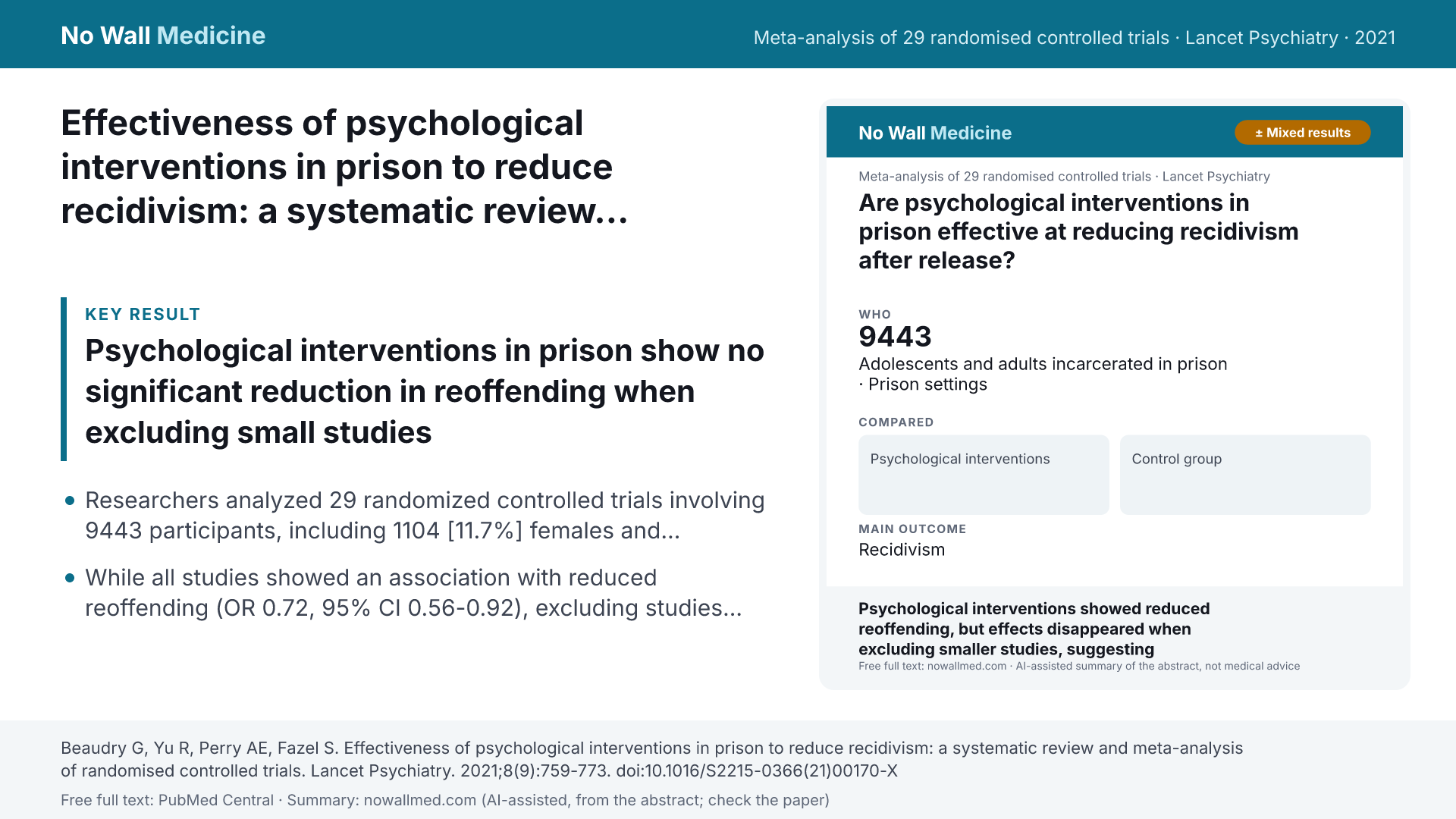
Effectiveness of psychological interventions in prison to reduce recidivism: a systematic review and meta-analysis of randomised controlled trials
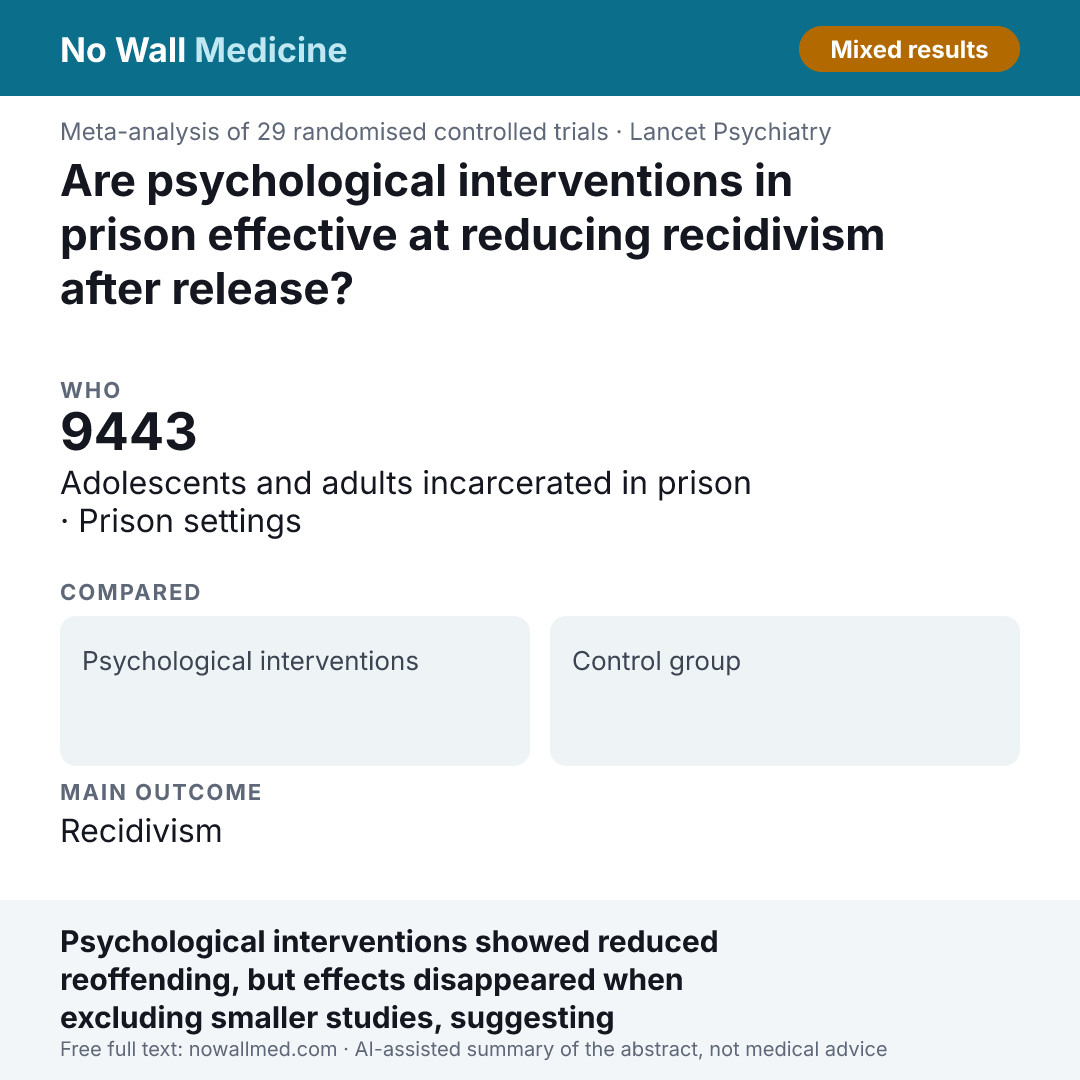
Key result: Psychological interventions in prison show no significant reduction in reoffending when excluding small studies
Key points
- Researchers analyzed 29 randomized controlled trials involving 9443 participants, including 1104 [11.7%] females and 8111 [85.9%] males, to measure the effect of prison-based psychological treatments.
- While all studies showed an association with reduced reoffending (OR 0.72, 95% CI 0.56-0.92), excluding studies with fewer than 50 participants resulted in no significant reduction (OR 0.87, 95% CI 0.68-1.11).
- Therapeutic communities, which are structured group treatment settings, were associated with decreased rates of recidivism in two studies (OR 0.64, 95% CI 0.46-0.91).
Limitation the authors note: Publication bias and small-study effects appear to have overestimated the reported modest effects of these interventions.
Discussion prompts
- Would these patients look like yours? Who was left out?
- Is the main outcome one that matters to patients?
- Is the difference large enough to change what you do?
Cite: Beaudry G, Yu R, Perry AE, Fazel S. Effectiveness of psychological interventions in prison to reduce recidivism: a systematic review and meta-analysis of randomised controlled trials. Lancet Psychiatry. 2021;8(9):759-773. doi:10.1016/S2215-0366(21)00170-X
Free full text: PubMed Central · Summary and visual abstract: nowallmed.com/a/effectiveness-of-psychological-interventions-in-prison-to-reduce-lmazbn/ (AI-assisted from the abstract; check the paper before relying on it).