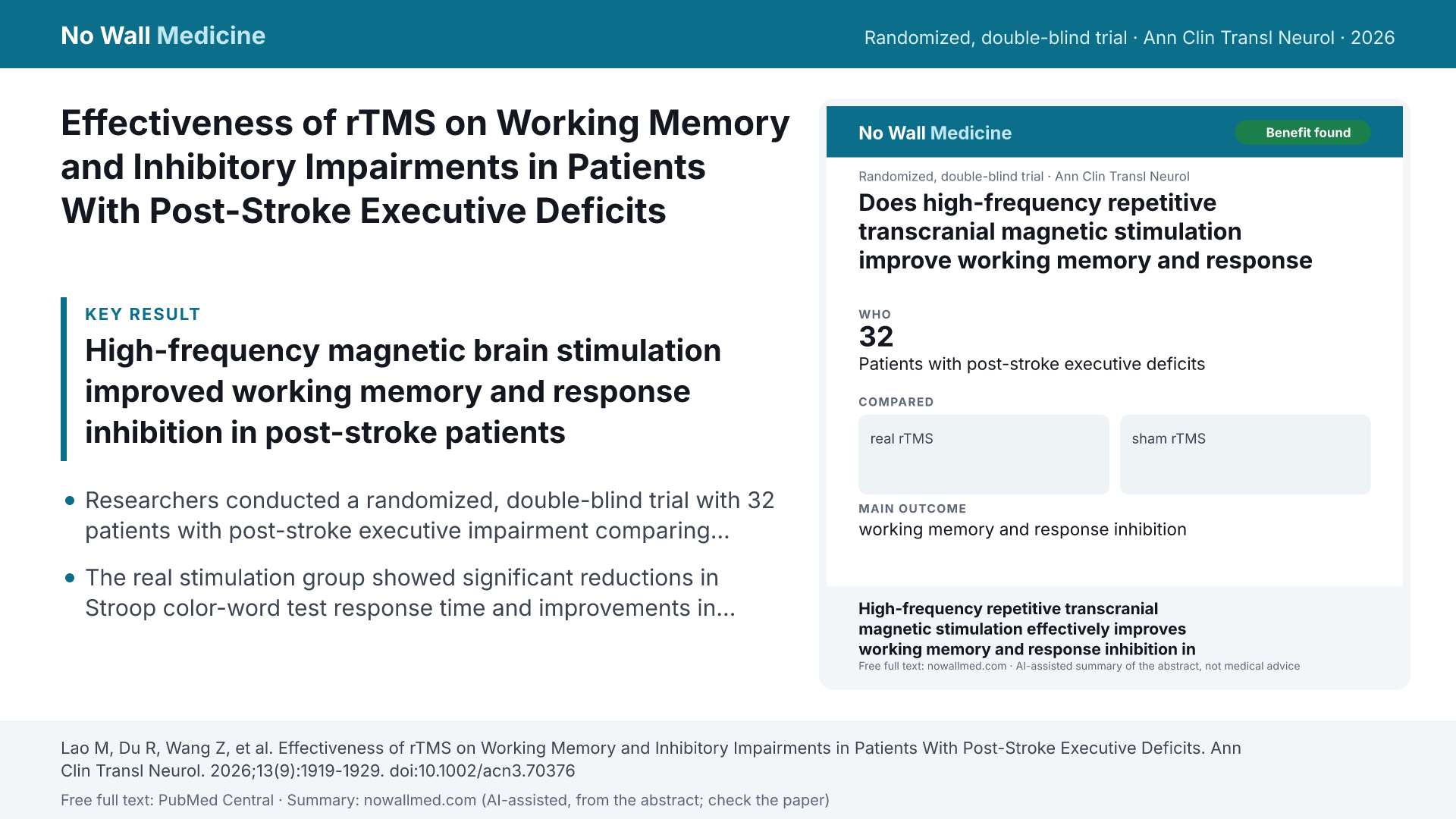
High-frequency magnetic brain stimulation improved working memory and response inhibition in post-stroke patients
Effectiveness of rTMS on Working Memory and Inhibitory Impairments in Patients With Post-Stroke Executive Deficits
Randomized, double-blind trialBenefit found
Does high-frequency repetitive transcranial magnetic stimulation improve working memory and response inhibition in post-stroke executive deficits?
Who
32
Patients with post-stroke executive deficits
Compared
real rTMS
sham rTMS
Main outcome
working memory and response inhibition
Bottom line: High-frequency repetitive transcranial magnetic stimulation effectively improves working memory and response inhibition in patients with post-stroke executive deficits.
Ann Clin Transl Neurol · 2026-03-25Download image
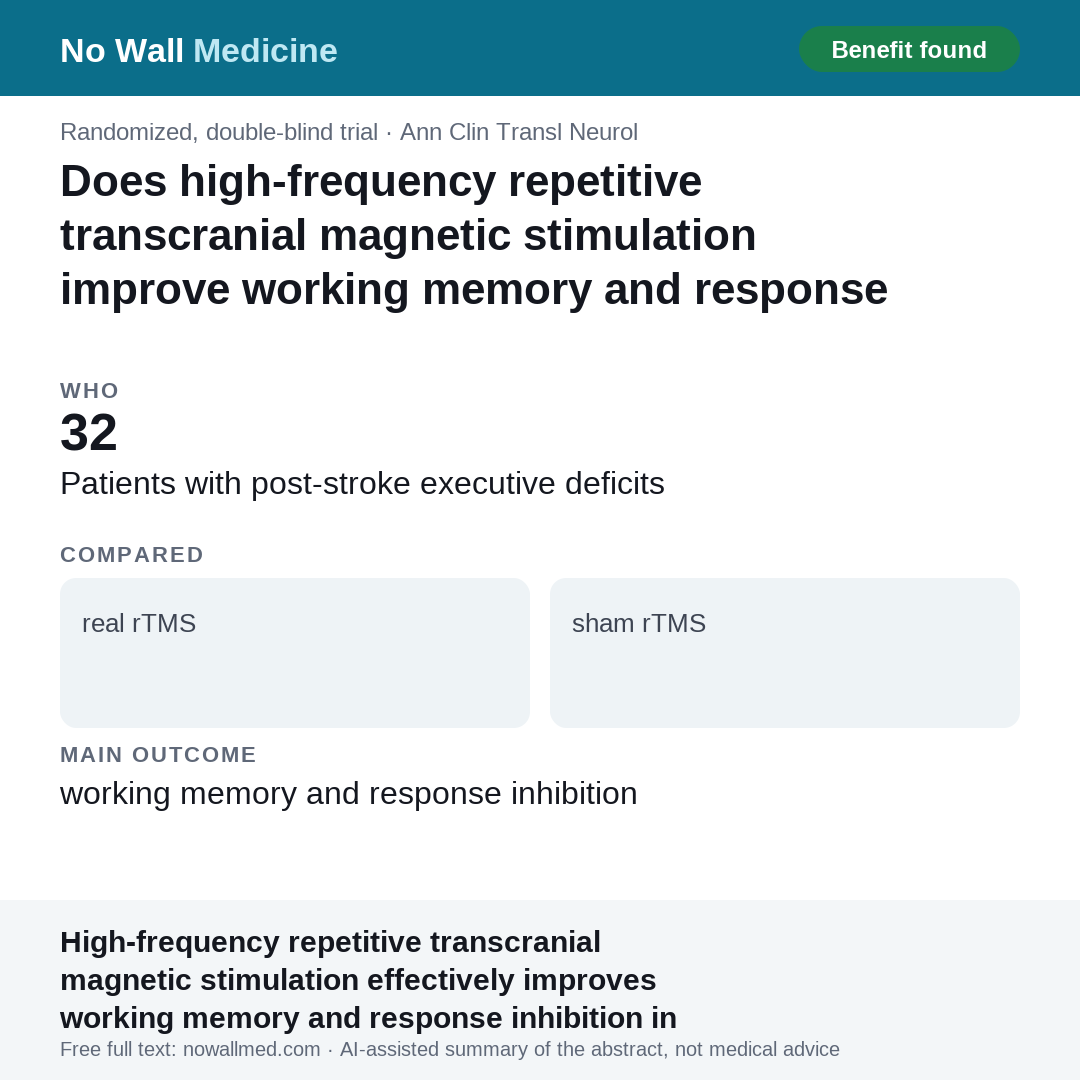
Clinical question: Does high-frequency repetitive transcranial magnetic stimulation improve working memory and response inhibition in post-stroke executive deficits?
Why it matters: It was unknown if high-frequency repetitive transcranial magnetic stimulation could effectively treat working memory and response inhibition impairments in patients with post-stroke executive deficits.
Key points
- Researchers conducted a randomized, double-blind trial with 32 patients with post-stroke executive impairment comparing real and sham repetitive transcranial magnetic stimulation.
- The real stimulation group showed significant reductions in Stroop color-word test response time and improvements in digit span test forward scores.
- Changes in brain connectivity and local communication efficiency in the frontoparietal network were significantly correlated with these cognitive improvements.
Headline and key points written with AI from the paper’s abstract, with every number checked against it. Read the paper before relying on them.
Was this summary helpful?
Subject terms
Cite this article
Lao M, Du R, Wang Z, et al. Effectiveness of rTMS on Working Memory and Inhibitory Impairments in Patients With Post-Stroke Executive Deficits. Ann Clin Transl Neurol. 2026. doi:10.1002/acn3.70376
Spotted a mistake? Suggest a correction