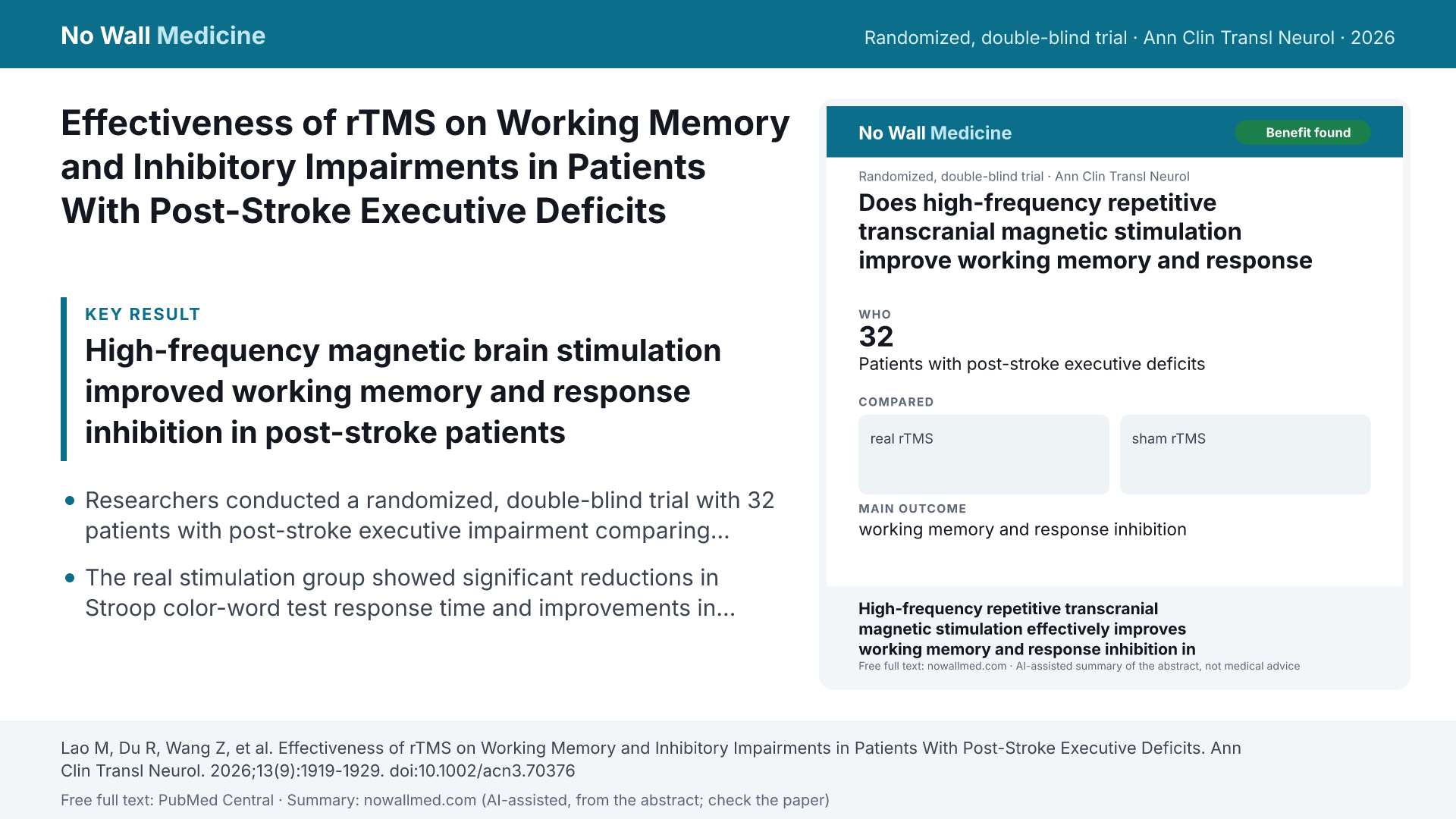
Effectiveness of rTMS on Working Memory and Inhibitory Impairments in Patients With Post-Stroke Executive Deficits
Key result: High-frequency magnetic brain stimulation improved working memory and response inhibition in post-stroke patients
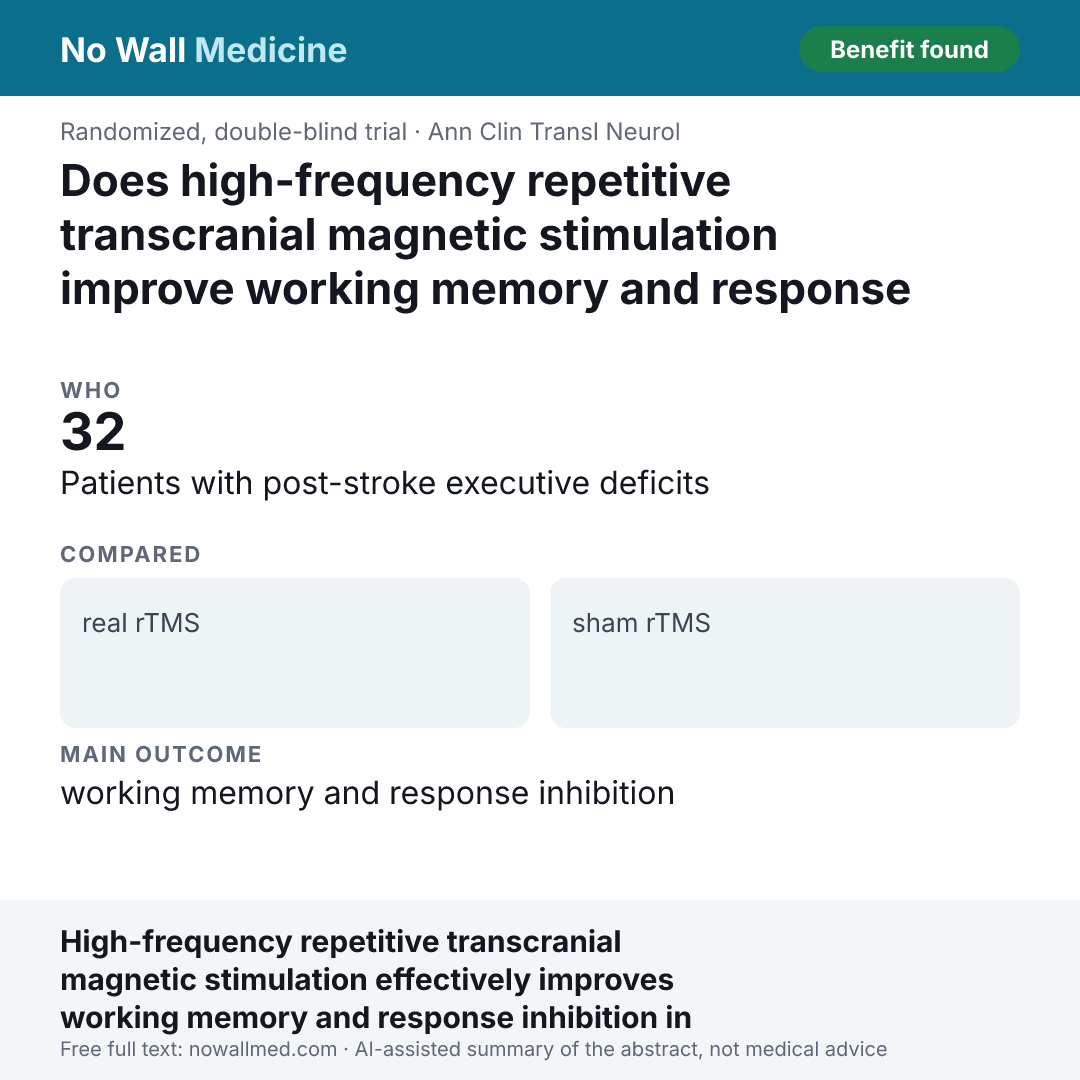
Randomized, double-blind trialBenefit found
Does high-frequency repetitive transcranial magnetic stimulation improve working memory and response inhibition in post-stroke executive deficits?
Who
32
Patients with post-stroke executive deficits
Compared
real rTMS
sham rTMS
Main outcome
working memory and response inhibition
Bottom line: High-frequency repetitive transcranial magnetic stimulation effectively improves working memory and response inhibition in patients with post-stroke executive deficits.
Ann Clin Transl Neurol · 2026-03-25 · Save PNG
Key points
- Researchers conducted a randomized, double-blind trial with 32 patients with post-stroke executive impairment comparing real and sham repetitive transcranial magnetic stimulation.
- The real stimulation group showed significant reductions in Stroop color-word test response time and improvements in digit span test forward scores.
- Changes in brain connectivity and local communication efficiency in the frontoparietal network were significantly correlated with these cognitive improvements.
Discussion prompts
- Would these patients look like yours? Who was left out?
- Is the main outcome one that matters to patients?
- Is the difference large enough to change what you do?
Cite: Lao M, Du R, Wang Z, et al. Effectiveness of rTMS on Working Memory and Inhibitory Impairments in Patients With Post-Stroke Executive Deficits. Ann Clin Transl Neurol. 2026;13(9):1919-1929. doi:10.1002/acn3.70376
Free full text: PubMed Central · Summary and visual abstract: nowallmed.com/a/effectiveness-of-rtms-on-working-memory-and-inhibitory-impairments-in-1ok8pwi/ (AI-assisted from the abstract; check the paper before relying on it).