Sensor-based interventions improved gait and balance performance in older adults compared to traditional exercise
Effectiveness of sensor-based interventions in improving gait and balance performance in older adults: systematic review and meta-analysis of randomized controlled trials
Meta-analysis of 58 randomized controlled trialsBenefit found
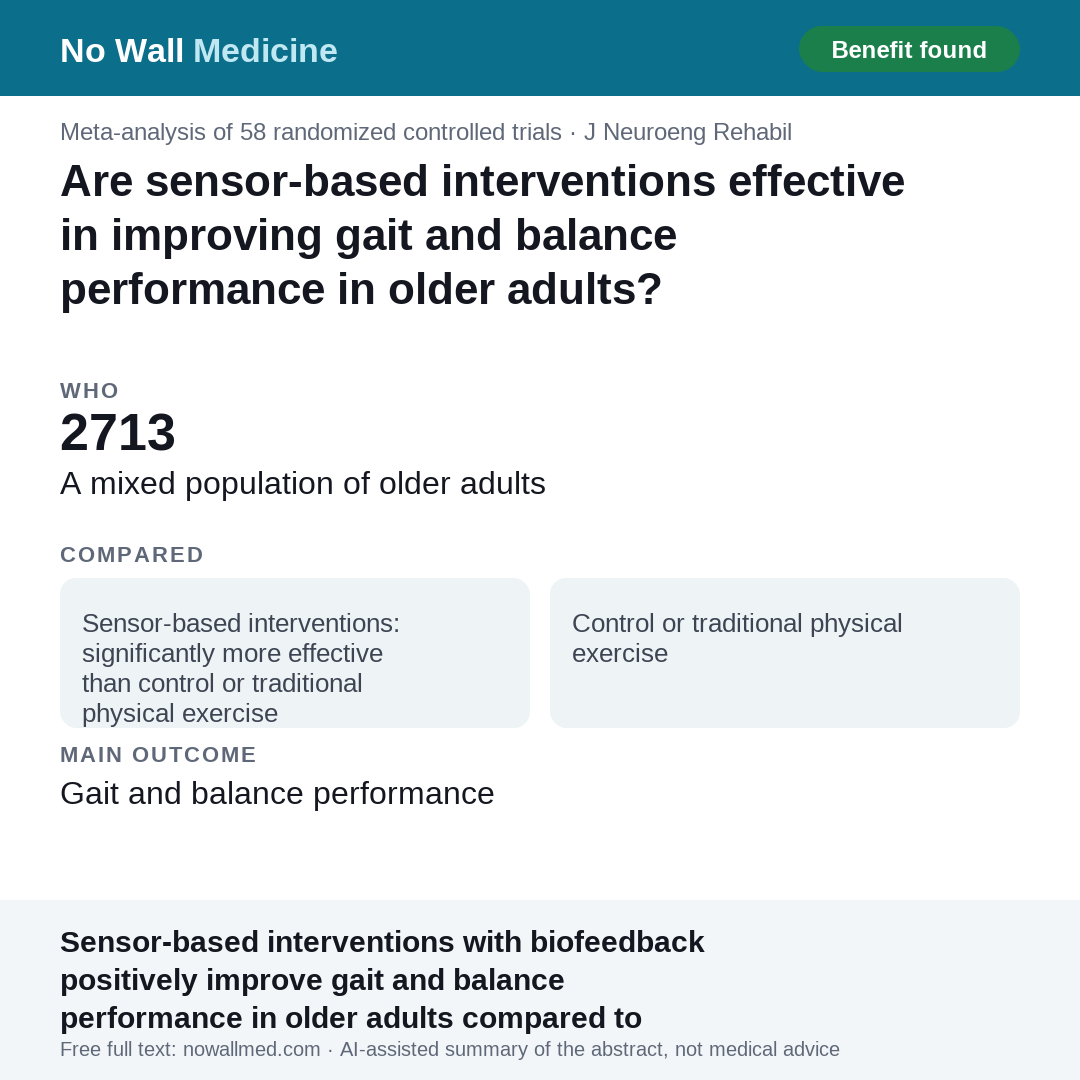
Are sensor-based interventions effective in improving gait and balance performance in older adults?
Who
2713
A mixed population of older adults
Compared
Sensor-based interventions: significantly more effective than control or traditional physical exercise
Control or traditional physical exercise
Main outcome
Gait and balance performance
Bottom line: Sensor-based interventions with biofeedback positively improve gait and balance performance in older adults compared to control groups.
Limitation: More studies are recommended to verify the effectiveness of specific sensor technologies.
J Neuroeng Rehabil · 2024-05-28Download image
Clinical question: Are sensor-based interventions effective in improving gait and balance performance in older adults?
Why it matters: The effectiveness of different sensor technologies for improving gait and balance in older adults remains unclear.
Key points
- Researchers analyzed 58 randomized controlled trials involving 2713 participants to compare sensor-based interventions with control or traditional physical exercise groups.
- Optical sensors and perception sensors were more effective than traditional exercise for several measures, including a mean difference of 25.166 m in the 6-Minute Walk Test.
- Wearable sensors showed no statistically significant difference in the Timed Up and Go test or normal gait speed when compared to control groups.
Headline and key points written with AI from the paper’s abstract, with every number checked against it. Read the paper before relying on them.
Was this summary helpful?
Subject terms
Cite this article
Mao Q, Zhang J, Yu L, Zhao Y, Luximon Y, Wang H. Effectiveness of sensor-based interventions in improving gait and balance performance in older adults: systematic review and meta-analysis of randomized controlled trials. J Neuroeng Rehabil. 2024. doi:10.1186/s12984-024-01375-0
Spotted a mistake? Suggest a correction
Top studies every Monday
The week’s key trials and guidelines in your specialties, plus any topics you follow. By email, free.
Get the weekly digest